
Folding e-bikes are the compromise of the catalogue. They fold, so they suit mixed commutes and small flats. But folding costs you in two ways: weight and range. Across all 142 folding models, the median weight is 29.5 kg, the same as the whole catalogue median, but the lightest folding bike is 17.7 kg, while the lightest bike of any type is 13.6 kg. Range is worse too. The median claimed range for all bikes is 97 km, but the median estimated range is 47 km. For a 720 Wh battery, ordinary riding gives about 48 km, with a band of 42 to 53 km. Hard riding drops that to 20 km. If you need to carry your bike up stairs or ride more than 30 km each way, a folding bike may not be the right tool.
What the catalogue shows
The catalogue holds 505 bikes from 62 brands. By type, there are 190 mountain bikes, 144 city bikes, 142 folding bikes, 26 cargo bikes, 2 touring bikes, and 1 commuter. Folding bikes are the third largest group. They are not a niche. They are a mainstream choice, and they compete directly with city bikes on price and with mountain bikes on capability.
Prices across the whole catalogue range from 399 USD to 5799 USD. The median price is 1299 USD. A quarter of all bikes are under 960 USD, half under 1299 USD, and three quarters under 1781 USD. Folding bikes fit that spread. The cheapest bike in the catalogue is the Fiido D3 Pro at 399 USD, a folding model. The most expensive folding bike is the ADO AIR Carbon at 4199 USD. So folding bikes cover the full price range, from budget to premium.
Batteries also vary widely. The median battery across all bikes is 720 Wh. The largest battery is 1920 Wh on the Coswheel GT20 PRO, a mountain bike. The smallest is 187 Wh on the Onesport OT02 PRO, a folding bike. That small battery gives an estimated range of 14 km, which is fine for a short hop but not much more.
Weight: what folding adds
Folding bikes are not light. The median weight for all bikes is 29.5 kg. The lightest bike in the catalogue is the Fiido Air Carbon at 13.6 kg, but that is a city bike, not a folder. The lightest folding bike is the Fiido D3 Pro at 17.7 kg. The heaviest bike in the catalogue is the Hiboy C1 at 56.7 kg, and that is a folding model. So folding bikes span from 17.7 kg to 56.7 kg, a range of 39 kg. That is a huge spread.
Why do folding bikes weigh so much? The frame needs a hinge and a latch, which add material. The wheels are often smaller, which can make the ride less stable, so manufacturers add thicker tires or suspension to compensate. Batteries are often mounted on the frame or rack, adding weight. And to keep the price down, many folding bikes use heavy steel frames.
| Bike | Type | Weight (kg) | Battery (Wh) | Estimated range (km) | Price (USD) |
|---|---|---|---|---|---|
| Fiido D3 Pro | Folding | 17.7 | 374 | 28 | 399 |
| ADO AIR Carbon | Folding | 15.9 | 346 | 26 | 4199 |
| Hiboy C1 | Folding | 56.7 | 522 | 36 | 440 |
| Heybike Ranger S | Folding | 22.7 | 720 | 53 | 1299 |
| Koolux RK10 | Folding | 34.7 | 624 | 45 | 1068 |
| Fiido Air Carbon | City | 13.6 | 614 | 46 | 1799 |
Range: what the claim says vs. what you get
Range claims are optimistic. Across all 505 bikes, 483 have a claim that exceeds the estimate. The median overclaim is 50 percent. The widest overclaim is 84 percent, on the Aventon Ramblas eMTB. The closest claim is on the Hidoes C5, a folding bike, where the claim is nearly accurate. But that is rare.
The median claimed range for all bikes is 97 km. The median estimated range is 47 km. That is a 50 percent overclaim. For a 720 Wh battery, the most common size, easy riding gives about 94 km, ordinary riding gives 48 km, and hard riding gives 20 km. The same battery in cold weather gives 40 km. On knobby tires, 42 km. On road tires, 52 km.
Folding bikes often have smaller batteries. The smallest battery in the catalogue is 187 Wh on the Onesport OT02 PRO, which gives an estimated range of 14 km. That is fine for a short trip to the shop, but not for a commute. The most common battery size is 720 Wh, which gives about 48 km in ordinary riding. If you need more range, look for a battery above 720 Wh, but remember that larger batteries add weight.
Price: what you pay for folding
Folding bikes are not cheaper than other types. The median price for all bikes is 1299 USD. The cheapest bike in the catalogue is the Fiido D3 Pro at 399 USD, a folding bike. The most expensive folding bike is the ADO AIR Carbon at 4199 USD. That is a wide range, but the median folding bike is likely around 1299 USD, same as the overall median.
Price bands across the catalogue: under 800 USD, 72 bikes; 800 to 1200 USD, 143 bikes; 1200 to 1600 USD, 131 bikes; 1600 to 2200 USD, 106 bikes; above 2200 USD, 53 bikes. Folding bikes appear in every band. The Fiido D3 Pro is under 800 USD. The Heybike Ranger S is at 1299 USD, the median price. The ADO AIR Carbon is above 2200 USD.
What does that money buy? At 399 USD, the Fiido D3 Pro has a 374 Wh battery and an estimated range of 28 km. At 4199 USD, the ADO AIR Carbon has a 346 Wh battery and an estimated range of 26 km. So price does not always buy range. It buys lighter weight and better components. The ADO AIR Carbon weighs 15.9 kg, while the Fiido D3 Pro weighs 17.7 kg. That is a small difference for a large price gap.
Who folding still suits
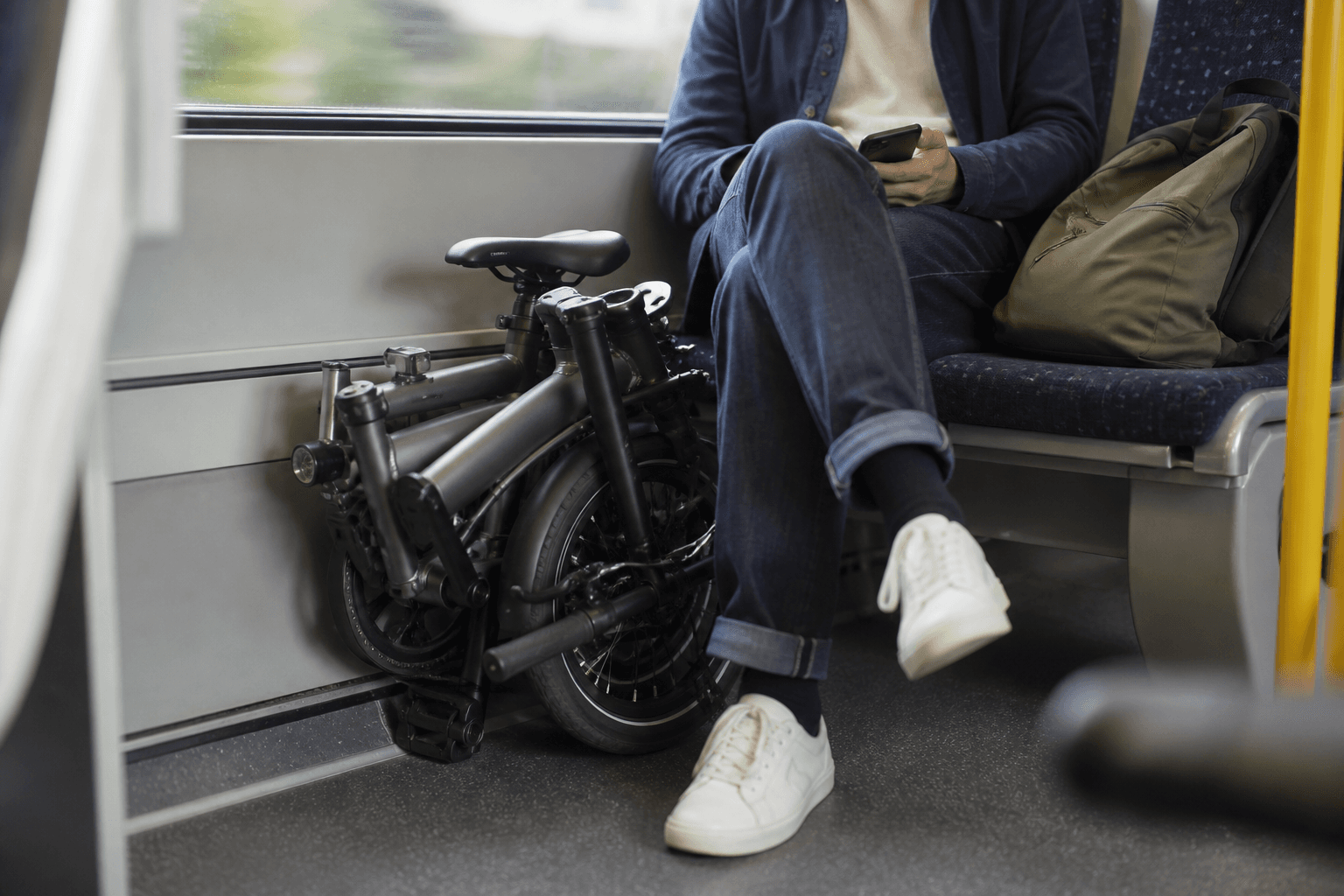
Folding bikes suit riders who need to combine cycling with public transport or who have limited storage. If you take your bike on a train or bus, a folding bike is often the only option. If you live in a small flat without a lift, a folding bike can be stored under a desk or in a cupboard. That convenience is worth the extra weight and reduced range.
But folding bikes are not for everyone. If you ride more than 30 km each way, or if you need to carry heavy loads, a folding bike will struggle. The median estimated range is 47 km, so a 30 km commute is possible but leaves little margin. If you ride in hilly terrain or in cold weather, range drops further. A 720 Wh battery in cold weather gives 40 km, and on knobby tires, 42 km.
Folding bikes also have lower payload ratings. The highest payload rating in the catalogue is 250 kg, on the Riding Time GT53, a cargo bike. Folding bikes typically have lower ratings. Check the payload rating before you buy. If you weigh more than 100 kg or carry a heavy bag, make sure the bike can handle it.
Cost of ownership: what riding costs
Riding an e-bike is cheaper than driving. The savings calculator shows that riding 50 km a week instead of driving saves 486 EUR a year. Riding 100 km a week saves 1072 EUR a year. Riding 200 km a week saves 2245 EUR a year. Those savings come from avoiding car maintenance, depreciation, and parking.
The cost of ownership calculator totals five years of price, charging, servicing, battery, and resale. For a median bike, five years total 1573 EUR. That includes 63 EUR for charging, 600 EUR for servicing, and 293 EUR in resale value. The cost per km is 0.10 EUR. Charging a median battery once costs 0.20 EUR at 0.28 EUR per kWh. Electricity to ride 100 km is 0.42 EUR.
Batteries wear out. A median battery lasts 800 full cycles, which is 38400 km. Replacing a 720 Wh pack costs 864 EUR at 1.2 EUR per Wh. That is a significant cost. Some folding bikes have smaller batteries, which cost less to replace. For example, a 374 Wh battery costs 449 EUR to replace. But smaller batteries also mean less range.
| Battery (Wh) | Ordinary range (km) | Replacement pack (EUR) |
|---|---|---|
| 187 | 12 | 224 |
| 374 | 25 | 449 |
| 522 | 35 | 626 |
| 720 | 48 | 864 |
| 1040 | 69 | 1248 |
How to choose your folding e-bike
Start with your needs. How far do you ride each day? What is the terrain like? Do you need to carry the bike? Answer those questions first. Then use the find-my-ebike tool to narrow the catalogue. It asks a short set of questions and returns a shortlist.
Once you have a shortlist, compare the specifications. Look at the battery size, the estimated range, and the weight. Use the range calculator to see how far each bike will go under your conditions. Use the cost of ownership calculator to see the five-year cost. And use the savings calculator to see how much you will save compared to driving.
Consider the battery replacement cost. A larger battery costs more to replace, but it gives more range. If you only ride short distances, a smaller battery may be enough and will cost less to replace. The Onesport OT02 PRO has a 187 Wh battery and a 14 km range, which is fine for a 5 km commute. The Heybike Ranger S has a 720 Wh battery and a 53 km range, which is better for longer rides.
What to do next
You have the numbers. Now decide what matters to you. If portability is your priority, look for a bike under 20 kg. If range is your priority, look for a battery above 720 Wh. If price is your priority, the Fiido D3 Pro at 399 USD is the cheapest entry point.
Use the find-my-ebike tool to get a shortlist based on your answers. Then compare the shortlisted bikes on the same axes: weight, range, and price. The bikes page lets you filter the whole catalogue by type, price, and other specs.
Frequently asked questions
Why do folding e-bikes weigh more than other types?
The folding frame and hinge add material. The median folding bike weighs 29.5 kg, same as the catalogue median, but the lightest folding bike is 17.7 kg while the lightest overall is 13.6 kg. Heavier batteries and motors also add weight.
How far can a folding e-bike really go?
The median claimed range for all bikes is 97 km, but the median estimated range is 47 km. For a 720 Wh battery, ordinary riding gives about 48 km, with a band of 42 to 53 km. Hard riding drops that to 20 km.
Are folding e-bikes cheaper than other types?
The median price for all bikes is 1299 USD. Folding bikes span from 399 USD to 4199 USD. The cheapest folding bike, the Fiido D3 Pro, is 399 USD, and the most expensive, the ADO AIR Carbon, is 4199 USD.
Who should buy a folding e-bike?
Folding e-bikes suit riders who need to carry the bike on transit or store it in a small space. They are not ideal for long rides or heavy cargo. If you ride less than 20 km a day and need portability, a folding bike can work.
How do I choose the right folding e-bike?
Start with your weight limit and the distance you ride. Check the battery size and estimated range. Use the range calculator to see how far a battery will take you under your conditions. Then compare prices and features.