
Your e-bike battery is the most expensive part of the bike. A replacement pack for a median 720 Wh battery costs 864 EUR, and that is before labor. The good news is that a few simple habits can add years to its life. Lithium-ion batteries degrade with heat, full charge, and deep discharge. Avoid those, and you keep more capacity for longer. Here are nine habits that matter, based on the chemistry of the cells and the way e-bikes are actually used.
1. Charge to 80% for Daily Use
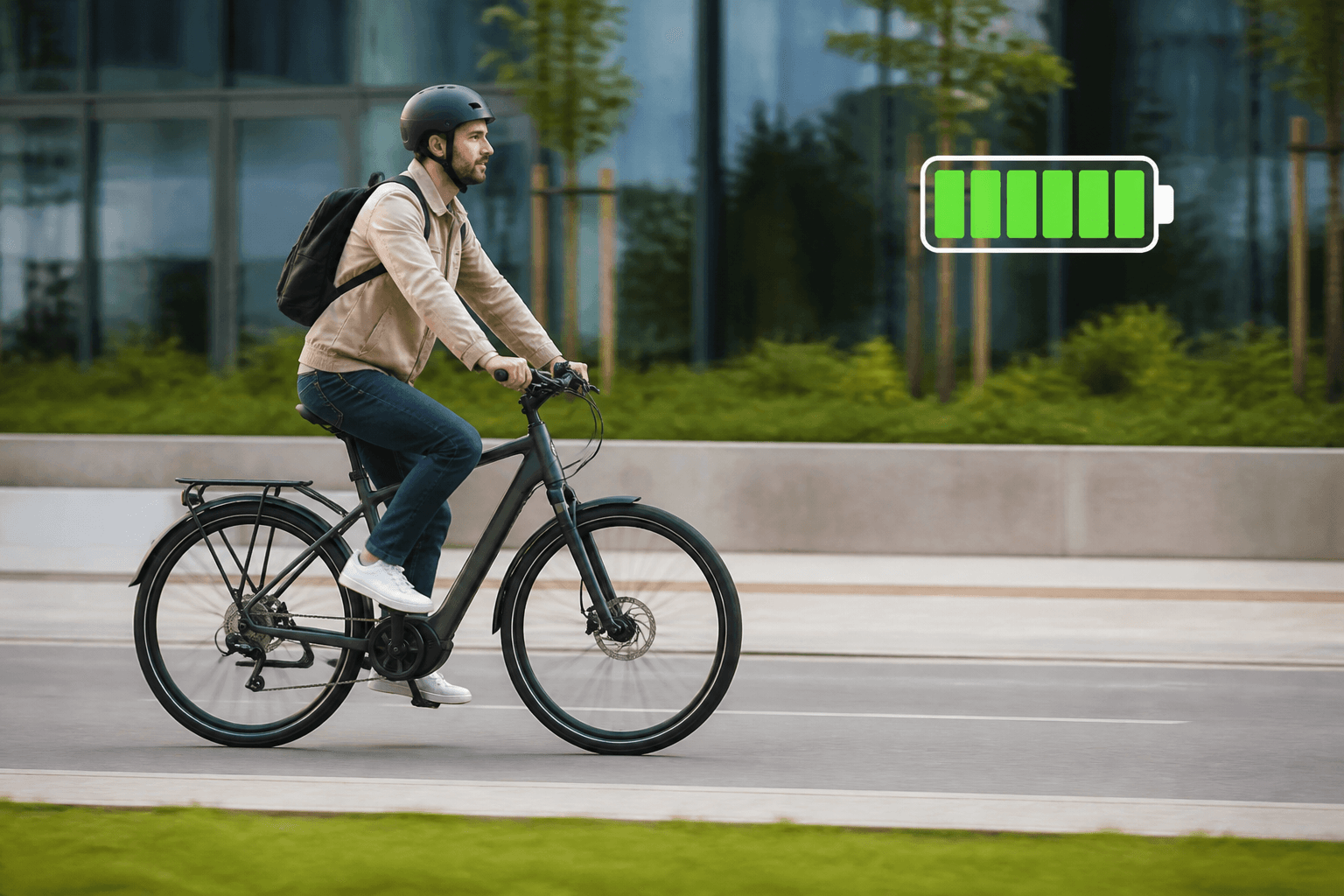
Lithium-ion batteries are happiest between 20% and 80% charge. Charging to 100% stresses the cells, especially if the bike sits at full charge for hours. For your daily commute or errands, you do not need the full range. Charge to 80% and you extend the battery's life without sacrificing practicality.
How much range do you lose? On a median 720 Wh battery, ordinary riding (Tour assist, rolling terrain) gives an estimated range of 48 km, in a band of 42 to 53 km. At 80% charge, that is roughly 38 km, still enough for most commutes. If you need more, charge to 100% the night before a long ride, but do not let it sit at full for days.
Some bikes have a setting in the display to stop charging at 80%. If yours does not, use a timer plug or unplug manually when the charger shows 80%. It becomes a habit after a week.
2. Avoid Letting It Drop to 0%
Deep discharge is as harmful as full charge. Running the battery to empty puts stress on the cells and can cause the battery management system to shut down prematurely. In extreme cases, a deep discharge can make the battery unusable.
Most e-bikes will cut power before the battery is truly empty, but that does not mean you should push to the last bar. Recharge when you hit 20% or 30%. This is especially important if you store the bike for a long time. A battery left at 0% can fall below the minimum voltage and refuse to charge.
If you are on a long ride and worried about range, use a lower assist mode. On a 720 Wh battery, easy riding (Eco, flat) gives an estimated range of 94 km, in a band of 82 to 105 km. That is nearly double the ordinary riding range. Planning ahead beats running the battery to the red.
3. Store at 50% Charge When Not Riding
If you are not riding for more than a week, store the battery at 50% charge. This is the optimal state for lithium-ion cells. At 50%, the battery is not stressed by high voltage or damaged by low voltage. It simply waits.
Where should you store it? A cool, dry place, ideally between 10 and 20 degrees Celsius (50 to 68 degrees Fahrenheit). Avoid garages that freeze in winter or bake in summer. Heat accelerates degradation, and cold can temporarily reduce capacity.
Check the charge every few months. Lithium-ion batteries self-discharge slowly, about 2% per month. If the charge drops to 30%, top it up to 50%. This keeps the cells healthy during long periods of inactivity, such as winter storage.
4. Keep It Cool (But Not Too Cold)
Heat is the enemy of lithium-ion batteries. High temperatures accelerate chemical reactions inside the cells, which leads to capacity loss. Avoid leaving your e-bike in direct sunlight on a hot day, especially with a black battery. Park in the shade or bring the battery indoors if you can.
Cold is less harmful but still affects performance. In cold weather, the battery's range drops. Our formula applies a temperature multiplier of 1.2 for cold conditions. That means a 720 Wh battery that gives 48 km in ordinary riding at mild temperatures gives about 40 km in the cold. That is a 17% reduction, noticeable on a commute.
What is the ideal temperature range? Most batteries operate best between 10 and 30 degrees Celsius (50 to 86 degrees Fahrenheit). If you ride in freezing conditions, keep the battery warm before you head out. Some riders store the battery indoors and install it just before riding. That helps, but do not charge a frozen battery. Let it warm up first.
5. Use the Right Charger
Your e-bike battery is designed to work with a specific charger. Using a charger with the wrong voltage or current can damage the cells or the battery management system. Always use the charger that came with your bike, or a replacement from the same brand with the same specifications.
Why does it matter? A charger with too high a current can overheat the battery. A charger with the wrong voltage can overcharge or undercharge the cells. Both shorten battery life and can be a safety hazard.
If you need a second charger, for work or travel, buy one from the bike manufacturer. Third-party chargers may be cheaper, but they are not worth the risk to a component that costs hundreds of euros to replace.
6. Unplug When Full (Don't Overcharge)
Modern chargers stop when the battery is full, but leaving the battery plugged in keeps it at 100% and can cause small, repeated charges as the battery self-discharges. This keeps the cells at high voltage for hours, which accelerates degradation.
The habit is simple: unplug the charger when the battery reaches the desired level. If you charge overnight, use a timer plug to cut power after a set time. Many smart plugs allow you to schedule charging, so you can wake up to an 80% charge without overcharging.
Overcharging is less of a problem than it was a decade ago, but it is still a habit that costs battery life. If you charge to 100% for a long ride, unplug as soon as it is full. Do not leave it plugged in while you go to work.
7. Avoid Charging Right After a Hard Ride
After a hard ride, the battery is warm. Charging a warm battery increases the stress on the cells. It is better to let the battery cool to room temperature before plugging it in. This is especially important in summer or after climbing steep hills.
How long should you wait? About 30 minutes to an hour, depending on the outside temperature. If the battery feels hot to the touch, wait longer. Charging a hot battery can reduce its lifespan and, in rare cases, cause swelling.
This habit is easy to overlook, especially when you are in a hurry. But a few minutes of patience can add months to your battery's life. If you ride hard and then need to charge immediately, consider a slower charge if your charger has that option.
8. Clean the Contacts Regularly
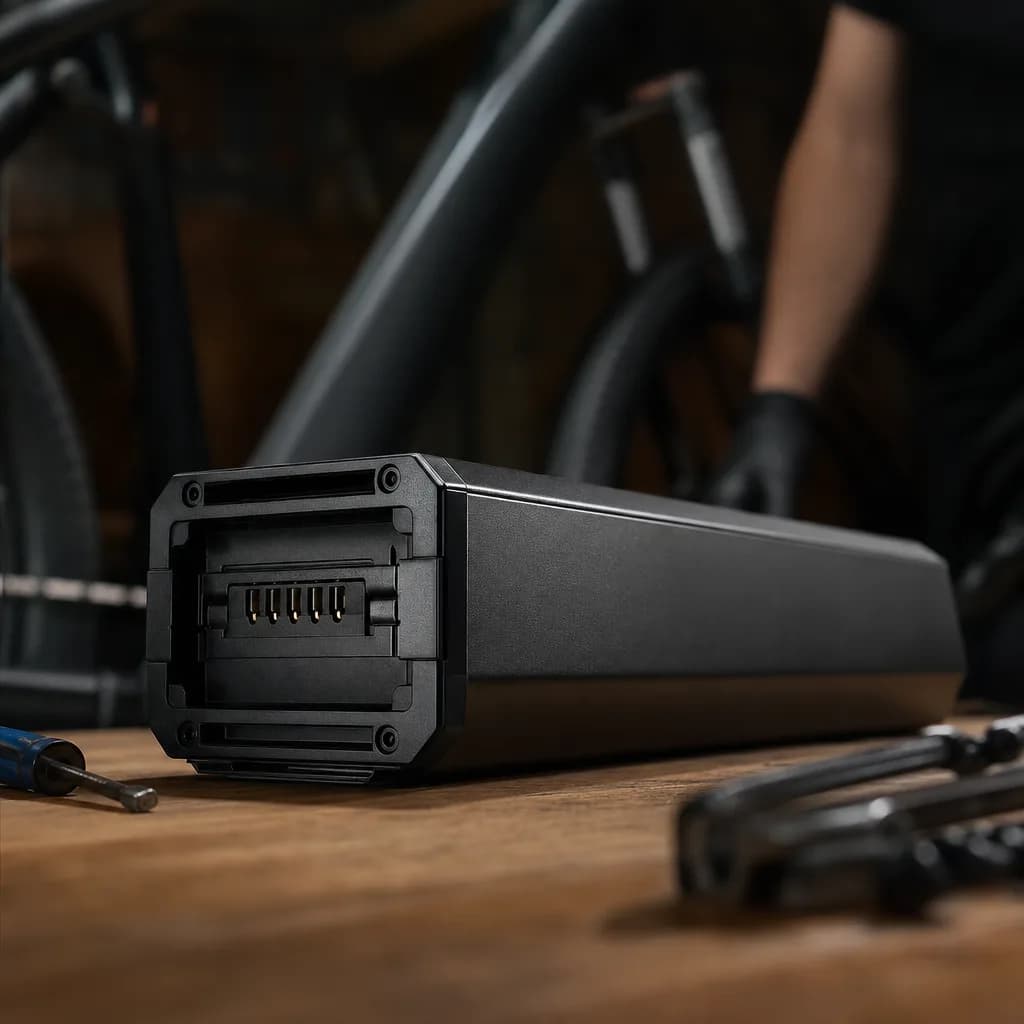
Dirty or corroded contacts can increase resistance and cause heat buildup when charging or riding. This heat damages the battery and can lead to poor performance. Clean the metal contacts on the battery and the bike with a dry cloth or a contact cleaner. Do this every few weeks, especially if you ride in wet or dusty conditions.
Why does it matter? A poor connection can cause voltage drops, which the battery management system may interpret as a fault. This can lead to error messages or reduced power. In extreme cases, it can cause arcing and damage the connectors.
When cleaning, make sure the battery is off and disconnected from the charger. Use a soft cloth and isopropyl alcohol if needed. Do not use water or abrasive materials. Check for any signs of corrosion or damage, and replace worn contacts if necessary.
9. Ride Smoothly to Reduce Strain
How you ride affects battery health. Hard acceleration and high assist levels draw more current from the battery, which generates heat. Heat is the enemy. Riding smoothly, with gradual acceleration and using lower assist modes when possible, reduces strain on the battery.
Our range estimates show the difference. A 720 Wh battery on hard riding (Turbo, steep) gives an estimated range of 20 km, in a band of 18 to 23 km. On easy riding (Eco, flat), it gives 94 km. That is a huge difference in current draw. The more you push the battery, the hotter it gets and the faster it degrades.
You do not have to ride like a grandma. But using Eco or Tour for most of your ride, and saving Turbo for hills or sprints, will keep the battery cooler and last longer. Also, shifting gears properly reduces motor strain. A motor that labors at low cadence draws more current.
Track Your Battery Health
Many e-bike displays show battery health or state of health. If yours does, check it occasionally. If not, you can estimate by tracking range over time. A noticeable drop in range, say 20% or more, indicates the battery is degrading.
You can also use the range calculator on MathBikes to see what range you should expect from your battery. Compare that to what you actually get. If you are consistently below the estimated range, the battery may be aging.
Battery health tracking helps you plan for replacement. A battery that has lost 20% of its capacity is still usable, but you will need to charge more often. Knowing the state of your battery helps you decide when to replace it, rather than being caught out on a ride.
How Long Should an E-Bike Battery Last?
A typical lithium-ion battery lasts about 800 full charge cycles. That is the number of times you can charge from empty to full before capacity drops to about 80%. On a median 720 Wh battery, that translates to roughly 38,400 km, based on our estimated range of 48 km per charge. That is many years of riding for most people.
But the actual lifespan depends on how you treat the battery. The habits above can push the battery beyond 800 cycles, or shorten it if you ignore them. Heat and full charge are the biggest factors. A battery kept at 100% in a hot garage might last only 300 cycles.
When the battery capacity drops below 70%, you will notice a significant reduction in range. At that point, you might consider a replacement. The cost of a replacement pack is roughly 1.2 EUR per Wh. For a 720 Wh battery, that is 864 EUR. That is a significant expense, so it is worth protecting your battery.
| Battery size (Wh) | Estimated range (km) | Replacement cost (EUR) |
|---|---|---|
| 374 | 25 | 449 |
| 480 | 32 | 576 |
| 614 | 41 | 737 |
| 720 | 48 | 864 |
| 1040 | 69 | 1248 |
The table shows examples from the MathBikes catalogue. The Fiido D3 Pro has a 374 Wh battery, with an estimated range of 28 km and a replacement cost of 449 EUR. The Cyrusher Trident has a 1040 Wh battery, with an estimated range of 60 km and a replacement cost of 1248 EUR. Larger batteries cost more to replace, so caring for them is even more important.
What If You Need a New Battery?
Eventually, every battery needs replacement. When that time comes, you have options. You can buy a new battery from the manufacturer, which is the safest choice. You can also consider a third-party battery, but make sure it is compatible with your bike's voltage and connector.
The cost of a replacement pack is roughly 1.2 EUR per Wh. For a median 720 Wh battery, that is 864 EUR. That is a significant expense, but it is less than the cost of a new bike. If your bike is otherwise in good condition, replacing the battery can give it years more life.
Before you buy a new battery, check the warranty. Most e-bike batteries have a warranty of 2 years or 500 cycles. If your battery fails within that period, you may get a free replacement. After that, you are on your own.
What to Do Next
Start with the habit that is easiest for you. If you charge overnight, set a timer to stop at 80%. If you store your bike for winter, charge to 50% and put it in a cool place. Every habit you adopt extends the life of your battery and saves you money in the long run.
Use the calculators on MathBikes to estimate your range and cost of ownership. That will help you understand how your battery is performing and when it might need replacement. Then, when you are ready to buy a new e-bike, use the catalogue to compare battery sizes and prices.
Frequently asked questions
Should I charge my e-bike battery to 100% every time?
No. For daily use, charge to 80%. Lithium-ion batteries degrade faster when kept at full charge. Charge to 100% only before a long ride that needs the full range.
Is it bad to leave my e-bike battery plugged in overnight?
Yes, it is not ideal. Most chargers stop at full, but keeping the battery at 100% for hours stresses it. Unplug once it reaches the desired level, or use a timer.
How should I store my e-bike battery in winter?
Store it at 50% charge in a cool, dry place. Avoid freezing temperatures and extreme heat. Check the charge every few months and top up to 50% if needed.
Can I charge my e-bike battery right after a ride?
It is better to wait. The battery is warm after use, and charging while hot accelerates degradation. Let it cool to room temperature first, about 30 minutes.
How long does an e-bike battery last?
A typical lithium-ion battery lasts about 800 full charge cycles. That is roughly 38,400 km on a median 720 Wh battery, depending on riding conditions and care.