
The short answer: you need 250W if you ride mostly flat ground, pedal along, and want a bike that is legal everywhere. You need 750W if you face steep hills, carry cargo, or want to arrive without breaking a sweat. But the real difference is not the number on the motor. It is how that power is delivered, how it affects range, and what the law allows where you ride.
What Watts Really Mean for E-Bike Motors
Watts measure power, the rate at which the motor does work. A 250W motor can sustain 250 watts of output. A 750W motor can sustain three times that. But you rarely use full power. E-bike motors assist only when you pedal, and the amount of assistance depends on the mode you select, Eco, Tour, Sport, or Turbo.
Think of watts like the engine size in a car. A bigger engine can accelerate faster and climb hills without downshifting, but it also uses more fuel when you press the pedal. The same is true for e-bikes. A 750W motor will get you up to speed more quickly and maintain speed on hills, but it will draw more current from the battery, especially in high-assist modes.
However, the wattage rating is not the whole story. Torque, measured in newton meters, determines how strongly the motor can turn the wheel. A motor with high torque will feel more powerful on hills, even if its wattage is lower. Our database counts a motor as a mid-drive from 60 Nm, which is a good indicator of climbing ability.
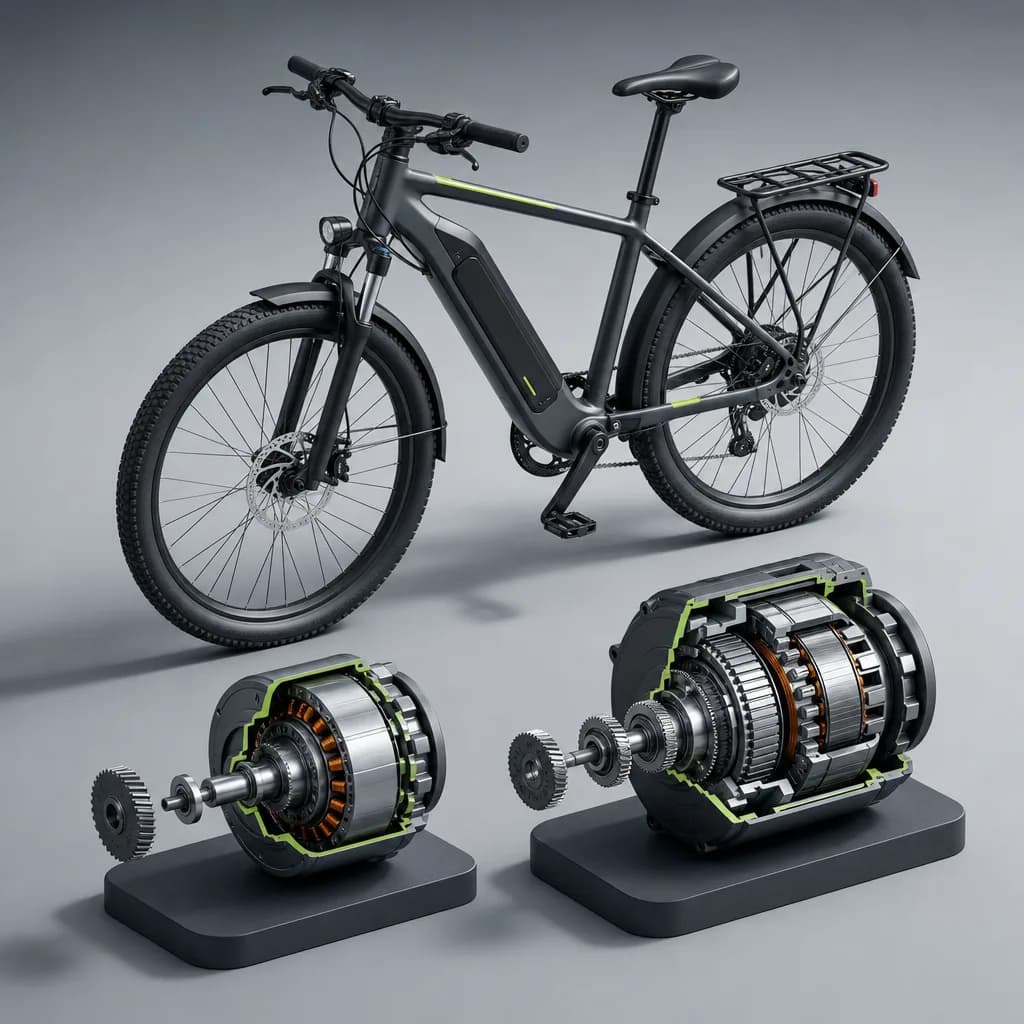
Another factor is where the motor sits. Hub motors, in the center of the wheel, are simpler and cheaper. Mid-drive motors, at the crank, use the bike's gears to multiply torque, making them more efficient on hills. The trade-off is that mid-drive motors cost more to service, 180 EUR a year versus 120 EUR for a hub motor.
Speed and Hill Climbing: Where Power Shows
On flat ground, both 250W and 750W motors will get you to the legal speed limit, usually 20 mph (32 km/h) for class 2 or 28 mph (45 km/h) for class 3. The difference is how quickly you get there. A 750W motor accelerates faster, which is useful when starting from a stop or merging into traffic. But once you are at the limit, the motor cuts out, so you won't go faster.
Hills are where the extra power matters. Climbing a steep hill requires sustained power output. A 250W motor may struggle, forcing you to pedal hard or drop to a low gear. A 750W motor can maintain a higher speed up the same hill, reducing your effort and time. If you live in a hilly area, the extra watts are worth it.
But wattage is not the only factor. Torque and motor type matter. A mid-drive 250W motor with high torque can outperform a hub 750W motor on steep grades because it uses the gears. For example, the Aventon Ramblas eMTB has a 346 Wh battery and a motor that is efficient enough for a 20 km estimated range, but its hill-climbing ability depends on torque, not just watts.
If you are a heavier rider or carry cargo, you need more power to accelerate and climb. Our formulas account for rider weight, adding 1 percent energy consumption per 5 kg above 80 kg. A 100 kg rider on a 250W bike will feel the difference more than a 60 kg rider. Consider your weight and what you carry when choosing.
| Motor Power | Best For | Hill Climbing | Speed |
|---|---|---|---|
| 250W | Flat commutes, light riders, legal everywhere | Moderate hills with pedaling | Up to 20 mph (32 km/h) or 28 mph (45 km/h) |
| 750W | Hilly terrain, cargo, heavier riders | Steep hills with less effort | Same legal limits, but faster acceleration |
Battery Range: How Power Affects Distance
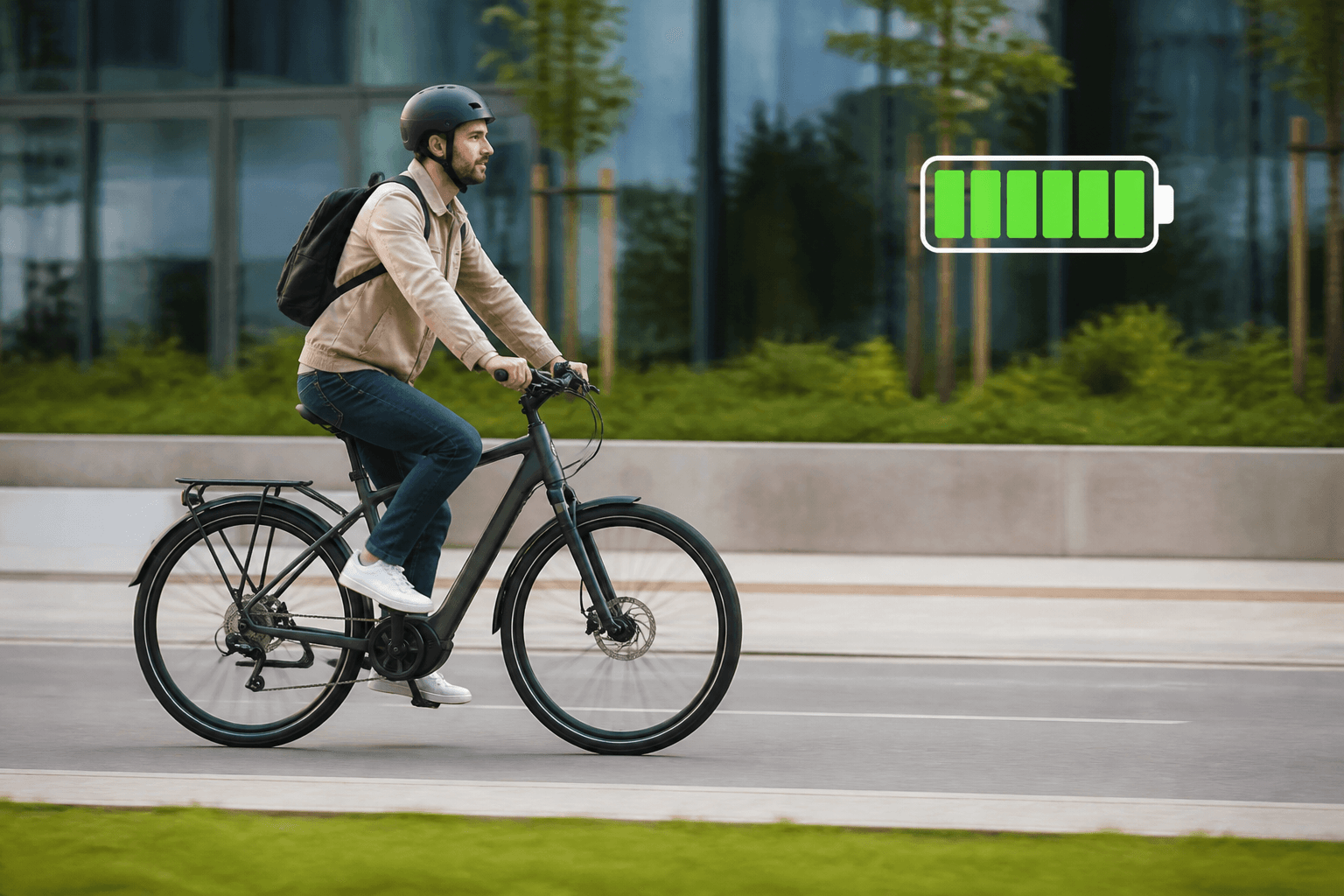
The motor's power directly affects how quickly you drain the battery. A 750W motor uses more energy per mile, especially in high-assist modes. Our range estimates show that a 720 Wh battery lasts 94 km in easy riding (Eco, flat) but only 20 km in hard riding (Turbo, steep). That is a huge difference, and it is why battery size matters as much as motor power.
But you are not always in Turbo. Most riders use a mix of modes. In ordinary riding (Tour, rolling hills), the same 720 Wh battery gives 48 km. In cold weather, that drops to 40 km. So if you ride a 750W bike and use the power often, expect shorter range than a 250W bike ridden gently.
Battery size varies widely. The median battery in our catalogue is 720 Wh, but you can find as small as 192 Wh (Ridel Cruzzer) and as large as 1440 Wh (Troxus Trax Plus). A larger battery gives you more range, but it also adds weight and cost. The Troxus Trax Plus weighs 32.7 kg, making it a heavy bike to pedal without power.
To estimate your own range, use our range calculator. It accounts for battery size, assist mode, terrain, tires, temperature, and rider weight. You can see how a 250W bike with a 720 Wh battery compares to a 750W bike with the same battery under your conditions.
Legal Limits: Where You Can Ride a 250W or 750W E-Bike
The law is where the 250W vs 750W decision becomes critical. In the United States, federal law classifies e-bikes with motors up to 750W as bicycles, provided they have pedals and a top speed of 20 mph (32 km/h) for class 2 or 28 mph (45 km/h) for class 3. That means most 750W e-bikes are legal on roads and bike paths, but some states and local jurisdictions have their own rules.
In the European Union, the standard for road-legal e-bikes is 250W continuous power and a top speed of 25 km/h (15.5 mph). Anything more powerful is classified as a moped or motorcycle, requiring registration, insurance, and a helmet. If you plan to ride in Europe, a 250W motor is the safe choice.
Even within the US, there are exceptions. Some national parks and trails restrict e-bikes to 250W or class 1 (pedal-assist only, no throttle). If you want to ride on singletrack or in protected areas, check the rules. A 750W bike might be illegal there, while a 250W bike is fine.
If you are unsure, our find-my-ebike tool can help narrow down bikes that meet your local regulations. It asks a few questions and returns models from our catalogue that fit your needs.
Cost Considerations: Power Affects Price and Running Costs
Generally, more power means a higher price. The median price in our catalogue is 1399 USD, but you can find 250W bikes for as little as 399 USD (Fiido D3 Pro) and 750W bikes for up to 4499 USD (Cyrusher Trident). The extra cost buys better components, a larger battery, and often a more powerful motor.
But the purchase price is not the only cost. Servicing a mid-drive motor costs 180 EUR a year, compared to 120 EUR for a hub motor. Over five years, that adds up. Our cost-of-ownership calculator shows that a median bike costs 1642 EUR over five years, including charging (63 EUR), servicing (600 EUR), and depreciation. The bike is worth 316 EUR at the end, so the net cost is lower than you might think.
Electricity is cheap. Charging a median battery costs 0.20 EUR per charge. Riding 100 km costs 0.42 EUR in electricity. Even with servicing, riding 3000 km a year costs 133 EUR on a hub motor. Compare that to driving, which costs 0.24 EUR per km in depreciation alone. Riding an e-bike can save you money if you replace car trips.
If you ride 50 km a week instead of driving, you save 486 EUR a year. A 1295 EUR bike pays for itself in 32 months. Ride 100 km a week, and the payback drops to 14 months. The more you ride, the faster the bike pays for itself. Use our savings calculator to see your potential savings.
Battery and Motor Compatibility: What to Look For
When choosing between 250W and 750W, consider the battery and motor as a system. A powerful motor with a small battery will give you short range. A 750W motor with a 192 Wh battery (like the Ridel Cruzzer) would be impractical, but that bike has a 250W motor and still only manages 14 km estimated range. The point is to match battery size to your needs.
Battery size is measured in watt hours (Wh). The median battery is 720 Wh, which gives 48 km in ordinary riding. If you need more range, look for a larger battery. For example, the Troxus Trax Plus has a 1440 Wh battery and an estimated range of 103 km, but it weighs 32.7 kg. A lighter bike with a smaller battery might be easier to handle.
Replacing a battery is a major cost. A 720 Wh pack costs 864 EUR to replace. Over the life of the bike, you might need one replacement after 800 charge cycles, which is about 38400 km. That is a significant expense, so consider battery longevity when choosing a bike.
Also, check the motor type. Hub motors are simpler and cheaper to service, but mid-drive motors are more efficient on hills and feel more natural. If you choose a mid-drive, expect higher servicing costs. Our cost-of-ownership calculator can show you the five-year total for any bike in our catalogue.
Comparing Real Models: 250W and 750W in the Catalogue
To make the choice concrete, look at real bikes. The Fiido D3 Pro is a 250W folding bike with a 374 Wh battery, weighing 17.7 kg. It costs 399 USD and has an estimated range of 28 km. It is cheap, light, and legal everywhere, but it is not for steep hills or long rides.
At the other end, the Cyrusher Trident is a 750W mountain bike with a 1040 Wh battery, weighing 26.8 kg. It costs 4499 USD and has an estimated range of 60 km. It can handle steep trails and heavy riders, but you pay for that power.
Between these extremes, the Velotric Nomad 1 is a 750W bike at the median price of 1399 USD. It has a 691 Wh battery and an estimated range of 40 km. It is a good all-rounder for commuting and light trails. The HITWAY BK15M is a 750W mountain bike for 700 USD, making it the cheapest way to get 750W, but it weighs 28.6 kg and has a 720 Wh battery with a 42 km estimated range.
When comparing models, look beyond the motor wattage. Check the battery size, weight, and estimated range. Use our bike catalogue to filter by power, price, and type. You can also use the find-my-ebike tool to get personalized recommendations.
Which Power Is Right for You? A Practical Guide
Start by assessing your terrain and riding style. If you live in a flat city and ride less than 20 km a day, a 250W bike with a small battery may be enough. It will be cheaper, lighter, and legal everywhere. The Fiido D3 Pro is a good example, but even a 250W bike with a 720 Wh battery will give you 94 km in easy riding.
If you face hills, carry groceries, or want to arrive without sweating, a 750W motor makes sense. The extra power reduces your effort and time. But be prepared for a heavier bike and a higher price. A 750W bike with a 720 Wh battery will give you 48 km in ordinary riding, which is enough for most commutes.
Consider your physical fitness. If you enjoy pedaling and want exercise, a 250W motor will give you a workout while still assisting. If you have a long commute or physical limitations, a 750W motor can make riding feasible.
Finally, think about the future. Will you ride more as you get comfortable? Will you move to a hillier area? Buying a 750W bike now might save you from upgrading later. But if you are on a budget, a 250W bike is a great starting point.
Once you have an idea of the power you need, use our find-my-ebike tool to narrow down the options. It will ask about your budget, terrain, and preferences, then suggest bikes from our catalogue.
Remember, the motor wattage is just one spec. The battery, weight, and motor type matter just as much. A well-matched 250W bike can outperform a poorly matched 750W bike in real-world riding. So, focus on the whole package, not just the watts.
Frequently asked questions
Is a 750W e-bike faster than a 250W e-bike?
Yes, but only up to a point. Most e-bikes are limited to 20 mph (32 km/h) or 28 mph (45 km/h) depending on class. A 750W motor can reach that limit more quickly and hold it better on hills, but the top speed is often capped by law.
Does a 750W motor drain the battery faster?
Yes, generally. A 750W motor uses more power, especially when you ride hard or climb steep hills. Our range estimates show that a 720 Wh battery lasts 94 km in easy riding but only 20 km in hard riding, regardless of motor wattage, but a 750W motor encourages harder riding.
Can I ride a 750W e-bike anywhere?
Not everywhere. In the US, 750W is the legal limit for class 2 and class 3 e-bikes on most public lands, but some areas restrict to 250W. Check local laws. In the EU, 250W is the standard for road-legal e-bikes.
Is a 250W motor enough for hills?
For moderate hills, yes, if you pedal. For steep hills, a 250W motor may struggle, especially if you are heavy or carry cargo. A 750W motor provides more torque, making hill climbing easier without exhausting you.
Which is better for commuting, 250W or 750W?
It depends on your commute. If it's flat and you want to pedal, 250W is efficient and legal everywhere. If it's hilly or you want to arrive without sweating, 750W gives more assistance. Our savings calculator shows you can save money riding either, but the bike cost and maintenance matter.