
Store your e-bike battery at about 50 percent charge, in a cool place, and it will survive winter without losing capacity. That is the short answer. The long answer involves temperature, charge level, and how many charge cycles you have used. This guide explains what the specifications say, so you can make your own decision.
Why winter storage matters
An e-bike battery is a consumable part. The catalogue lists a median battery of 720 Wh, and the published cycle life is 800 full cycles. A full cycle is using 100 percent of the battery's capacity, whether in one ride or over several. After 800 cycles, the battery is considered worn out. The cost to replace a 720 Wh pack is 864 EUR, at the published rate of 1.2 EUR per Wh.
Winter storage can eat into that cycle life. If you store the battery at 100 percent charge, it stresses the cells. If you store it at zero, it can fall below the minimum voltage. Both can shorten the battery's life. The ideal is a partial charge, around 50 percent, which puts the least stress on the chemistry.
What the cycle life number really means
The published cycle life is 800 full cycles. That number is an average. Some batteries last longer, some shorter. The way you use and store the battery affects how many cycles you get. Each full cycle reduces the battery's capacity slightly. After 800 cycles, you might see a noticeable drop in range.
How many kilometers is 800 cycles? For the median battery, the worked example shows 38400 km before a pack reaches 800 cycles. That assumes ordinary riding, which uses about 15 Wh per km. Your own number depends on your riding style and conditions. Use the range calculator to estimate your range, then divide your annual kilometers by that to see how many cycles you use per year.
The ideal storage charge
Most manufacturers recommend storing at 50 percent charge. Why 50 percent? At that level, the battery's voltage is in the middle of its range. Storing at 100 percent keeps the cells at a high voltage, which accelerates chemical reactions that degrade the battery. Storing at 0 percent can let the voltage drop too low, which can permanently damage the cells.
If you are storing for a few weeks, a 50 percent charge is fine. If you are storing for a whole season, check the charge every month or two. If it drops below 20 percent, top it up to 50 percent. This keeps the battery in the safe zone.
| Storage duration | Charge level | What to do |
|---|---|---|
| A few weeks | 50 percent | Charge to 50 percent, then store |
| A month or two | 50 percent | Check monthly, top up if below 20 percent |
| A whole winter | 50 percent | Check every 6 weeks, top up as needed |
Temperature: where to keep the battery
The ideal storage temperature is cool, but not freezing. A range of 10 to 20 degrees Celsius is often cited. Avoid storing the battery in a hot garage or a freezing shed. Extreme heat can cause the battery to degrade faster. Extreme cold can make the battery sluggish and, if charged while frozen, can cause damage.
The range formula includes a temperature multiplier: mild is 1, cold is 1.2. This means that in cold weather, the battery produces less usable energy. The worked example shows a 720 Wh battery gives 48 km in ordinary riding, but only 40 km in the cold. That is a 20 percent reduction. So if you ride in winter, expect shorter range.
How many cycles have you used?
Before you store the battery, it helps to know how many cycles you have used. That tells you how much life is left. The battery life is 800 full cycles. If you ride 50 km a week, you might use about 1 cycle per week, depending on your battery size. Over a year, that is about 50 cycles. Over 5 years, 250 cycles. That leaves plenty of life.
But if you ride 200 km a week, you might use 4 cycles per week. Over a year, that is over 200 cycles. Over 5 years, you would exceed 800 cycles. That means the battery would need replacement during the bike's life. The cost of a replacement pack is significant. For a median 720 Wh battery, it is 864 EUR.
Should you remove the battery?
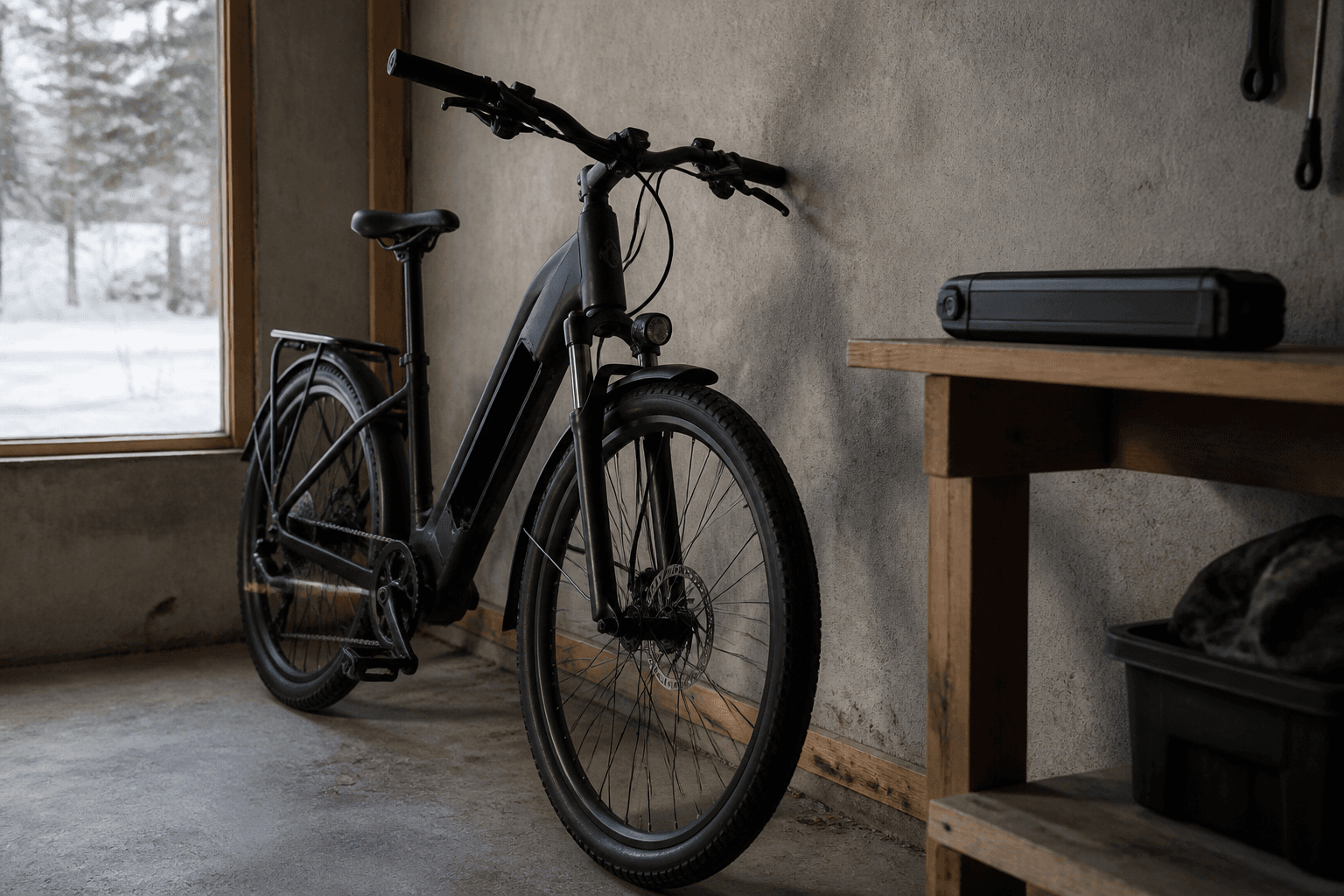
Most e-bikes have removable batteries. Removing the battery for storage is a good idea. It makes it easier to store at the right temperature. It also prevents the bike's electronics from slowly draining the battery. Some bikes have a standby drain that can pull the battery down over weeks.
If your battery is not removable, you can still store the bike indoors. But be aware that the battery is attached to the bike, and the bike's systems may draw power. Check the charge level periodically.
What about the bike itself?
Winter storage is not just about the battery. The bike also needs care. Clean it, lubricate the chain, and check the tires. If you store the bike with tires inflated, they may lose pressure. Over months, tires can develop flat spots. Consider storing the bike with the wheels off the ground, or at least check the pressure periodically.
The frame and components can also suffer from moisture. Store the bike in a dry place. If you store it in a shed, use a cover. But the battery should always come inside, if possible.
Using the battery calculator
To plan your winter storage, you need to know your battery's capacity and how many cycles you use. The battery calculator can help. It converts amp hours and volts into watt hours, and estimates range and charge cost. You can also use it to see how much a replacement pack would cost.
The cost of a new battery
If you do not store the battery properly, you might need a new one sooner. The cost of a replacement pack is 1.2 EUR per Wh. For a median 720 Wh battery, that is 864 EUR. That is a significant expense. For a bike that costs 1299 USD, the battery is a large part of the value.
The cost of ownership calculator shows that over five years, the median bike costs 1573 EUR in total, including charging, servicing, and resale. The battery replacement is not included in that figure. If you need a new battery during that time, the cost goes up.
What to do now
Before you put your e-bike away for winter, do these steps. First, clean the bike and check for any damage. Second, charge the battery to about 50 percent. Third, remove the battery and store it in a cool, dry place. Fourth, check the battery's charge every month or so. Finally, when spring comes, charge the battery fully before your first ride.
If you are unsure about your battery's capacity or how to calculate cycles, use the battery calculator. It will give you the numbers you need. And if you are thinking of buying a new e-bike, compare models on our catalogue. Winter storage is just one part of owning an e-bike. The right battery care will save you money in the long run.
Frequently asked questions
What charge level should I store my e-bike battery at?
Aim for around 50 percent. Storing at 100 percent or at zero stresses the cells. Check your manual, as some batteries have a storage mode.
Can I leave my e-bike outside in winter?
The bike can handle cold, but the battery should come inside. Cold reduces range and can damage the cells if charged when frozen.
How often should I charge the battery during storage?
Check the charge every month or two. If it drops below 20 percent, top it up to 50 percent. This keeps the battery in a safe zone.
Does winter storage void my battery warranty?
Most warranties cover defects, not damage from improper storage. Follow the manufacturer's guidelines to avoid issues.
Should I remove the battery from the bike for storage?
Yes, if you can. It makes it easier to store at room temperature and reduces drain from the bike's electronics.