
A direct-to-consumer e-bike arrives in a box, not a showroom. You assemble it, you set it up, and you deal with the brand directly for support. That changes everything about warranty, returns, and servicing. Here is what you need to know before you spend your money.
What Direct-to-Consumer Means for You
Direct-to-consumer (DTC) brands sell online and ship the bike to your door. No dealer, no test ride, no one to hand you the keys. The trade-off is price. In our catalogue of 505 bikes, the median price is 1299 USD, and a quarter of bikes are under 960 USD. That is lower than many dealer models, but you give up the services a dealer provides.
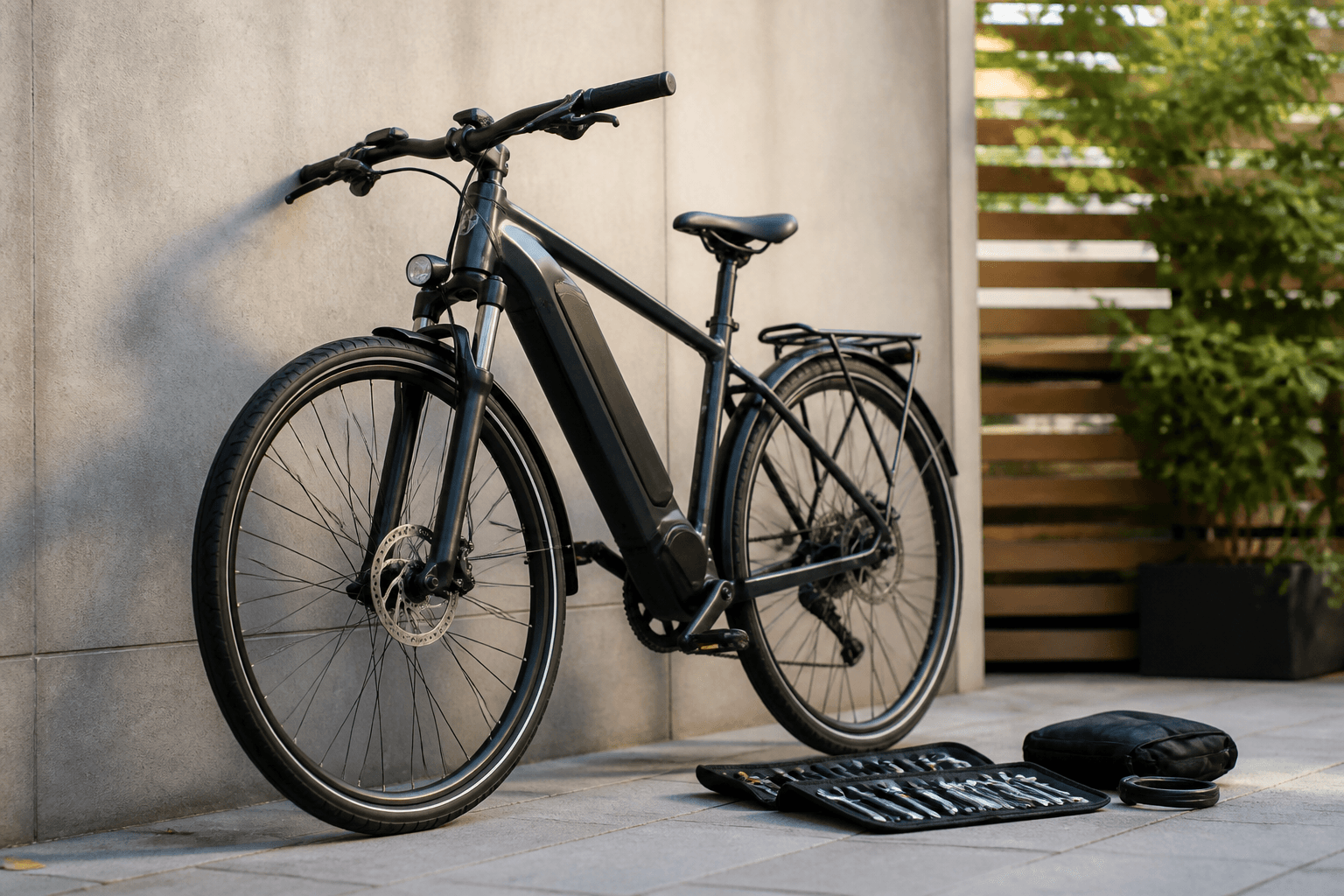
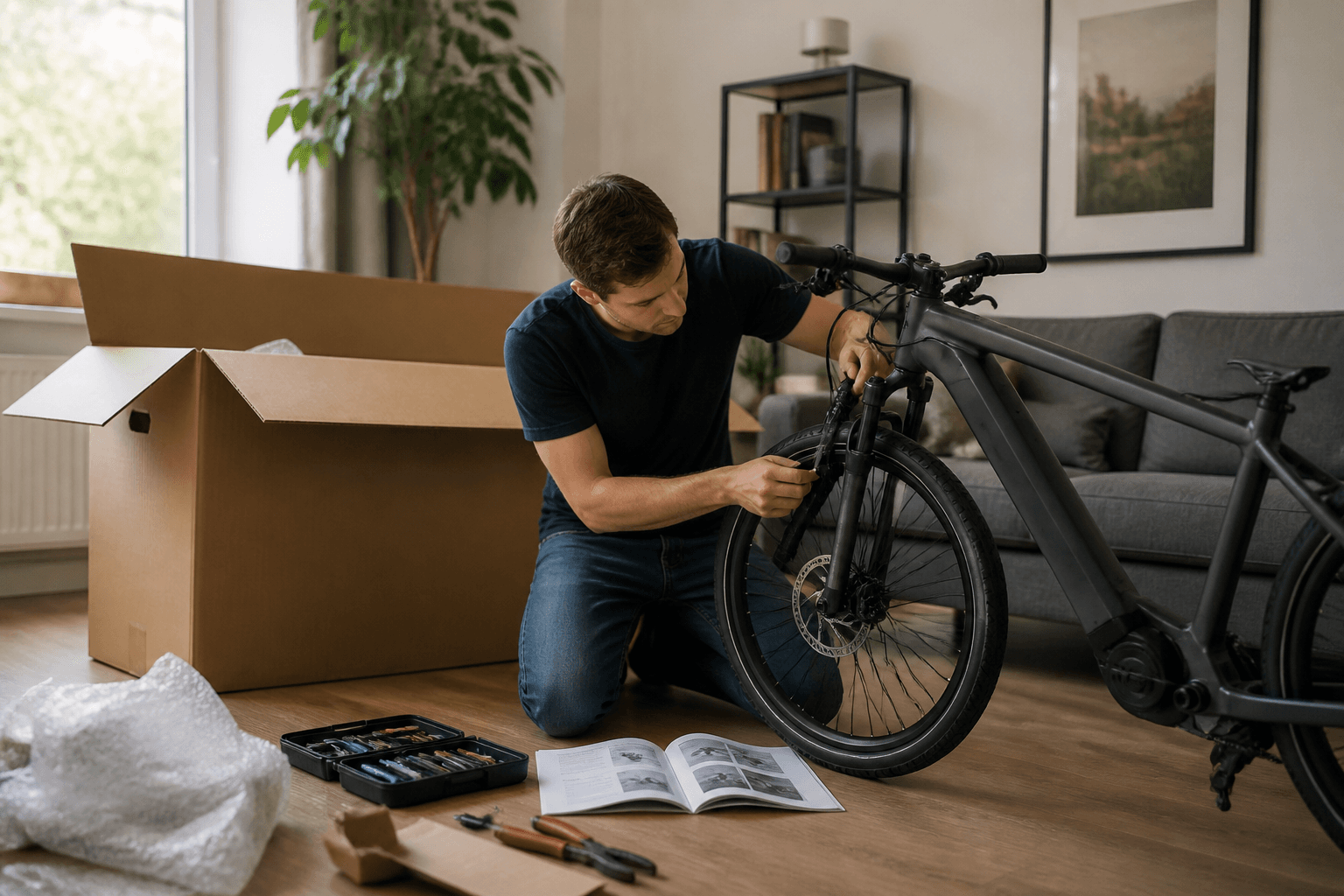
When you buy from a DTC brand, you are the first line of support. The bike arrives partially assembled. You attach the front wheel, handlebars, pedals, and sometimes the fenders or rack. You need basic tools and a little mechanical confidence. If you are not comfortable with that, factor in the cost of a local shop to assemble it for you.
The savings can be real. The cheapest bike in our catalogue, the Fiido D3 Pro, costs 399 USD. Even a mid-priced folding bike like the Heybike Ranger S at 1299 USD is far less than many dealer models. But the price tag is only the start. You also need to consider what happens when something goes wrong.
Warranty: Who Fixes What
A warranty is a promise to fix or replace a faulty part. With a DTC brand, that promise is handled by mail. You contact the brand, they send you a replacement part, and you install it. Some brands cover the cost of a local shop to do the work, but many do not.
Warranty terms vary. Some brands cover the frame for 5 years, the motor for 2 years, and the battery for 1 year. Others offer a single 1-year warranty on everything. Read the warranty document before you buy. Look for what is excluded: normal wear, misuse, or damage from improper assembly. Also check if you must register the bike or keep the original box.
When a part fails, you may need to diagnose the problem yourself. The brand's support team might ask you to send photos or videos. They may ship a new part, but you install it. If the motor fails, that is a bigger job. You might need to send the whole wheel or the bike back, which can be costly and slow.
| Warranty Aspect | What to Check |
|---|---|
| Length | How many years on frame, motor, battery? |
| Coverage | What parts are covered? Labor? |
| Process | Do you ship parts or the whole bike? |
| Exclusions | What voids the warranty? Water damage? |
| Registration | Do you need to register within 30 days? |
Returns: The Box Goes Back
You cannot test ride a DTC bike before buying. That is why return policies matter. Most brands offer a trial period, often 30 days. If you do not like the bike, you can return it for a refund. But read the fine print.
You may have to pay return shipping, which can be 100 to 200 USD for a heavy e-bike. Some brands charge a restocking fee, often 10 percent of the price. Others only accept returns if the bike is in like-new condition, with all original packaging. If you scratch the frame during assembly, that could count as damage.
Before you order, find out who pays for return shipping. Some brands offer free returns, but many do not. Also check the time limit. 30 days is common, but some give only 14 days. And if the bike arrives damaged, the brand should cover the return, but you need to report it within a few days of delivery.
Servicing: Who Turns the Wrenches
Every e-bike needs service. Brakes wear, tires go flat, chains stretch. With a DTC bike, you have three options: do it yourself, find a local shop that will work on it, or use a mobile mechanic. The best choice depends on your skills and your bike.
Some local bike shops refuse to service e-bikes they did not sell. They worry about parts availability and liability. Others welcome any e-bike, especially if you bring the brand's support contact. Call ahead and ask. Also ask if they can order parts from the brand or if you must supply them.
If you are handy, you can do a lot yourself. Changing brake pads, adjusting derailleurs, and replacing tires are common tasks. For motor or battery issues, you will likely need the brand's help. Some brands offer online chat or video support to guide you through repairs.
The Hidden Costs of Going DTC
The purchase price is not the only cost. You may need to buy tools, pay for assembly, or ship the bike for warranty work. Also, consider the battery. A replacement pack is expensive. For a median 720 Wh battery, a replacement costs 864 EUR at 1.2 EUR per Wh. That is a big expense down the road.
Batteries degrade over time. Our formula assumes a battery lasts 800 full cycles. For a median battery, that is 38400 km. If you ride 5000 km a year, that is more than 7 years. But if you ride 10000 km a year, you might need a new battery in under 4 years. Plan for that cost.
| Battery Size (Wh) | Ordinary Range (km) | Replacement Cost (EUR) |
|---|---|---|
| 374 | 25 | 449 |
| 504 | 33 | 605 |
| 614 | 41 | 737 |
| 720 | 48 | 864 |
| 1040 | 69 | 1248 |
Servicing is another ongoing cost. Our formula assumes 100 EUR per year for servicing, but that is for a mid-drive motor. Hub motors are cheaper at 120 EUR per year? Actually, the formula says hub motor 120 EUR per year and mid-drive 180 EUR per year. So budget accordingly. And if you cannot do your own work, shop rates add up.
What to Look For in a DTC Brand
Not all DTC brands are equal. Some have been around for years and have a solid reputation. Others are new and may not be around when you need support. Look for a brand that has been in business for a while, has a physical address, and offers phone support. Email-only support can be slow.
Check the brand's return policy and warranty in writing. Look for reviews from independent sources, not just the brand's website. Also, see if the brand sells spare parts like brake pads, tires, and batteries. If they do not, you may struggle to find replacements.
- How long has the brand been selling e-bikes?
- Do they have a physical office or warehouse?
- What do independent reviews say?
- Can you reach a human by phone?
- Do they sell spare parts for your model?
Real Examples from Our Catalogue
To see how DTC pricing works, look at some real bikes. The Fiido D3 Pro is the cheapest in our catalogue at 399 USD. It is a folding bike with a 374 Wh battery and an estimated range of 28 km. That is a low price, but the battery is small and the range is short. If you need more range, you will pay more.
On the other end, the Cyrusher Trident Full Suspension costs 5799 USD, the most expensive in our catalogue. It has a 1040 Wh battery and an estimated range of 58 km. That is a serious investment. With that kind of money, you might expect dealer support, but it is still a DTC bike.
Between those extremes, you have bikes like the Heybike Ranger S at 1299 USD, the median price. It is a folding bike with a 720 Wh battery and an estimated range of 53 km. That is a typical DTC bike: good value, but you need to be self-sufficient.
How to Decide If DTC Is Right for You
Start with your own skills and situation. Are you comfortable with basic bike maintenance? Do you have a local shop that will work on any e-bike? Can you handle the assembly? If you answered no to any of these, a DTC bike might still be fine, but budget for professional help.
Also think about how you will use the bike. If you ride 50 km a week, you might save 486 EUR a year compared to driving, according to our savings calculator. A 1203 EUR bike would pay for itself in 30 months. That is a solid argument for going DTC to save money upfront.
The Real Cost of Ownership
When comparing DTC bikes, do not just look at the sticker price. Use our cost of ownership calculator to see the five-year total. For a median bike, that total is 1573 EUR, including charging, servicing, and resale. That works out to 0.10 EUR per km. That is far less than driving, but it is more than the purchase price alone.
Charging is cheap. Charging a median battery once costs 0.20 EUR at 0.28 EUR per kWh. If you ride 5000 km a year, electricity costs 21 EUR. Servicing is the bigger cost. At 100 EUR per year, that is 500 EUR over five years. And if you need a new battery, that is another 864 EUR for a 720 Wh pack.
Resale value helps. Our formula assumes a resale value of 0.6 times the original price, depreciated over time. For a median bike, that is 293 EUR after five years. So the net cost is lower than you might think.
What to Do Next
Before you buy a DTC e-bike, do your homework. Read the warranty and return policy. Check if a local shop will service it. Budget for assembly and future battery replacement. And compare models using our catalogue.
If you are handy and willing to learn, a DTC bike can save you money. If you want a dealer to handle everything, you might pay more for that convenience. Either way, make an informed choice.
Remember, the cheapest bike is not always the best value. Consider the total cost of ownership, including battery replacement and servicing. A slightly more expensive bike with a larger battery might save you money in the long run if it lasts longer.
And always check the estimated range, not the claimed range. In our catalogue, the median overclaim is 50 percent. A bike that claims 97 km might only do 47 km in ordinary riding. Use our range calculator to get a realistic estimate for your conditions.
Buying an e-bike from a DTC brand can be a great decision if you know what you are getting into. The price is right, but you trade away the dealer safety net. Do your research, and you will be happy with your purchase.
Frequently asked questions
What is a direct-to-consumer e-bike?
A direct-to-consumer (DTC) e-bike is sold online by the brand, without a physical dealership or showroom. You order it, and it arrives in a box, often partially assembled. This model cuts out the middleman, which can lower the price, but it also means you are responsible for assembly, setup, and finding your own service options.
How does the warranty work on a DTC e-bike?
Warranties on DTC e-bikes are typically handled directly with the brand, not a local shop. You may need to ship parts back or receive replacements by mail. Some brands offer a warranty that covers the frame, motor, and battery for a certain number of years, but the terms vary widely. Always read the warranty document before buying, and check if you must register the bike or keep proof of purchase.
What if I need to return a DTC e-bike?
Return policies for DTC e-bikes vary. Some brands offer a trial period, like 30 days, during which you can return the bike for a refund, but you may have to pay for return shipping, which can be expensive for a heavy bike. Others only accept returns if the bike is unused or defective. Before buying, confirm the return window, restocking fees, and who pays for shipping.
Can I get a DTC e-bike serviced at a local bike shop?
Many local bike shops will service e-bikes, but some refuse to work on brands they don't sell, especially if they can't get parts. Before buying, ask a few shops in your area if they service DTC e-bikes. Also, check if the brand sells spare parts directly and offers online support or video guides for common repairs.
Are DTC e-bikes cheaper than those from dealers?
Often yes, because you are not paying for a dealer's overhead. In our catalogue, the median price is 1299 USD, and a quarter of bikes are under 960 USD. But the total cost includes assembly, any tools you need, and possibly shipping fees. Also, consider the cost of servicing if you can't do it yourself.