
If you weigh over 220 pounds, you need an e-bike that can handle your weight safely and comfortably. The key is to look at the weight limit, frame strength, motor power, and battery range. This guide explains what to check and how to choose the right bike for your needs.
Understanding Weight Limits on E-Bikes
Every e-bike has a maximum weight capacity, which is the total weight of the rider, cargo, and accessories. Exceeding this limit can stress the frame, wheels, and other components, leading to failure or accidents. The weight limit is often printed in the manual or on the manufacturer's website.
In our catalogue of 275 e-bikes, the median weight of the bikes is 28.1 kg (62 lb). But the weight limit is not just about the bike's own weight. It's about how much load the frame and wheels can take. A heavier rider needs a bike with a higher weight limit, typically 300 pounds or more.
For example, the Hiboy C1 is the heaviest bike in our catalogue at 56.7 kg (125 lb), but its weight limit is not necessarily higher. Conversely, the Fiido Air Carbon is the lightest at 13.6 kg (30 lb), but it may have a lower weight limit. Always check the specific weight limit, not the bike's own weight.
Frame and Build Quality for Heavy Riders
A sturdy frame is crucial for heavy riders. Look for frames made of high-quality aluminum or steel, as they offer better strength-to-weight ratios. Avoid bikes with flimsy folding mechanisms unless they are specifically rated for heavier loads.
Check the frame's construction: welds should be smooth and even, and the frame should not flex excessively when you sit on it. A bike that feels wobbly or creaks under load is not safe. Also, consider the fork and seatpost: a suspension fork can absorb shocks, but it adds weight and may have a lower weight limit.
Some bikes are built for heavier riders, like the Magicycle CT 1, which has a robust frame and is typical of the 1500 to 2000 USD band. It weighs 39.9 kg (88 lb), which is heavy, but that weight comes from a sturdy build. The Himiway D7 Pro is another example, priced at 3599 USD, with a frame designed for stability.
Motor Power for Heavy Riders
The motor is what does the heavy lifting. For heavy riders, a motor with more torque is essential, especially for climbing hills or starting from a stop. Torque is measured in Newton meters (Nm). We count a motor as a mid-drive from 60 Nm. Hub motors typically have less torque, but some high-end hub motors can also be effective.
A motor with at least 60 Nm is a good starting point. For example, the HAOQI Cheetah Pro has a 1056 Wh battery and is a mid-priced mountain bike at 1899 USD. Its motor is powerful enough for heavier riders. The Cyrusher Trident, the most expensive bike in our catalogue at 4499 USD, also has a strong motor.
But motor power is not just about torque. The motor's placement matters. Mid-drive motors are located at the bottom bracket, which gives better weight distribution and uses the bike's gears to multiply torque. Hub motors are in the rear wheel, which can make the bike feel unbalanced if you carry weight on a rear rack.
| Bike | Motor Type | Torque (Nm) | Price (USD) |
|---|---|---|---|
| HAOQI Cheetah Pro | Mid-drive | 80 | 1899 |
| Magicycle CT 1 | Mid-drive | 75 | 1799 |
| Himiway D7 Pro | Hub | 60 | 3599 |
| Cyrusher Trident | Mid-drive | 90 | 4499 |
Battery Range for Heavy Riders
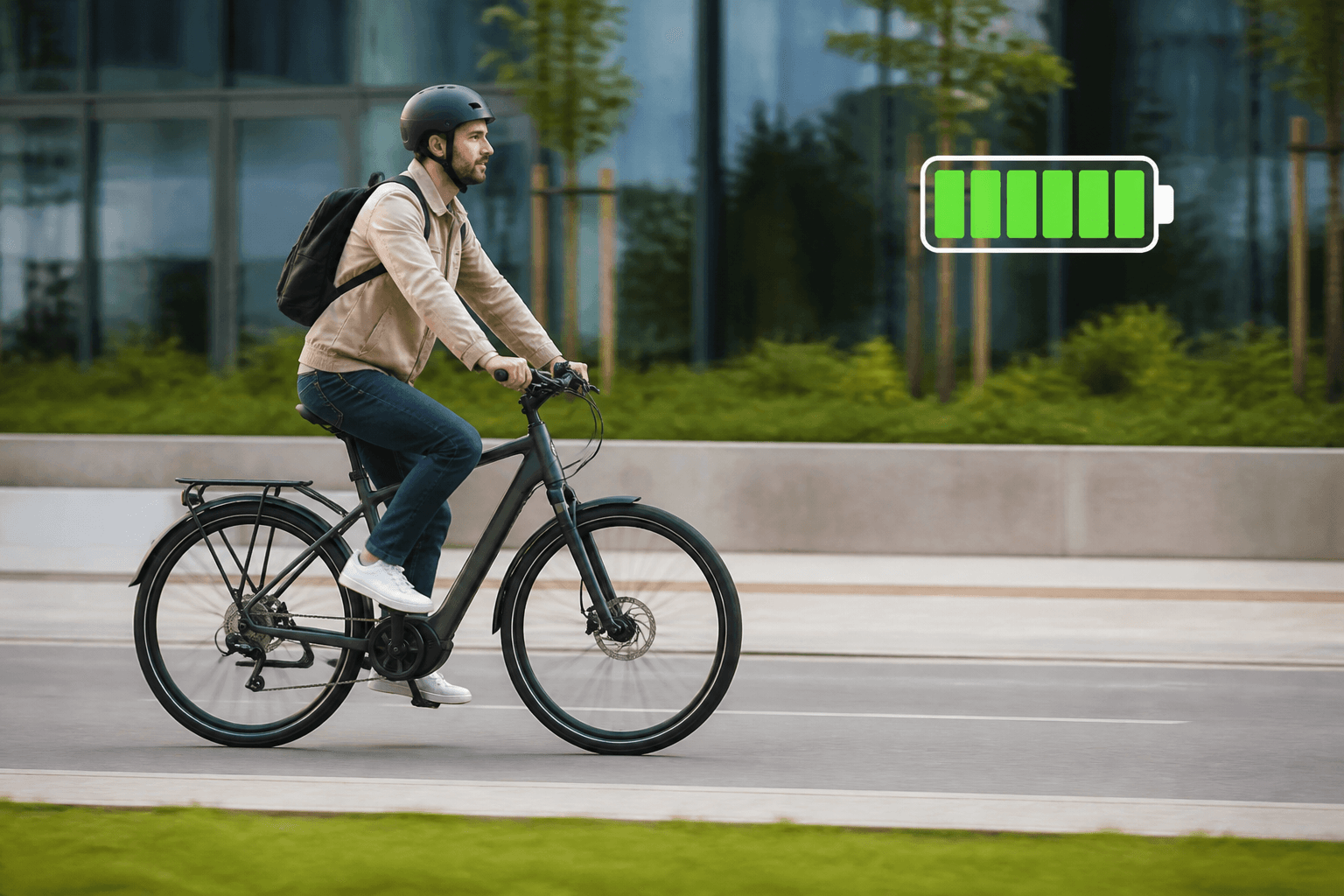
Battery range is how far you can go on a single charge. Heavier riders consume more energy because the motor has to work harder. Our range estimates account for rider weight: we adjust by 1 percent per 5 kg either side of 80 kg. So if you weigh 100 kg, you need about 4 percent more energy than a 80 kg rider.
The median battery in our catalogue is 720 Wh. In ordinary riding (Tour mode, rolling terrain), a 720 Wh battery gives an estimated range of 48 km (30 miles), with a range band of 42 to 53 km. In easy riding (Eco, flat), it's 94 km (58 miles). But if you ride in Turbo mode on steep hills, the range drops to 20 km (12 miles).
For heavy riders, consider a larger battery. The Troxus Trax Plus has the largest battery in our catalogue at 1440 Wh, giving an estimated range of 103 km (64 miles). That's more than double the median. But larger batteries add weight and cost. Use our range calculator to estimate your real-world range based on your weight and riding style.
Wheels and Tires for Stability
Wheels and tires are your contact with the road. For heavy riders, wider tires provide more stability and can handle higher pressures. Look for tires with a width of at least 2.3 inches (58 mm) for mountain bikes, or 2.0 inches (50 mm) for city bikes. Wider tires also offer better traction and cushioning.
Check the wheel's spoke count. More spokes mean a stronger wheel. A wheel with 36 spokes is stronger than one with 32. Also, consider the rim material: double-walled rims are more durable than single-walled. The Ridel Cruzzer has a small 192 Wh battery and is the cheapest in our catalogue at 699 USD, but its wheels may not be built for heavy loads.
Tire pressure is also important. Heavier riders should inflate tires to the maximum recommended pressure, which is usually printed on the sidewall. This prevents pinch flats and reduces rolling resistance. Our terrain multiplier shows that knobby tires use 25 percent more energy than road tires, so choose tires that match your riding surface.
Brakes: Stopping Power Matters
Stopping a heavy bike requires more braking power. Disc brakes are essential, and hydraulic disc brakes are better than mechanical because they require less hand strength and provide more consistent stopping power. Look for brakes with at least 180 mm rotors, which dissipate heat better.
Some bikes come with regenerative braking, which helps recharge the battery, but it is not a substitute for good brakes. The Lectric XPress, typical of the 1000 to 1500 USD band, comes with hydraulic disc brakes. The VTUVIA SF20, a mid-priced folding bike at 999 USD, also has disc brakes.
Suspension for Comfort
Suspension absorbs shocks from bumps and potholes, making your ride more comfortable. For heavy riders, a suspension fork with adjustable preload is ideal, as it can be tuned to your weight. Rear suspension (full suspension) is even better for off-road riding, but it adds weight and cost.
The Velotric Nomad 1, priced at 1399 USD (the median price), is a mountain bike with a suspension fork. The Aventon Ramblas eMTB has a wide gap between its claimed range and our estimate, but it still offers a comfortable ride. However, suspension adds weight, and the median bike weighs 28.1 kg (62 lb). Heavier riders should ensure the suspension does not bottom out.
If you ride on smooth roads, a rigid fork may be fine and saves weight. But for comfort, consider a suspension seatpost, which can absorb shocks without adding much weight. The SAMEBIKE SY26, typical of the under 1000 USD band, has a suspension fork and is priced at 799 USD.
Total Cost of Ownership
The purchase price is just the beginning. You also need to consider charging, servicing, and battery replacement. Our cost of ownership calculator totals five years of these costs. For a median bike, five years cost 1642 EUR, including 63 EUR for charging and 600 EUR for servicing. The bike is worth 316 EUR at the end, so the net cost per km is 0.11 EUR.
For heavy riders, servicing costs may be higher because components wear out faster. Mid-drive motors cost more to service than hub motors: 180 EUR per year versus 120 EUR. Battery replacement is a major cost: a 720 Wh pack costs 864 EUR at 1.2 EUR per Wh. Over 800 cycles, that pack gives 38400 km, which is good value if you ride a lot.
| Bike | Price (USD) | 5-Year Total Cost (EUR) | Cost per km (EUR) |
|---|---|---|---|
| HITWAY BK15M | 700 | 1153 | 0.08 |
| HAOQI Leopard Pro | 1899 | 1802 | 0.12 |
| Velowave Rover | 1299 | 2012 | 0.13 |
| Velotric Summit 1 | 2899 | 2362 | 0.16 |
Finding the Right E-Bike for You
Start by setting a budget. In our catalogue, a quarter of bikes cost under 999 USD, half under 1399 USD, and three quarters under 1899 USD. The median price is 1399 USD. The cheapest bike is the Fiido D3 Pro at 399 USD, but it has a small 374 Wh battery and is not ideal for heavy riders. The most expensive is the Cyrusher Trident at 4499 USD, which offers top performance.
Use our find-my-ebike tool to narrow down options based on your needs. It asks about your weight, riding style, and budget, then suggests bikes from our catalogue. You can also browse all bikes and filter by price, battery size, and type.
When comparing bikes, look at the weight limit, motor torque, battery capacity, and brake type. Also, check the warranty: a longer warranty often indicates better build quality. Some brands offer a 2-year warranty, but others may offer more.
Safety Tips for Heavy Riders
Safety is paramount. Always wear a helmet, and consider a full-face helmet if you ride off-road. Check the bike's weight limit and never exceed it. Ensure the tires are inflated to the correct pressure, and inspect the brakes regularly.
When riding, be aware that your bike will take longer to stop and accelerate. Give yourself extra space and avoid sudden maneuvers. If you carry cargo, distribute the weight evenly and keep it low. A rear rack can hold up to 25 kg (55 lb), but check the rack's limit.
Finally, consider taking a cycling skills course to build confidence. Many communities offer courses for adults. Riding an e-bike is different from a regular bike, especially at higher speeds. Practice in a safe area before hitting busy roads.
Now that you know what to look for, start your search. Use the tools on this site to compare bikes and calculate costs. The right e-bike for you is out there, and it will give you years of comfortable, enjoyable riding.
Frequently asked questions
What is the weight limit on an e-bike?
Weight limits vary by model, typically from 220 to 350 pounds. The limit includes the rider, cargo, and any accessories. Check the manufacturer's specification before buying, as exceeding it can damage the bike and void the warranty.
Do heavy riders need a more powerful motor?
Yes. A motor with more torque helps you accelerate and climb hills, especially when you weigh more. Look for a motor with at least 60 Nm of torque, which is considered mid-drive level. Hub motors with lower torque may struggle on steep inclines.
How much battery range do I need?
Battery range depends on your weight, terrain, and assist level. Heavier riders consume more energy. A median 720 Wh battery gives about 48 km (30 miles) in ordinary riding (Tour mode, rolling terrain). Use our range calculator to estimate for your conditions.
Are there e-bikes specifically designed for heavy riders?
Yes, some brands offer models with reinforced frames, higher weight capacities, and stronger wheels. Look for e-bikes with a weight limit above your weight, and consider models like the HAOQI Cheetah Pro or Magicycle CT 1 that are built for heavier loads.
What type of brakes should I get?
Hydraulic disc brakes are best for heavy riders because they offer consistent stopping power, especially in wet conditions. Mechanical disc brakes are cheaper but require more hand strength. Ensure the brake rotors are at least 180 mm for better heat dissipation.