
The price tag on an e-bike is just the beginning. Battery replacement, tyres, brakes, drivetrain, servicing, accessories, electricity, insurance, and storage all add up. The good news: you can predict most of these costs before you buy. This guide breaks down every hidden cost, shows you what to budget, and gives you tools to calculate your own numbers.
Battery Replacement: The Big One
The battery is the most expensive component on an e-bike, and it will not last forever. Our formula assumes a battery life of 800 full charge cycles. After that, capacity drops noticeably. How far is 800 cycles? On a median 720 Wh battery, that is 38400 km of riding at ordinary pace. For most riders, that is several years, but if you ride daily or use high assist levels, you will get there sooner.
Replacement cost scales directly with battery size. At 1.2 EUR per Wh, a 720 Wh pack costs 864 EUR. Smaller packs are cheaper: a 374 Wh pack is around 450 EUR. But many budget bikes have small batteries, and you might need to replace them more often if you ride far. A 192 Wh pack on the Ridel Cruzzer costs only 230 EUR, but it gives you just 14 km of estimated range. You will charge it constantly.
Battery size varies wildly across the catalogue. The Troxus Trax Plus has a 1440 Wh pack, the largest we track. Replacing that would cost 1728 EUR. The smallest, on the Ridel Cruzzer, is 192 Wh. Most bikes fall in between. When you compare models, look at the watt hours, not just the price. A cheap bike with a tiny battery might cost you more in the long run.
| Battery size (Wh) | Replacement cost (EUR) | Ordinary range (km) |
|---|---|---|
| 192 | 230 | 13 |
| 374 | 450 | 25 |
| 518 | 622 | 34 |
| 720 | 864 | 48 |
| 1056 | 1267 | 70 |
| 1440 | 1728 | 95 |
Tyres, Brakes, and Drivetrain: Wear Items
E-bikes are heavy. The median bike in our catalogue weighs 28.1 kg. That weight, plus motor torque, wears out tyres, brake pads, chains, and cassettes faster than on a regular bike. You will replace these parts more often, and they cost real money.
Tyres
E-bike tyres need to handle higher speeds and heavier loads. Knobby tyres, common on mountain e-bikes, wear faster on pavement. A set of quality e-bike tyres can cost anywhere from 50 to 100 EUR or more. If you ride on rough surfaces, budget for replacements every couple of years. Puncture-resistant tyres cost more upfront but save you from frequent flats.
Brakes
Stopping a 28 kg bike plus rider takes a toll on brake pads. Hydraulic disc brakes, common on e-bikes, need pad replacements regularly. Rotors eventually wear out too. If you ride in hilly areas or stop often, expect to replace pads more frequently. Brake maintenance is not expensive if you do it yourself, but shop labour adds up.
Drivetrain
The chain, cassette, and chainring all wear with use. Motor power puts extra stress on the chain. A worn chain wears out the cassette faster. Replacing a chain is cheap, but a cassette and chainring cost more. Mid-drive motors, which drive through the chain, cause more drivetrain wear than hub motors. If you ride in the rain or mud, clean and lubricate the chain regularly to extend its life.
How much should you budget? Our cost-of-ownership model includes 0.04 EUR per km for maintenance, plus 100 EUR a year for servicing. Over five years, that is 600 EUR for servicing alone. That covers typical wear items and labour. If you ride 3000 km a year, the total maintenance and electricity cost is about 133 EUR a year for a hub motor bike. That is a realistic figure.
Servicing and Repairs: The Real Cost of Keeping It Running
Every e-bike needs regular servicing. Our formula sets annual servicing at 120 EUR for a hub motor and 180 EUR for a mid-drive. That covers checking brakes, gears, wheel bearings, and the motor system. Over five years, that is 600 EUR for a typical bike. If you cannot do basic maintenance yourself, shop labour adds up quickly.
Repairs beyond routine servicing can be expensive. A snapped chain, a broken spoke, or a faulty display all cost money. Some repairs require special tools or expertise. Budget a little extra each year for unexpected repairs. Our five-year total cost example for a median bike is 1642 EUR, which includes 600 EUR of servicing. That is a good baseline.
You can reduce servicing costs by learning to fix a flat, adjust brakes, and clean the drivetrain yourself. Many owners do their own basic maintenance and only visit a shop for motor or electrical issues. That can cut your annual servicing bill in half. But be careful: some warranties require professional servicing. Check your warranty terms before you skip the shop.
Accessories, Upgrades, and Electricity: The Nickel-and-Dime Costs
You will want accessories. A helmet, lights, lock, fenders, rack, and phone mount are almost essential. These add up to a few hundred dollars. Upgrades like a better saddle, suspension seatpost, or pannier bags cost even more. The bike itself is just the start.
Electricity costs are surprisingly small. Charging a median 720 Wh battery costs about 0.20 EUR at typical electricity rates. Riding 100 km costs about 0.42 EUR in electricity. Over a year of riding 1000 km, that is 4 EUR. Even at 5000 km a year, electricity is only 21 EUR. So do not worry about the electricity bill. It is negligible compared to maintenance and depreciation.
But electricity is not the only running cost. Our formula includes 0.04 EUR per km for maintenance, which covers tyres, brake pads, and chain. Add that to electricity and you get a realistic cost per km. For a hub motor bike riding 3000 km a year, the combined cost is 133 EUR. That is less than a car's insurance alone.
| Annual riding distance | Electricity cost (EUR) | Electricity + servicing (hub motor) (EUR) |
|---|---|---|
| 1000 km | 4 | 124 |
| 3000 km | 13 | 133 |
| 5000 km | 21 | 141 |
Insurance, Theft, and Storage: Costs You Might Forget
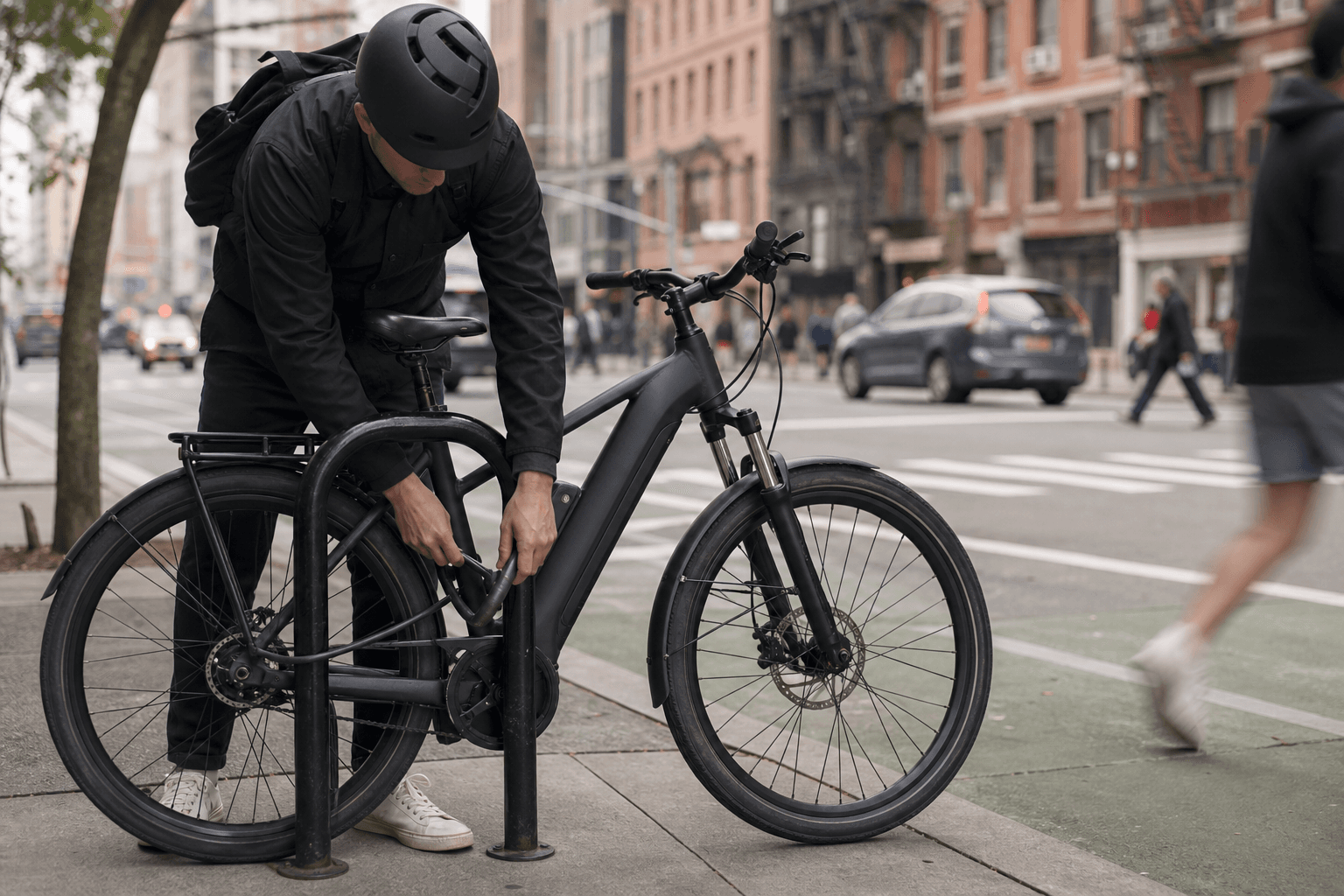
E-bikes are attractive to thieves. A good lock is essential, but even the best lock is not foolproof. Insurance for an e-bike costs money, especially if you want coverage for theft, damage, and liability. Some home insurance policies cover e-bikes, but many have limits. Dedicated e-bike insurance is available, and it is worth the peace of mind if your bike is expensive.
Storage is another cost. If you live in an apartment, you might need to pay for a bike locker or a spot in a garage. If you keep the bike indoors, you need space. A bike cover protects it from the weather if you store it outside. These costs vary widely, but they are real.
Theft is a risk you can mitigate. Register your bike, use a sturdy lock, and consider GPS tracking. But do not forget that a stolen bike is a total loss unless you have insurance. The median bike price is 1399 USD, so a theft is a significant financial hit. Budget for insurance or accept the risk.
The Big Picture: E-Bike vs. Car and Total Cost of Ownership
Now let's put it all together. The total cost of owning an e-bike over five years includes the purchase price, charging, servicing, maintenance, and battery replacement, minus the resale value. For a median bike, that total is 1642 EUR. That works out to 0.11 EUR per km. A car costs much more per km when you include depreciation, maintenance, and parking.
Our savings calculator compares riding to driving. If you ride 50 km a week instead of driving, you save 486 EUR a year. A 1295 EUR bike pays for itself in 32 months. Ride 100 km a week, and you save 1072 EUR a year, paying off the same bike in 14 months. At 200 km a week, savings jump to 2245 EUR a year, and the bike pays for itself in 7 months. The more you ride, the faster it pays off.
But not all bikes cost the same to own. Our cost-of-ownership calculator shows a wide spread. For example, over five years at 3000 km a year, the HITWAY BK15M costs 1153 EUR total, or 0.08 EUR per km. The HAOQI Leopard Pro costs 1802 EUR, or 0.12 EUR per km. The Velowave Rover costs 2012 EUR, or 0.13 EUR per km. The Velotric Summit 1 costs 2362 EUR, or 0.16 EUR per km. The difference comes from purchase price, battery size, and servicing type.
How to Budget and Cut Costs
Start with a realistic budget. Consider the purchase price, but also set aside money for accessories, maintenance, and battery replacement. A good rule of thumb is to add 20% to 30% of the bike's price for immediate accessories and the first year of maintenance. For a 1399 USD bike, that is about 300 USD.
To reduce costs, buy a bike with a battery that matches your needs. A smaller battery is cheaper to replace, but if it does not get you where you need to go, you will not ride it. Choose a hub motor if you want lower servicing costs. Learn to do basic maintenance yourself. Keep tyres inflated to reduce wear. Clean and lubricate the chain regularly.
Consider financing. A 1295 EUR bike over 24 months at 0% APR costs 54 EUR per month with zero interest. At 9.9% APR, the monthly payment is 60 EUR and the total interest is 138 EUR. If you can get 0% financing, it is a good deal. Otherwise, pay cash if you can.
Finally, use our tools to plan. The range calculator helps you choose the right battery. The cost-of-ownership calculator shows the five-year total for any bike in our catalogue. The savings calculator shows how quickly your bike will pay for itself. Knowledge is the best way to avoid hidden costs.
Frequently asked questions
How much does it cost to replace an e-bike battery?
Replacement packs run about 1.2 EUR per watt hour. For a typical 720 Wh pack, that is 864 EUR. Smaller batteries cost less, but even a 374 Wh pack is around 450 EUR.
How often do e-bike tyres need replacing?
E-bike tyres wear faster than regular bike tyres because of the extra weight and torque. Expect to replace them more often than on a normal bike, and budget for higher-quality puncture-resistant tyres.
Are e-bikes expensive to service?
Annual servicing runs about 120 EUR for a hub motor and 180 EUR for a mid-drive. Over five years, that adds up to 600 EUR for a typical bike. You can reduce costs by learning basic maintenance yourself.
Does riding an e-bike really save money compared to a car?
Yes, if you ride enough. Riding 100 km a week instead of driving saves about 1072 EUR a year. A 1295 EUR bike pays for itself in 14 months at that pace. Even at 50 km a week, you save 486 EUR a year.
What is the total cost of owning an e-bike over five years?
For a median-priced bike, the five-year total is about 1642 EUR, including charging, servicing, and depreciation. That works out to 0.11 EUR per km. The bike itself is the biggest cost, but maintenance and battery replacement are significant.