
An e-bike pays for itself when the money you save by riding it instead of driving covers what you paid. For most people that takes between 7 months and a few years. The exact time depends on three things: how many car trips you replace, what your car costs per mile, and what you spend on the bike. Ride 200 km a week instead of driving and a 1295 EUR bike is paid off in 7 months. Ride 50 km a week and the same bike takes 32 months. The savings calculator works out your number from your mileage and your car.
What Does Pay for Itself Mean?
Payback is the moment your cumulative savings equal the bike's price. After that, every mile you ride instead of drive puts money back in your pocket. The savings are real and measurable. They come from not buying fuel, not paying for parking, and not putting wear on your car.
You also avoid some car maintenance and depreciation. The figures on this site put car costs at 0.06 EUR per km for maintenance, 0.12 EUR per km for depreciation, and 0.02 EUR per km for parking. That is 0.20 EUR per km before fuel. An e-bike costs about 0.04 EUR per km in maintenance plus a small amount for electricity. The gap is what pays for your bike.
Payback is not the same as total cost of ownership. A bike that costs more may still pay back faster if it replaces more car trips. A cheap bike that sits in the garage never pays back. The question is not only the price tag, it is how much you ride.
The Biggest Savings: Replacing Car Trips
The largest savings come from leaving the car at home. Every kilometer you ride instead of drive avoids the full cost of running a car. That includes fuel, maintenance, depreciation, and parking. The site's formula uses 0.20 EUR per km for those three items alone, before fuel.
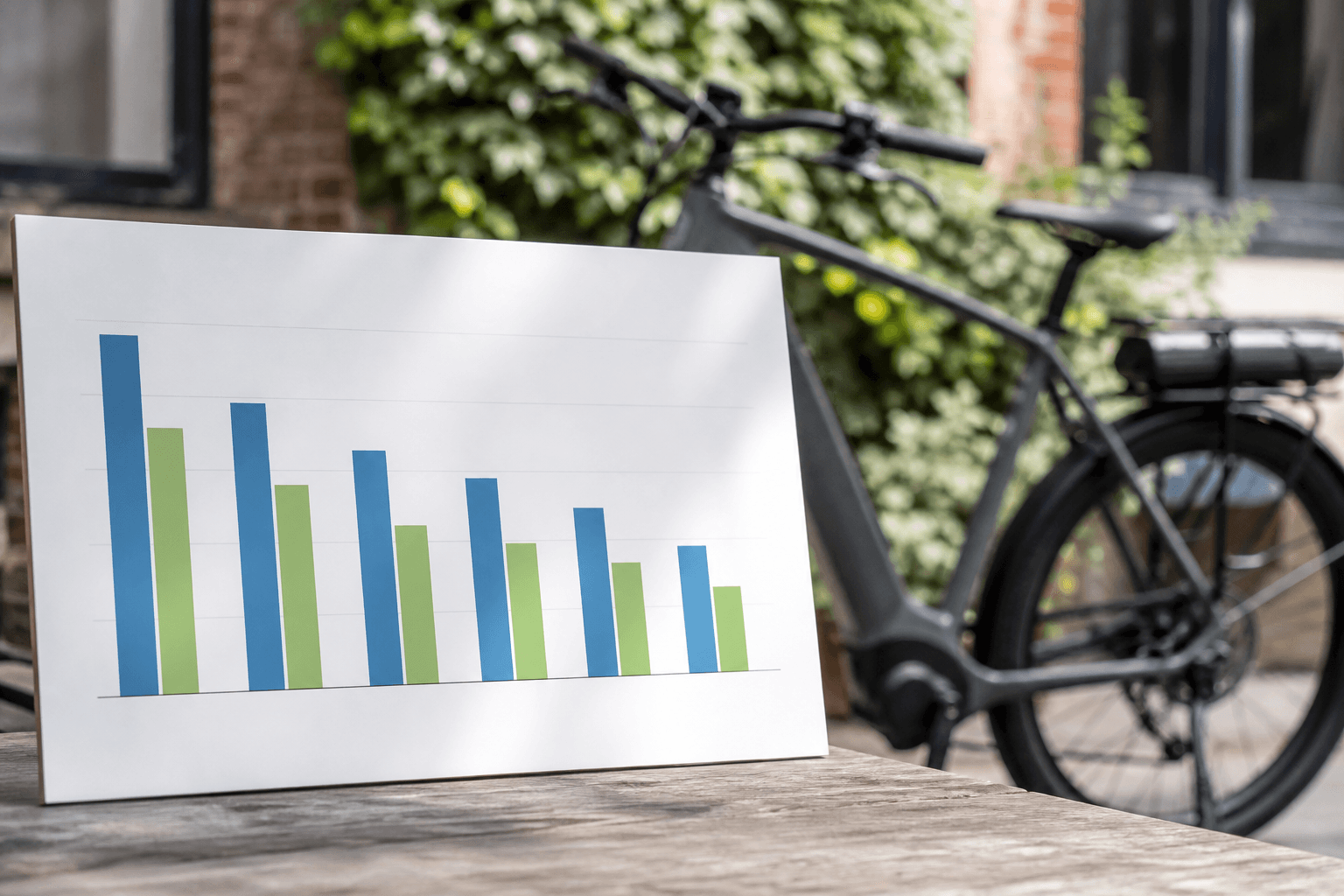
The worked examples show the power of mileage. Riding 50 km a week instead of driving saves 486 EUR a year. That pays back a 1295 EUR bike in 32 months. Double the distance to 100 km a week and the annual saving jumps to 1072 EUR, cutting payback to 14 months. At 200 km a week, the saving is 2245 EUR a year and payback is just 7 months.
These numbers assume you would have driven those kilometers. If you switch a commute from car to e-bike, the savings are nearly all new money. If you ride for fun on top of driving, the savings are smaller. Be honest about how many car trips you replace.
| Weekly riding instead of driving | Annual saving (EUR) | Months to pay back a 1295 EUR bike |
|---|---|---|
| 50 km | 486 | 32 |
| 100 km | 1072 | 14 |
| 200 km | 2245 | 7 |
Other Ways an E-Bike Saves Money
Beyond fuel and parking, an e-bike cuts other car-related costs. You drive fewer miles, so your car needs less maintenance. Tires, brakes, oil changes, and routine service all stretch further. The site's car maintenance figure is 0.06 EUR per km. Over 5000 km a year, that is 300 EUR saved.
You also slow your car's depreciation. A car loses value with every mile. The site uses 0.12 EUR per km for depreciation. If you ride 5000 km a year instead of driving, you save 600 EUR in depreciation alone. That is often the largest hidden saving.
Parking is another cost that disappears. City parking can run 0.02 EUR per km in the site's formula, but in many places it is far more. An e-bike parks free at a rack or in your office. No meters, no garages, no tickets.
Health benefits are real but harder to count. Regular cycling improves fitness and may reduce healthcare costs. The site does not put a number on that, but it is a bonus on top of the financial savings.
The Math: A Real-World Example
Take a typical e-bike at the median price of 1399 USD. Over five years, what does it really cost? The cost of ownership calculator totals the purchase, charging, servicing, and what the bike is worth at the end.
For a median bike, five years of ownership comes to 1642 EUR total. That includes 63 EUR for charging and 600 EUR for servicing. At the end of five years, the bike is worth 316 EUR, which offsets the cost. The net cost per km is 0.11 EUR.
Compare that to a car. Driving the same distance costs at least 0.20 EUR per km in maintenance, depreciation, and parking, plus fuel. The e-bike costs less than a third as much per km. Over 5000 km a year, the e-bike saves roughly 1000 EUR or more.
Does the Battery Affect Payback?
The battery is the one component that will eventually need replacing. Most packs last about 800 full cycles. On a median 720 Wh battery, that is 38400 km. For most riders, that is many years of commuting.
A replacement pack costs 1.2 EUR per Wh. For a 720 Wh battery, that is 864 EUR. That is a significant cost, but it comes after years of use. Over five years, the cost of ownership calculator includes battery depreciation. For a median bike, five years of charging costs only 63 EUR.
The battery size also affects range, which affects how useful the bike is for replacing car trips. A larger battery lets you ride farther without recharging. The median estimated range is 48 km, which covers most commutes. If your commute is longer, look for a bigger battery.
| Battery size (Wh) | Ordinary range (km) | Replacement pack (EUR) |
|---|---|---|
| 374 | 25 | 449 |
| 499 | 33 | 599 |
| 614 | 41 | 737 |
| 720 | 48 | 864 |
| 1040 | 69 | 1248 |
Buying an E-Bike: Finding the Right Price
The price of an e-bike ranges from 399 USD to 4499 USD in the catalogue. The median is 1399 USD. A more expensive bike does not pay back faster unless it encourages you to ride more. A cheaper bike that you actually ride will beat a costly one that stays parked.
Look at the total cost of ownership, not just the sticker price. The cost of ownership calculator adds servicing, charging, and battery replacement over five years. For example, five years of a HITWAY BK15M at 3000 km a year totals 1153 EUR, or 0.08 EUR per km. A HAOQI Leopard Pro totals 1802 EUR, or 0.12 EUR per km. The more expensive bike costs more per km, but it may have features you want.
Financing can affect payback. A 1295 EUR bike over 24 months at 0 percent APR costs 54 EUR a month with no interest. At 9.9 percent APR, the payment is 60 EUR a month and total interest is 138 EUR. That interest adds to the cost and delays payback. If you can pay cash, you reach the break-even point sooner.
Comparing E-Bike vs. Car: The Big Picture
The financial case for an e-bike is strong, but the comparison goes beyond money. An e-bike is faster in congested cities, easier to park, and better for the environment. The site's figures show a car emits 170 g of CO2 per km, while an e-bike emits 5 g. Over 5000 km a year, that is a saving of 825 kg of CO2, which is about 37 trees' worth of absorption.
E-bikes also reduce wear on your car, so it lasts longer and needs fewer repairs. That extends the life of a vehicle that is often the second biggest expense after housing. The savings from not driving are not just at the pump.
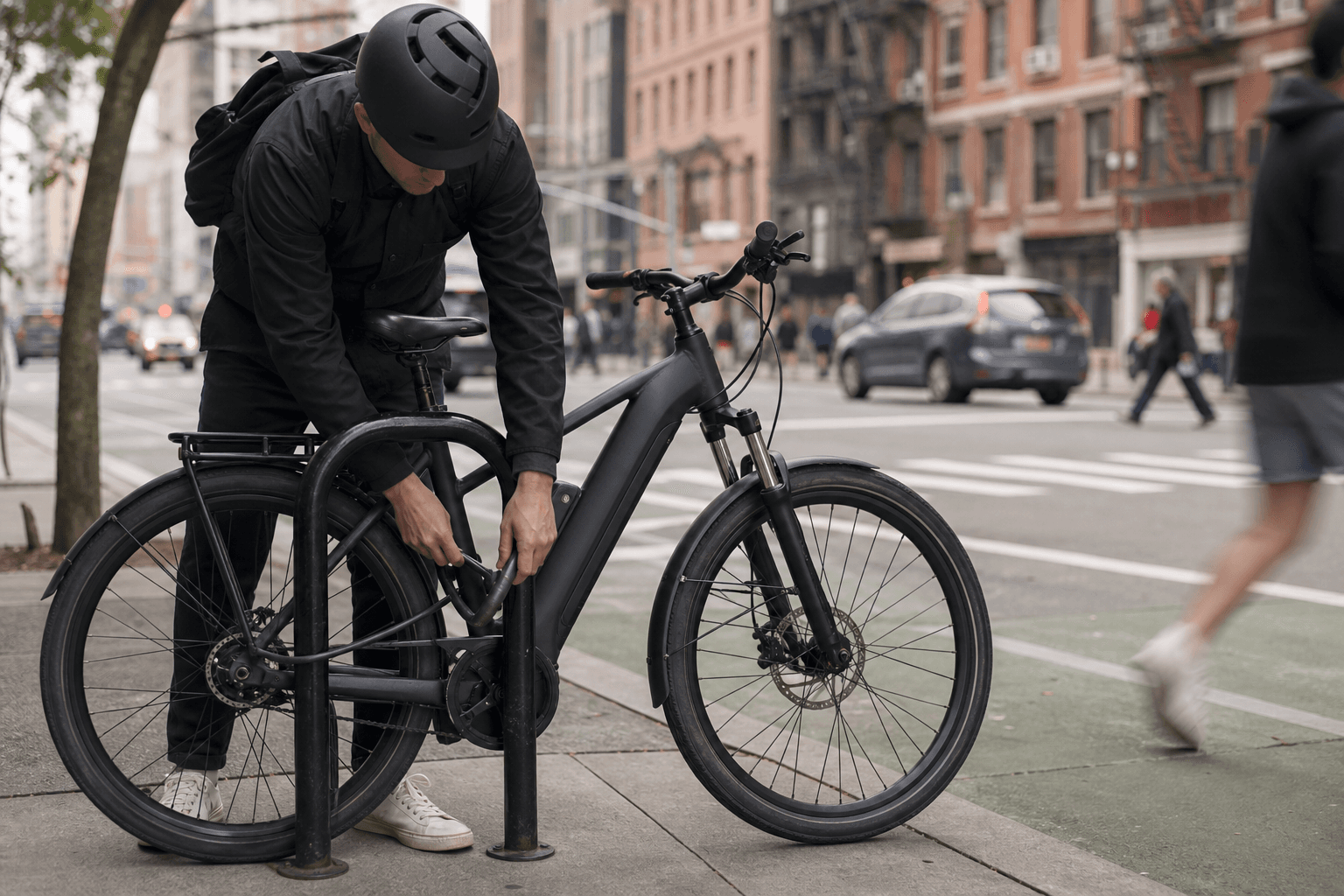
There are also costs to consider. An e-bike needs secure storage, especially in cities. Theft is a risk, and insurance may be wise. But these costs are small compared to car insurance, which you still pay if you keep the car.
The total cost of owning a car is far higher than most people realize. The site's formula counts maintenance, depreciation, and parking at 0.20 EUR per km. Add fuel and the cost per km is even higher. An e-bike at 0.11 EUR per km over five years is a fraction of that.
How to Speed Up Payback
The fastest way to pay off an e-bike is to ride it more. Replace every short car trip with a bike ride. The savings calculator shows that doubling your weekly riding from 50 km to 100 km cuts payback from 32 months to 14 months. Tripling it to 200 km cuts it to 7 months.
Choose a bike that fits your budget. You do not need the most expensive model. A quarter of bikes in the catalogue cost under 999 USD. A 399 USD folding bike like the Fiido D3 Pro can replace car trips for a fraction of the cost of a premium bike.
Keep your bike well maintained. Regular servicing costs about 100 EUR a year, but neglect can lead to expensive repairs. A mid-drive motor costs 180 EUR a year to service, a hub motor 120 EUR. That is still far less than car maintenance.
Charge at off-peak rates if your utility offers them. Electricity is already cheap, about 0.20 EUR per full charge for a median battery. Even small savings add up over time.
Factors That Can Delay Payback
Several things can push payback further into the future. If you ride only occasionally, the savings are small. A bike that sits idle does not save money. Be realistic about how often you will ride.
High purchase prices and financing costs also delay payback. A 4499 USD bike takes much longer to pay off than a 1399 USD one, unless it replaces an equal amount of driving. Interest on a loan adds to the total cost. The finance calculator shows that 9.9 percent APR adds 138 EUR in interest on a 1295 EUR loan over 24 months.
Battery replacement is a future cost. If you ride enough to reach 800 cycles, a new pack will cost 864 EUR for a 720 Wh battery. That is a significant expense, but it comes after many years of use. The cost of ownership calculator includes it in the five-year total.
Maintenance and repairs can also add up, especially for mid-drive motors. Servicing a mid-drive costs 180 EUR a year, compared to 120 EUR for a hub motor. Choose a bike with a hub motor if you want lower running costs.
What to Do Next
Start with the savings calculator. Enter your weekly car mileage and the price of the bike you are considering. It will show your annual saving and the months to payback. That is the number that matters.
Then use the cost of ownership calculator to see the full five-year picture. It includes charging, servicing, battery replacement, and resale value. Compare a few models to find the one that fits your budget and riding style.
Finally, browse the catalogue to see what is available at your price point. Filter by type, battery size, and price. The find-my-ebike tool can narrow the options based on your needs.
Frequently asked questions
How is e-bike payback calculated?
Payback is the purchase price divided by the monthly savings from riding instead of driving. Savings include car operating costs, parking, and maintenance. Use the savings calculator for your exact figure.
What is the average payback period for an e-bike?
It depends on how much you ride. Riding 50 km a week instead of driving can pay back a 1295 EUR bike in 32 months. Riding 100 km a week drops that to 14 months, and 200 km a week to 7 months.
Do e-bikes have high maintenance costs?
E-bike maintenance is low. Servicing runs about 100 EUR a year, plus 0.04 EUR per km for maintenance. A hub motor costs 120 EUR a year to service, a mid-drive 180 EUR. Over five years, servicing a median bike totals 600 EUR.
How much does it cost to charge an e-bike?
Charging is cheap. Electricity to ride 100 km costs 0.42 EUR. Riding 1000 km a year costs 4 EUR in electricity. The median battery takes about 0.20 EUR to charge once at 0.28 EUR per kWh.
Does the battery need replacing?
Yes, after about 800 full cycles. On a median 720 Wh battery, that is 38400 km. A replacement pack costs 1.2 EUR per Wh, so 864 EUR for a 720 Wh pack. Factor that into long-term costs.