

An e-bike loses about 40% of its value in the first year, and after five years it is worth roughly a quarter of what you paid. That is the short answer. The longer answer is that depreciation is not a fixed number. It depends on the battery, the brand, the type of bike, and how you maintain it. This guide explains how depreciation works, what affects it, and how to get the best price when you sell.
How E-Bike Depreciation Works
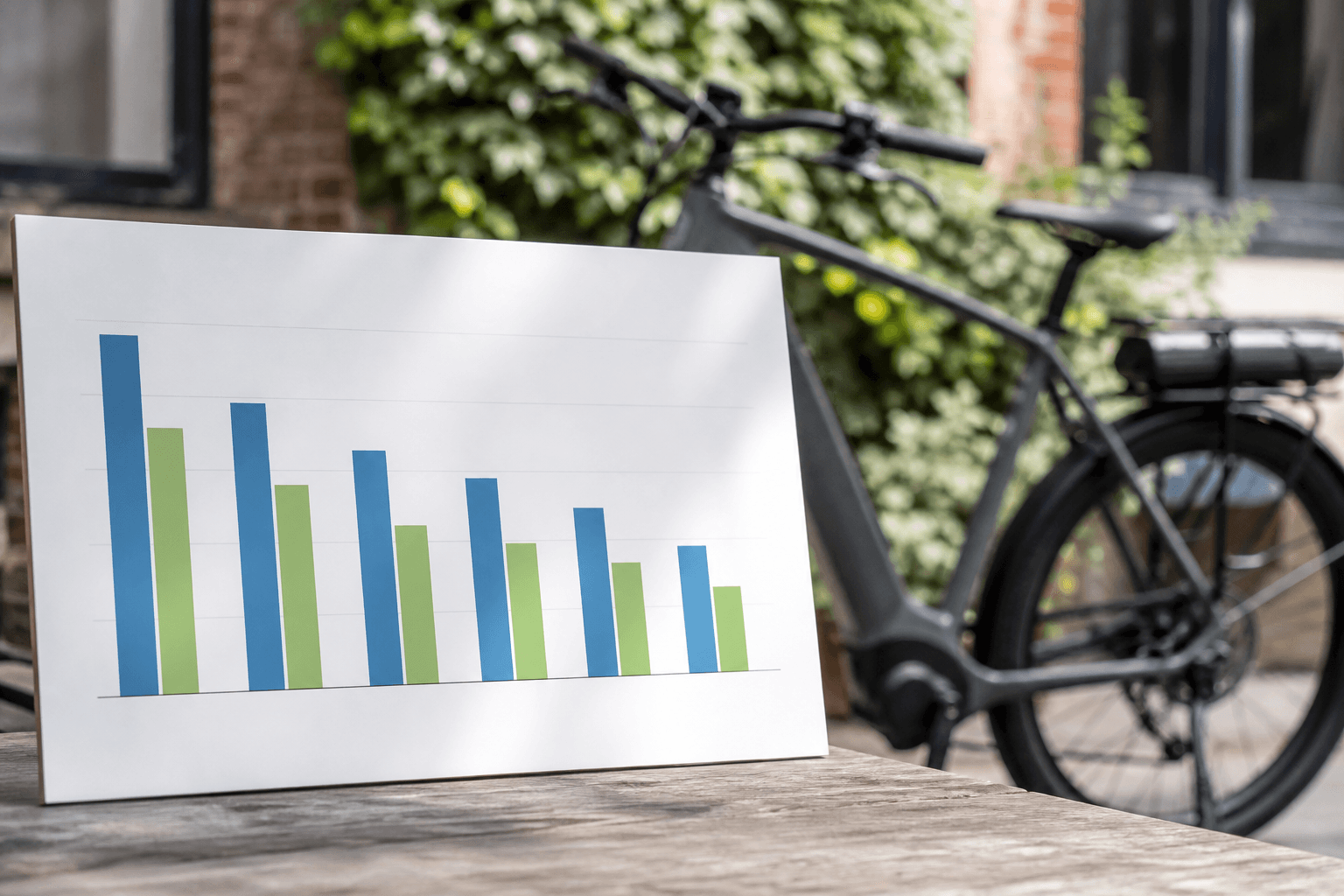
E-bikes depreciate faster than cars. Our formula for resale value is 0.6 times e to the power of minus 0.18 times the number of years, with a floor at 0.15. That means after one year, a bike is worth about 60% of its original price. After three years, it is worth about 35%. After five years, it drops to about 24%. The floor of 15% means even a very old bike has some value, mostly for parts.
The median price of an e-bike in our catalogue is 1399 USD. A median bike after five years is worth about 0.24 of its price, which is about 336 USD. That is a loss of over 1000 USD in five years. But depreciation is not a straight line. The biggest drop happens in the first year, often because the warranty is transferable but the new-bike smell is gone.
Why do e-bikes depreciate so fast? The main reason is the battery. Batteries degrade with use and time. A replacement battery for a median 720 Wh pack costs about 864 EUR, which is more than the bike is worth after five years. Buyers know this, so they discount used bikes heavily.
Key Factors That Affect Resale Value
Battery health is the single biggest factor. A battery has a life of about 800 full cycles. After that, capacity drops significantly. A replacement pack costs about 1.2 EUR per Wh. For a 720 Wh battery, that is 864 EUR. If a buyer faces that cost, they will subtract it from the price they are willing to pay.
Brand and model reputation matter. Some brands hold value better because they are known for quality and support. In our catalogue, we cover 37 brands. A bike from a reputable brand with available spare parts will sell for more than a no-name bike. The type of bike also matters. Mountain bikes and cargo bikes often have a dedicated market, while generic city bikes may be harder to sell.
Condition and maintenance history are also important. A bike with service records and new tires will fetch more. Cosmetic damage, like scratches and dents, lowers value. Buyers also look at the motor type. Mid-drive motors are generally more desirable than hub motors, and they cost more to service: 180 EUR per year versus 120 EUR for a hub motor.
| Factor | Impact on Resale Value |
|---|---|
| Battery health | High: degraded battery can halve the value |
| Brand reputation | Medium: trusted brands hold value better |
| Type of bike | Medium: mountain and cargo bikes have niche markets |
| Condition | High: cosmetic damage and wear reduce price |
| Maintenance records | Medium: proof of care reassures buyers |
| Motor type | Low to medium: mid-drive is preferred |
How to Estimate Your E-Bike's Resale Value
Start with the price you paid. Apply the depreciation formula: multiply the original price by 0.6 times e to the power of minus 0.18 times the age in years. For example, a bike that cost 1295 EUR and is two years old would be worth about 0.6 times e to the power of minus 0.36, which is about 0.42, so about 544 EUR. But that is just a starting point.
Adjust for battery condition. If the battery is old or has many cycles, subtract the cost of a replacement. For a median 720 Wh battery, that is 864 EUR. If the battery is in good shape, you can ask for more. Also adjust for market demand. Check online listings for similar bikes. The price spread in our catalogue shows that a quarter of bikes cost under 999 USD, half under 1399 USD, and three quarters under 1899 USD. That gives you a sense of what buyers expect to pay.
Use our cost of ownership calculator to see the total cost of owning a bike, including depreciation. It will show you what a bike is worth at the end of five years. That can help you set a realistic asking price.
Tips to Maximize Resale Value
Keep the battery healthy. Avoid leaving it fully discharged or in extreme heat. Charge it to about 80% for storage. A battery that holds its capacity will make your bike much more attractive to buyers.
Maintain the bike regularly. Keep the chain lubricated, tires inflated, and brakes adjusted. Service records show buyers that you cared for the bike. For a mid-drive motor, annual servicing costs about 180 EUR. That is an investment that pays off when you sell.
Clean the bike before listing it. A clean bike looks well-cared-for and can sell for more. Take clear photos in good light. Write an honest description that mentions the battery condition, any replacements, and the reason for selling.
Sell at the right time. Spring and summer are peak seasons for e-bike sales. You may get a better price then. Also, consider selling privately rather than trading in at a shop. Private sales typically yield higher prices.
What Hurts Resale Value Most
A degraded battery is the biggest value killer. A battery that has been through many cycles or has been abused will not hold a charge. Buyers know that a replacement pack costs a lot. For example, a 720 Wh battery costs 864 EUR to replace. That is more than the bike is worth after five years.
Cosmetic damage also hurts. Scratches, dents, and rust make a bike look neglected. Even if it runs fine, buyers will offer less. Lack of maintenance records is another red flag. Without proof of servicing, buyers worry about hidden problems.
Outdated technology can also reduce value. E-bike technology improves quickly. A bike with a small battery or a weak motor may be less desirable. For example, a bike with a 192 Wh battery has a range of only about 13 km in ordinary riding, which is not enough for most commuters.
- Battery degradation: the most expensive issue
- Cosmetic damage: reduces perceived value
- Lack of service history: raises buyer concerns
- Obsolete specs: small battery, low torque, no suspension
Should You Buy a Used E-Bike?
Buying used can save you money, but you take on risk. The main risk is the battery. A used bike may need a new battery soon, which can cost hundreds of dollars. For example, a 720 Wh battery costs 864 EUR to replace. If the bike is cheap enough, that might still be a good deal.
Check the battery's condition if you can. Ask how old it is and how many miles it has. Look for signs of wear, like swelling or cracks. If possible, take a test ride and see how far it goes on a charge. Our range calculator can estimate range based on battery size and riding conditions.
Also consider the motor type. Mid-drive motors are generally more reliable and easier to service, but they cost more to maintain. Hub motors are simpler and cheaper to service. A used bike with a hub motor might be a better value if you are on a budget.
Finally, consider the total cost of ownership. A used bike may have a lower purchase price, but if you need to replace the battery and do some servicing, the total cost might approach that of a new bike. Use our cost of ownership calculator to compare.
How to Sell Your E-Bike for the Best Price
Start by setting a realistic asking price. Use the depreciation formula and adjust for battery condition and market demand. Look at similar listings online. Our catalogue shows a wide price range, from 399 USD to 4499 USD, so there is a market for every budget.
Take good photos. Show the bike from multiple angles, including the battery, motor, and any wear. Be honest about any issues. A buyer who feels misled will walk away or ask for a lower price.
Write a clear description. Include the brand, model, year, battery size, and any upgrades. Mention the battery condition and whether it has been replaced. If you have service records, mention that.
Choose where to sell. Online marketplaces and local classifieds are popular. You can also sell to a bike shop, but they will offer less because they need to make a profit. Private sales usually get you the best price.
Be prepared to negotiate. Have a minimum price in mind, but be willing to come down a little. If you are firm on price, you might wait longer for a buyer.
What to Do Next: Sell or Keep?
Before you sell, decide if it makes financial sense. If you ride regularly, the cost per mile may be low. For example, riding 100 km a week instead of driving saves about 1072 EUR a year. That saving can offset the depreciation.
If you are selling because you want a new bike, consider the timing. Selling in spring or summer will likely get you a better price. Also, think about whether you need the money now or if you can wait.
If you decide to sell, use the tips in this guide to maximize your price. If you decide to keep, maintain the battery and the bike to extend its life. A well-maintained e-bike can last many years.
Use our savings calculator to see how much you save by riding instead of driving. That can help you decide if keeping your bike is worth more than the resale value.
Frequently asked questions
How fast do e-bikes depreciate?
E-bikes lose value quickly in the first few years. Our formula suggests a bike retains about 60% of its value after one year, declining to about 24% after five years. This is faster than cars, which typically depreciate more slowly.
What most affects an e-bike's resale value?
Battery health is the biggest factor. A replacement battery can cost more than the bike's resale value. Other factors include brand reputation, condition, and market demand for the type of bike.
Should I buy a used e-bike?
Yes, if you are handy and can assess battery health. You can save money, but budget for a possible battery replacement. A used bike with a worn battery may need a new pack, which can be expensive.
How can I maximize my e-bike's resale value?
Keep the battery healthy by avoiding extreme temperatures and deep discharges. Maintain the bike regularly, keep receipts, and clean it before selling. Selling privately usually gets a better price than trading in.
What hurts resale value most?
A degraded battery is the biggest value killer. Also, cosmetic damage, lack of maintenance records, and outdated technology can reduce what buyers will pay.