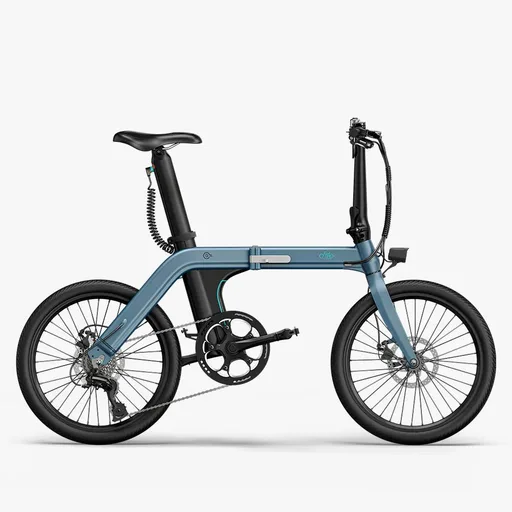
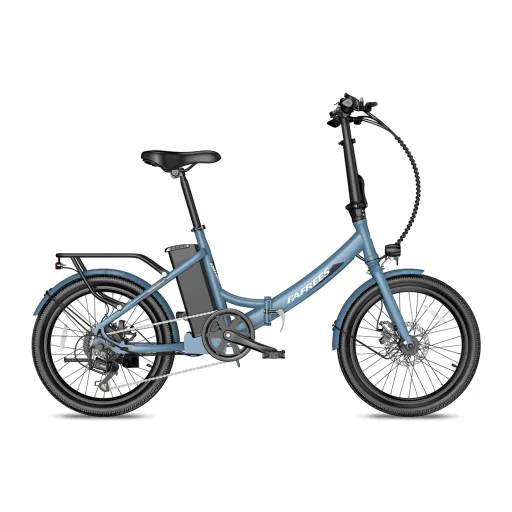
The Fafrees F20 Light is a folding e-bike that stands out for its low weight. At 22.7 kg, it is 14% lighter than the median folding bike, which weighs 26.3 kg. That makes it easier to carry up stairs or onto a train. It also costs 18% less than the median price for its type, at 819 USD against 999 USD.
This bike suits commuters who need a portable ride and want to save money. It has a 576 Wh battery, which is 17% below the class median of 691 Wh. The motor delivers 40 Nm of torque, exactly the class median. You get a standard pedelec with a top speed of 24 km/h, no throttle, and no step-through frame.
What the numbers say
| Spec | This bike | Median for its type |
|---|---|---|
| Battery | 576 Wh | 691 Wh |
| Weight | 22.7 kg | 26.3 kg |
| Torque | 40 Nm | 40 Nm |
| Estimated range | 42 km | 49 km |
| Price | 819 USD | 999 USD |
Questions people ask about the Fafrees F20 Light
How much does it weigh?
The Fafrees F20 Light weighs 22.7 kg. That is 14% below the median for folding e-bikes, which is 26.3 kg. It is a real advantage if you need to lift your bike often.
How much torque does it have?
The motor produces 40 Nm of torque. That is exactly the median for its type. It is a hub motor, so it suits flat commutes more than steep hills.
What speed class is it?
It is a standard pedelec class. The top speed is 24 km/h. There is no throttle, so you pedal to get assistance.
How far does it really go?
The manufacturer claims a range of 80 km. MathBikes estimates the range at 42 km, with a band from 37 to 47 km. That estimate is 48% below the claim. The estimate comes from a formula, not a test. You can adjust the assumptions with the range calculator.
What does it cost to run?
The purchase price is 819 USD, which is 18% below the median of 999 USD. Running costs depend on electricity, maintenance, and parts. The warranty is not listed, so factor that into your budget. Use the cost calculator to compare long-term costs.
Where it falls short
The Fafrees F20 Light makes a clear trade-off. It is lighter and cheaper than average, but the battery is smaller. At 576 Wh, it is 17% below the median of 691 Wh. That directly cuts the estimated range to 42 km, which is 14% below the class median of 49 km.
Who should buy it
This bike fits riders who value portability and price over maximum range. It is a practical choice for short commutes or errands. The weight and cost advantages are real, but the range is modest.
- You carry your bike up stairs or on public transport and want a lighter load.
- You ride fewer than 37 km per charge and can charge at work or home.
- You want an affordable folding e-bike and accept a smaller battery.
Look elsewhere if you need a long-range bike or plan to carry heavy cargo. The max payload is 120 kg, and it is not cargo capable. Also, if you prefer a step-through frame, this model does not have one.