
Yes, an e-bike can replace your car for many trips, but not all. The answer depends on your commute distance, cargo needs, local weather, and budget. This guide walks through the key factors and shows you how to calculate whether an e-bike is a practical and cost-effective substitute for your car.
What Can an E-Bike Do?
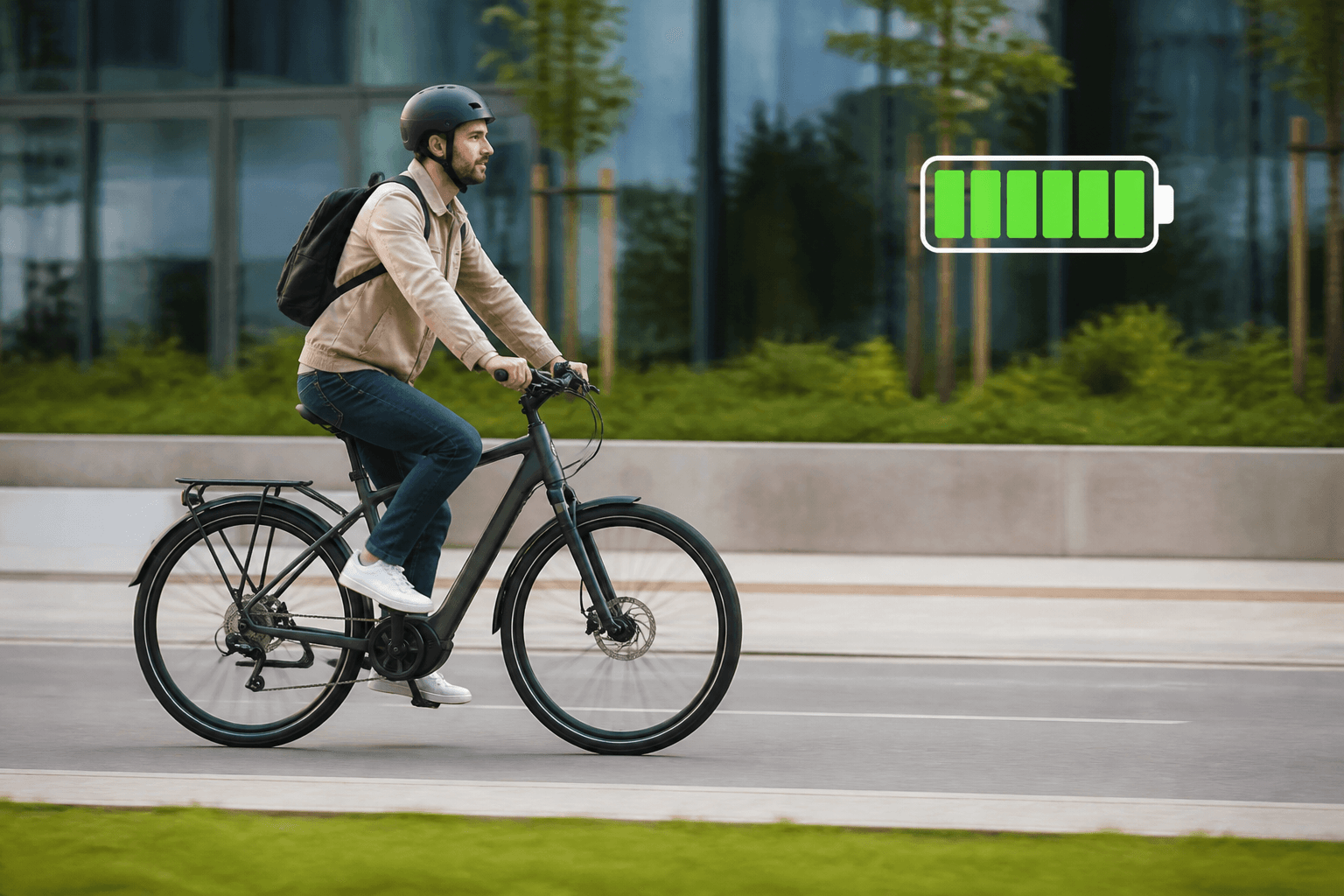
E-bikes are not just for recreation. They can handle daily commuting, errands, and even light cargo. The median estimated range in our catalogue is 48 km (about 30 miles), which covers the round trip for most urban commuters. For example, a 720 Wh battery, the median size, gives you about 48 km of ordinary riding on rolling terrain, with a range band of 42 to 53 km. If you ride more gently on flat ground, that same battery can go about 94 km, in a band of 82 to 105 km.
Speed matters too. In the US, most e-bikes are Class 1, 2, or 3, with pedal assist up to 20 or 28 mph. That means you can keep up with city traffic and arrive without sweating. The motor assistance also flattens hills, making routes that would be daunting on a regular bike feel manageable.
What about speed and distance? If your commute is 20 miles round trip, an e-bike with a 720 Wh battery can handle it on a single charge in ordinary conditions. If you ride fast or face steep hills, the range drops. For example, riding in Turbo mode on steep terrain gives you only about 20 km from that same battery. Cold weather also cuts range by about 20 percent, so a 48 km ride becomes about 40 km in the cold.
Where a Car Still Wins
E-bikes have limits. If you regularly drive more than 50 miles a day, carry heavy loads, or travel with passengers, a car remains the better tool. The median e-bike weighs 28.1 kg (about 62 pounds), and even the lightest in our catalogue, the Fiido Air Carbon, tips the scales at 13.6 kg. Hauling that up stairs or onto a bus is not fun.
Weather is another factor. Rain, snow, and extreme heat make cycling less pleasant and sometimes unsafe. While you can dress for rain, icy roads are a real hazard. If you live in a place with harsh winters, an e-bike might only be practical for part of the year.
Cargo capacity is also limited. Even a cargo e-bike like the Fiido T2 has a weight limit, and you cannot carry a week's groceries for a family of four. For big trips to the hardware store or airport runs, you will still need a car or delivery service.
| Situation | E-Bike Works? | Why |
|---|---|---|
| Commute under 30 miles round trip | Yes | Median range covers it, and you save on gas |
| Commute over 50 miles | No | Range is too short, charging takes time |
| Carrying a week of groceries | No | Cargo capacity is limited |
| Transporting kids to school | Maybe | Cargo bikes can do it, but they are heavy and pricey |
| Living in a snowy climate | Maybe | Cold cuts range, ice is dangerous |
| Running errands within 5 miles | Yes | Quick trips are ideal for e-bikes |
The Cost Difference
The most compelling reason to switch is money. Driving a car costs more than you might think. Our cost model includes maintenance at 0.06 EUR per km, depreciation at 0.12 EUR per km, and parking at 0.02 EUR per km. That adds up to 0.20 EUR per km. An e-bike, by contrast, uses about 15 Wh per km, which at typical electricity prices costs almost nothing. Maintenance runs about 0.04 EUR per km, plus about 100 EUR a year for servicing.
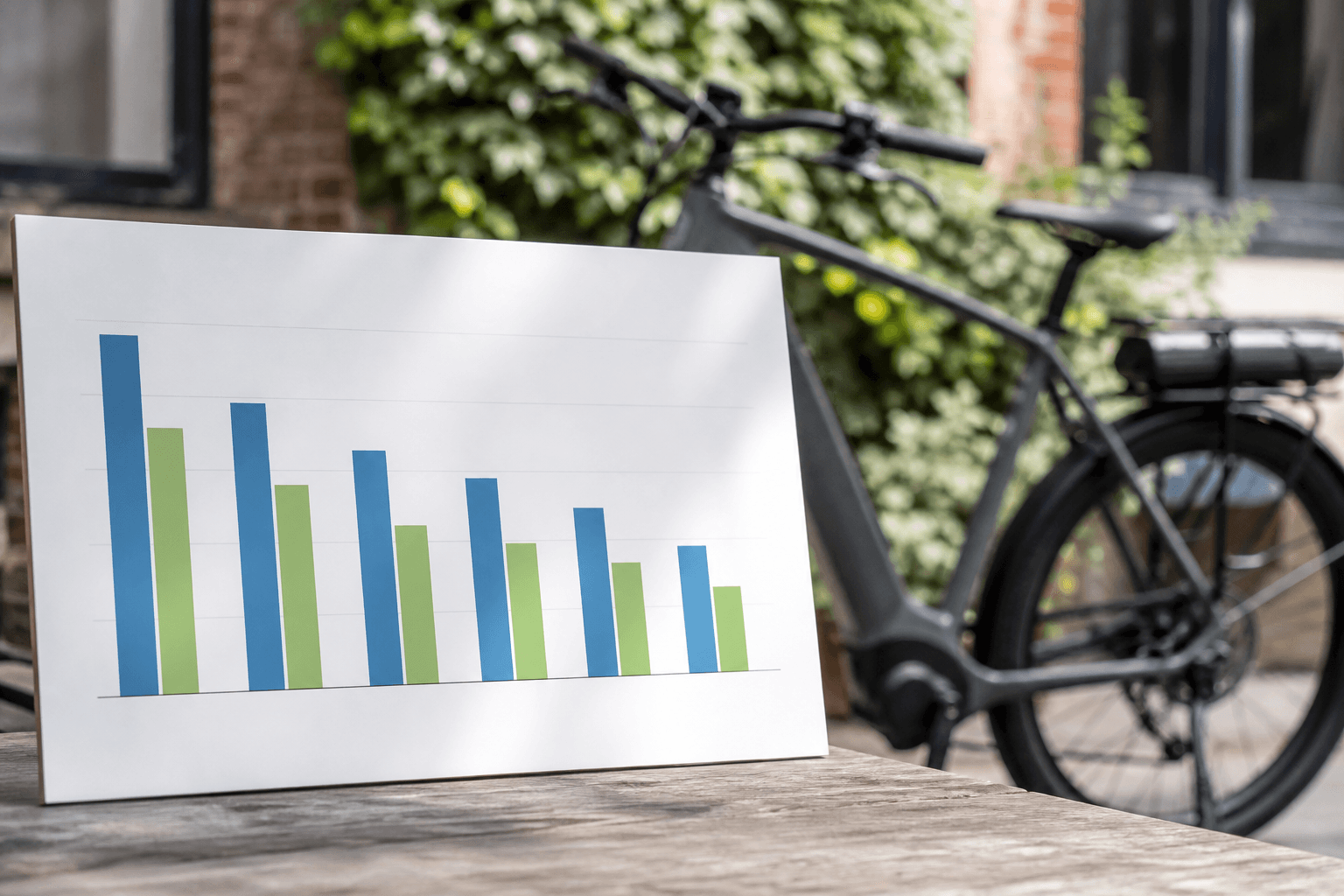
Let's put real numbers on it. If you ride 50 km a week instead of driving, you save about 486 EUR a year. If you ride 100 km a week, you save about 1072 EUR a year. And if you ride 200 km a week, you save about 2245 EUR a year. Those savings can pay for a bike quickly. A 1295 EUR bike pays for itself in about 32 months at 50 km a week, 14 months at 100 km a week, and just 7 months at 200 km a week.
But the upfront cost can be a barrier. The median price in our catalogue is 1399 USD, and prices range from 399 USD to 4499 USD. If you need financing, a 1295 EUR bike over 24 months at 0 percent APR costs 54 EUR a month. At 9.9 percent APR, the monthly payment is 60 EUR, and you pay 138 EUR in interest. That is still less than a car payment for most people.
Total Cost of Ownership
The purchase price is only the beginning. You need to factor in charging, servicing, battery replacement, and resale value. Over five years, a median bike costs about 1642 EUR total. That includes 63 EUR for charging, 600 EUR for servicing, and the bike's depreciation. At the end of five years, the bike is worth about 316 EUR, which is 24 percent of its original price.
Servicing costs depend on the motor. Hub motors cost about 120 EUR a year to service, while mid-drive motors cost about 180 EUR a year. Most bikes in our catalogue use hub motors, but if you are considering a mid-drive, budget for the higher cost. Battery replacement is another big-ticket item. A 720 Wh pack costs about 864 EUR to replace at 1.2 EUR per Wh. A battery lasts about 800 full cycles, which translates to about 38400 km on a median bike.
| Battery Size (Wh) | Ordinary Range (km) | Replacement Cost (EUR) |
|---|---|---|
| 374 | 25 | 449 |
| 499 | 33 | 599 |
| 614 | 41 | 737 |
| 720 | 48 | 864 |
| 1040 | 69 | 1248 |
| 1440 | 95 | 1728 |
To see how these costs stack up, consider a few real bikes. The HITWAY BK15M, a budget mountain bike, costs about 1153 EUR over five years at 3000 km a year, or 0.08 EUR per km. The HAOQI Leopard Pro costs 1802 EUR total, or 0.12 EUR per km. The Velowave Rover costs 2012 EUR, or 0.13 EUR per km. And the Velotric Summit 1 costs 2362 EUR, or 0.16 EUR per km. Even the most expensive of these is far cheaper than driving a car.
Environmental Impact
If you care about the planet, an e-bike is a clear win. Driving a car emits about 170 grams of CO2 per km. Riding an e-bike emits about 5 grams per km, including the electricity generation. That is a 97 percent reduction. Over a year of riding 5000 km instead of driving, you would save about 825 kg of CO2, which is equivalent to the absorption of about 37 trees per year.
The manufacturing impact of an e-bike is higher than a regular bike because of the battery and motor, but it is still far lower than a car. Over the lifetime of the bike, the emissions savings are substantial. Even if you only replace half of your car trips, the environmental benefit is significant.
Practical Tips for Going Car-Free
If you decide to try replacing your car with an e-bike, start small. Use it for short trips first: commuting, grocery runs, visiting friends. See how it feels in your daily routine. You might find that you enjoy it more than you expected, or you might discover that you need a car for certain trips.
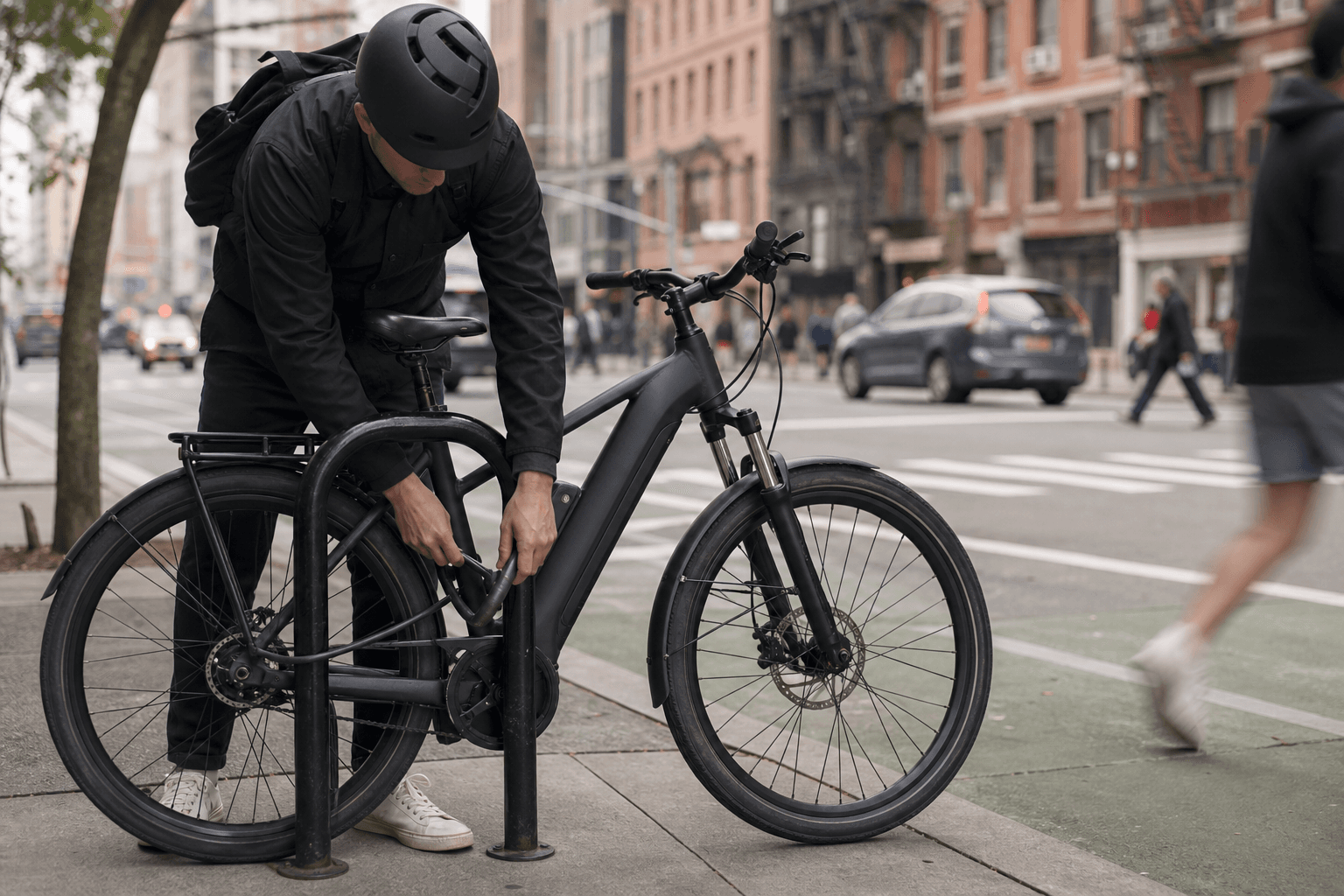
Invest in good accessories. A sturdy lock, fenders for wet weather, and lights for visibility are essential. If you plan to carry cargo, consider a rear rack or panniers. A helmet is non-negotiable. And if you live in a cold climate, dress in layers and consider studded tires for ice.
Think about charging. Most e-bikes have removable batteries, so you can charge at your desk or in your apartment. A full charge takes a few hours, and you can top up during the day if needed. If your commute is near the limit of your range, plan a charging stop at work.
Finally, consider the type of bike. A folding bike like the Fiido D3 Pro is great for mixed commutes, but it has a small battery and limited range. A city bike like the Lectric XPress offers a balance of range and comfort. A mountain bike like the Velotric Nomad 1 can handle rough roads but is heavier. Use our find-my-ebike tool to narrow down the options based on your needs.
Making the Decision
So, can an e-bike replace your car? The answer is yes for many people, but it depends on your specific situation. If your daily travel is within the e-bike's range, you do not need to haul heavy loads, and you are willing to adapt to weather, then an e-bike can save you thousands of dollars a year and reduce your carbon footprint.
Start by estimating your typical weekly mileage. Use our savings calculator to see how much you would save. Then, use the range calculator to ensure a bike with a certain battery can cover your trips. Finally, use the cost-of-ownership calculator to see the total cost over five years. This will give you a clear picture of whether an e-bike is a smart investment for you.
If you decide to go for it, browse our catalogue of 275 bikes from 37 brands. You can filter by price, range, and type. And if you are not sure where to start, our find-my-ebike tool will ask a few questions and suggest bikes that fit your needs. The right e-bike is out there, and it could be the last car replacement you ever make.
Frequently asked questions
How far can an e-bike go on a single charge?
The median estimated range for bikes in our catalogue is 48 km (about 30 miles). That's for ordinary riding on rolling terrain. Easy riding on flat ground can stretch a 720 Wh battery to about 94 km, while hard riding on steep hills drops it to about 20 km.
Can an e-bike replace a car for commuting?
Yes, for many commutes. If your round trip is within the bike's range and you can carry what you need, an e-bike can replace a car. For example, riding 50 km a week instead of driving saves about 486 EUR a year, and riding 200 km a week saves about 2245 EUR a year.
What are the ongoing costs of an e-bike?
Charging is cheap: about 0.20 EUR for a full charge of a median 720 Wh battery. Servicing runs about 100 EUR a year, plus battery replacement after about 800 full cycles. Over five years, a median bike costs about 1642 EUR total, including charging, servicing, and depreciation.
How much does an e-bike cost?
The median price in our catalogue is 1399 USD, with a range from 399 USD to 4499 USD. A quarter of bikes cost under 999 USD, and three quarters under 1899 USD. You can find a capable commuter for around 1000 to 1500 USD.
What about cargo and passengers?
Cargo bikes can carry groceries or kids, but they are heavier and pricier. For example, the Fiido M1 Pro is a cargo bike at 799 USD, while the Fiido T2 is a mid-priced cargo option at 1499 USD. If you regularly haul large loads, a car might still be necessary.