
E-bike theft is a real risk. The median e-bike in our catalogue costs 1299 USD. Some cost far more. A thief does not care about your range estimate or torque. They see a valuable, heavy object that is easy to roll away. What actually works to stop them? The honest answer: a combination of a good lock, smart storage, a tracker, and registration. Each has a cost. That cost should be weighed against the price of the bike it protects. This guide compares the options, using real figures from our catalogue.
The Threat: What You Are Protecting
Our catalogue holds 505 e-bikes from 62 brands. Prices range from 399 USD for the Fiido D3 Pro to 5799 USD for the Cyrusher Trident Full Suspension. Half of the bikes cost less than 1299 USD. A quarter are under 960 USD, and three quarters are under 1781 USD. Whatever you ride, it is worth something.
E-bikes are heavier than regular bikes. The median weight is 29.5 kg. The lightest, the Fiido Air Carbon, is 13.6 kg. The heaviest, the Hiboy C1, is 56.7 kg. Heavy bikes are harder to carry away, but they are still easy to roll or load into a van. Thieves often target e-bikes because of their high resale value.
The battery is a major cost. The median battery is 720 Wh. Replacing it at 1.2 EUR per Wh costs 864 EUR. That is more than many bikes cost. A thief can strip the battery and sell it. So protecting the battery is part of protecting the bike.
Locks: The First Line of Defense
A lock is the most basic protection. The market offers U-locks, folding locks, chain locks, and cables. Cable locks are light and cheap, but they are easy to cut with bolt cutters. U-locks and folding locks made of hardened steel are much harder to cut. Chain locks are heavy but flexible.
How much should you spend? A common rule is 10 percent of the bike's value. For a median 1299 USD bike, that is about 130 USD. For a 399 USD bike, 40 USD might be enough. For a 5799 USD bike, you should consider a 500 USD lock, though that seems extreme. The point is to match the lock to the value.
| Lock type | Typical cost (USD) | Security level | Weight | Best for |
|---|---|---|---|---|
| Cable lock | 10 to 30 | Low | Light (under 1 kg) | Quick stops, low-risk areas |
| Chain lock | 30 to 100 | Medium to high | Heavy (2 to 5 kg) | High-risk urban parking |
| Folding lock | 50 to 150 | Medium to high | Moderate (1 to 2 kg) | Commuting, carrying on bike |
| U-lock | 30 to 150 | High | Moderate to heavy (1 to 3 kg) | Most situations, especially city |
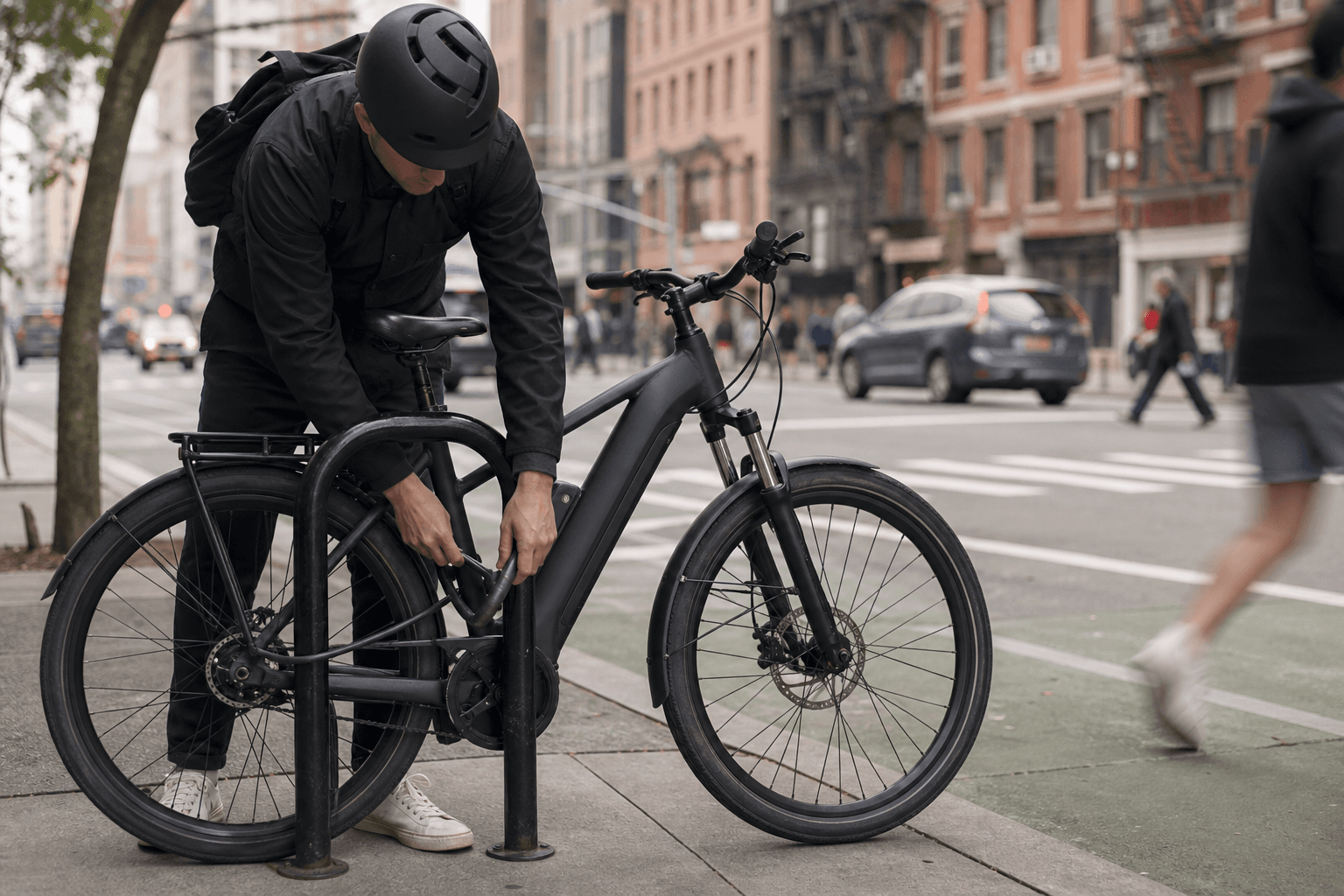
The best practice is to lock the frame and both wheels to a fixed object, like a bike rack. Use a secondary cable or lock for the wheels if your main lock is small. Remove the battery and take it with you, if possible. Many e-bikes have removable batteries, and that also protects the battery from theft.
Storage: Where You Park Matters
Where you store your e-bike when not in use is as important as the lock. Indoor storage is the safest. A locked garage, shed, or apartment hallway keeps the bike out of sight and out of reach. If you must park outside, choose a well-lit, busy area with a solid rack. Avoid leaving the bike overnight in public spaces.
Consider the cost of storage. A bike locker or indoor parking at work may cost a monthly fee. But compare that to the cost of replacing a stolen bike. For a median 1299 USD bike, one theft is a big loss. A storage fee of 20 USD a month is 240 USD a year. That is less than the price of many bikes, but it adds up. Use our cost of ownership calculator to see how storage affects your total.
Trackers: Finding It After Theft
A GPS tracker can help you locate a stolen bike. Many trackers are small, battery-powered, and hide inside the frame or under the seat. Some require a subscription for cellular data. Others use Bluetooth and rely on a network of phones to report location, which is cheaper but less reliable in rural areas.
Trackers do not prevent theft. A thief can find and remove a tracker if they know where it is. But a well-hidden tracker can lead police to the bike. The cost of a tracker ranges from 25 USD for a simple Bluetooth tag to over 100 USD for a cellular tracker with a monthly fee. For a bike that costs 2000 USD or more, a tracker is a small investment. For a 399 USD bike, it may not be worth it.
Some e-bikes have built-in tracking or anti-theft features. Check the specifications. For example, the Coswheel GT20 PRO has a large 1920 Wh battery and a price of 2094 USD. If it has a tracker, that adds value. But do not assume all bikes have one.
Registration: Making It Traceable
Registering your e-bike with a local or national database can help recover it if stolen. Many cities have free bike registries. You provide the serial number and a description. If police find a bike, they can check the registry and return it to you. Some insurance policies require registration, so check your policy.
Registration is low-cost or free, but it only works if the police check the database. In some places, they do. In others, recovered bikes are auctioned without a check. The effectiveness varies. Still, it takes minutes and costs nothing, so it is worth doing.
Write down your serial number and take photos of your bike. Keep the receipt. This helps with insurance claims and police reports. The serial number is often on the bottom bracket or head tube. If you do not know where it is, check the owner's manual.
Insurance: The Financial Safety Net
Even with locks, storage, trackers, and registration, theft can happen. Insurance covers the financial loss. Homeowners or renters insurance may cover bike theft, but often only up to a limit and with a deductible. Dedicated bike insurance is more comprehensive, covering theft, damage, and sometimes roadside assistance.
The cost of bike insurance varies. It is typically a percentage of the bike's value per year, often 5 to 10 percent. For a 1299 USD bike, that is 65 to 130 USD a year. For a 5799 USD bike, it could be 290 to 580 USD a year. Compare that to the cost of replacing the bike out of pocket.
Cost of Protection vs. Cost of Bike
The right amount to spend on security depends on the bike's price. Our catalogue has bikes under 800 USD (72 of them), 800 to 1200 USD (143), 1200 to 1600 USD (131), 1600 to 2200 USD (106), and above 2200 USD (53). A cheap bike may not justify a 200 USD lock and a 100 USD tracker. An expensive bike does.
| Bike price band (USD) | Number of bikes | Example bike | Suggested security budget (10% of price) |
|---|---|---|---|
| Under 800 | 72 | Fiido D3 Pro at 399 USD | 40 USD |
| 800 to 1200 | 143 | Fiido E Gravel C22 at 999 USD | 100 USD |
| 1200 to 1600 | 131 | Heybike Ranger S at 1299 USD | 130 USD |
| 1600 to 2200 | 106 | Vitilan H5 ALL Terrain at 1894 USD | 190 USD |
| Above 2200 | 53 | Cyrusher Trident Full Suspension at 5799 USD | 580 USD |
Consider the total cost of ownership. Over five years, a median bike costs 1573 EUR total, including charging, servicing, and resale. That is for the bike itself, not security. Adding a 130 USD lock and a 50 USD tracker increases that by about 180 USD. Spread over five years, that is 36 USD a year. For peace of mind, that is often worth it.
What Works: A Practical Approach
Based on the evidence, here is a practical approach to e-bike security. First, buy a quality U-lock or folding lock. Spend about 10 percent of the bike's price. Second, always lock the frame and both wheels to a fixed object. Remove the battery if you can. Third, store the bike indoors whenever possible. If you must park outside, choose a busy, well-lit spot. Fourth, consider a GPS tracker if your bike costs more than 1500 USD. Fifth, register the bike with a local database. Finally, look into insurance, especially for expensive bikes.
- Buy a U-lock or folding lock that costs about 10 percent of the bike's price.
- Lock the frame and both wheels to a solid object every time.
- Remove the battery and take it with you, if the bike allows.
- Store the bike indoors or in a locked area when not riding.
- Install a GPS tracker if the bike is worth more than 1500 USD.
- Register the serial number with a local bike registry.
- Check if your home insurance covers bike theft, or buy dedicated bike insurance.
No single measure guarantees safety. But combining a good lock, smart storage, a tracker, and registration makes your bike much less appealing to a thief. The cost of these measures is small compared to the cost of replacing a stolen e-bike.
The Bottom Line on Security Spending
The right security spending is a balance. For a 399 USD bike, a 40 USD lock is reasonable. For a 5799 USD bike, you might spend 500 USD on locks and trackers. The median bike at 1299 USD justifies a 130 USD lock and perhaps a 50 USD tracker. That is about 180 USD, or 14 percent of the bike's price. Over five years, that is less than the cost of one year of servicing, which is 120 to 180 EUR per year depending on the motor.
Remember, the cost of theft is not just the bike. It is the time without a ride, the hassle of insurance claims, and the emotional loss. A little prevention goes a long way.
Next Steps
Now that you know what works, apply it to your situation. Look up your bike in our catalogue to see its price and weight. Then decide on a lock and storage plan. Use the range calculator to see how far you can ride, and the savings calculator to see how much you save by riding instead of driving. Finally, use the cost of ownership calculator to include security costs in your budget.
Frequently asked questions
What is the best way to prevent e-bike theft?
Use a high-quality U-lock or folding lock to secure the frame and both wheels to a fixed object. Store the bike indoors when possible. Add a GPS tracker and register the serial number with local authorities. No single measure works, but combining them makes theft harder.
Are GPS trackers worth it for e-bikes?
Trackers can help recover a stolen bike, but they do not prevent theft. They cost money for the device and often a subscription. Consider the price of your bike: a tracker is more worthwhile on a bike that costs 2000 USD than on one that costs 400 USD.
How much should I spend on a lock?
A common rule is to spend about 10 percent of the bike's value on a lock. For a median-priced e-bike at 1299 USD, that is around 130 USD. A cheaper lock may not deter a determined thief, especially for expensive bikes.
Does bike registration actually help recover stolen e-bikes?
Registration can help police identify a bike if they find it. Many cities have registries, and some insurance policies require registration. It is usually low-cost or free. But registration alone does not prevent theft, so still use a good lock.
Is it safe to leave my e-bike outside overnight?
Leaving any bike outside overnight increases theft risk, especially for e-bikes which are valuable. If you must, use a heavy lock and secure it to a fixed object in a well-lit area. Better, store it indoors or in a locked shed. The cost of indoor storage is often less than replacing a bike.