
Your e-bike is getting old. The battery sags on hills, the motor makes noise, and the shop quote for repairs is steep. Should you fix it or buy new? The answer depends on the battery, the cost of repairs, and what the bike is worth. This guide gives you a clear process to decide, with numbers from our catalogue of 275 bikes and 37 brands.
Check Your Battery First
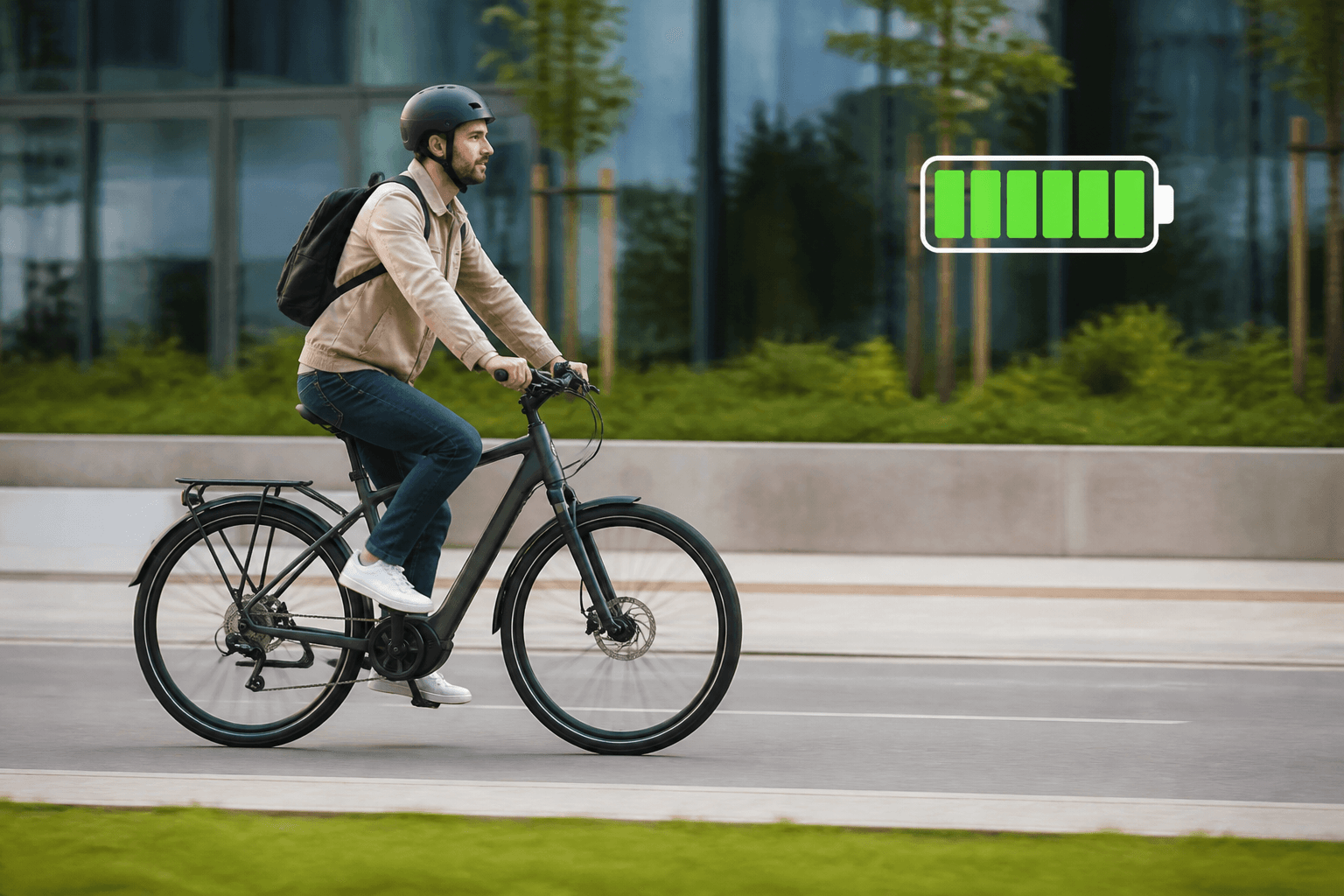
The battery is the heart of an e-bike and usually the first part to wear out. Most batteries last about 800 full charge cycles. On a median 720 Wh battery, that's roughly 38400 km of riding. If you ride 50 km a week, that's over 14 years. But if you ride hard or in cold weather, the battery may fade sooner.
How do you know if your battery is failing? Compare your real range to what we estimate. Our range calculator uses your battery size and riding conditions. For a 720 Wh battery, easy riding (Eco, flat) gives about 94 km. Ordinary riding (Tour, rolling) gives about 48 km. Hard riding (Turbo, steep) gives about 20 km. In cold weather, that drops to about 40 km on ordinary riding. If your battery delivers far less, it may be time to replace it.
A replacement pack costs about 1.2 EUR per Wh. For a 720 Wh battery, that's 864 EUR. For smaller batteries, it's less: a 346 Wh pack costs 415 EUR, a 518 Wh pack costs 622 EUR. But if your bike is old and worth little, spending that on a battery may not make sense. Check the bike's value first.
Compare Costs: Repair vs Replace
The core question is simple: what will it cost to fix, and what will it cost to replace? For repair, get a quote from a shop. Include the battery if it's weak. For replacement, consider the price of a new bike, but also the value of your old one if you sell it.
Let's use a median bike. The median price in our catalogue is 1399 USD. A typical repair might be a new battery at 864 EUR, plus some servicing. If the motor fails, that's more. A mid-drive motor service runs 180 EUR a year. Over five years, servicing alone totals 600 EUR for a median bike. Add charging at 63 EUR over five years, and the total cost of ownership is 1642 EUR, with the bike worth 316 EUR at the end.
If a repair quote is more than the bike's value, replacement is usually smarter. For example, a 5-year-old bike that cost 1295 EUR is worth about 316 EUR. If the repair costs 800 EUR, you're pouring money into a bike that's worth a third of that. A new bike, even at 1295 EUR, gives you a warranty and a fresh battery.
| Repair option | Typical cost |
|---|---|
| Battery replacement (720 Wh) | 864 EUR |
| Annual servicing (hub motor) | 120 EUR |
| Annual servicing (mid-drive) | 180 EUR |
| New median bike | 1399 USD |
Look at Total Cost of Ownership
Repair vs replace is not just about the immediate cost. You also need to consider what each option costs over the next few years. A new bike will have lower maintenance initially, but it also depreciates. An old bike that you repair may need more repairs later.
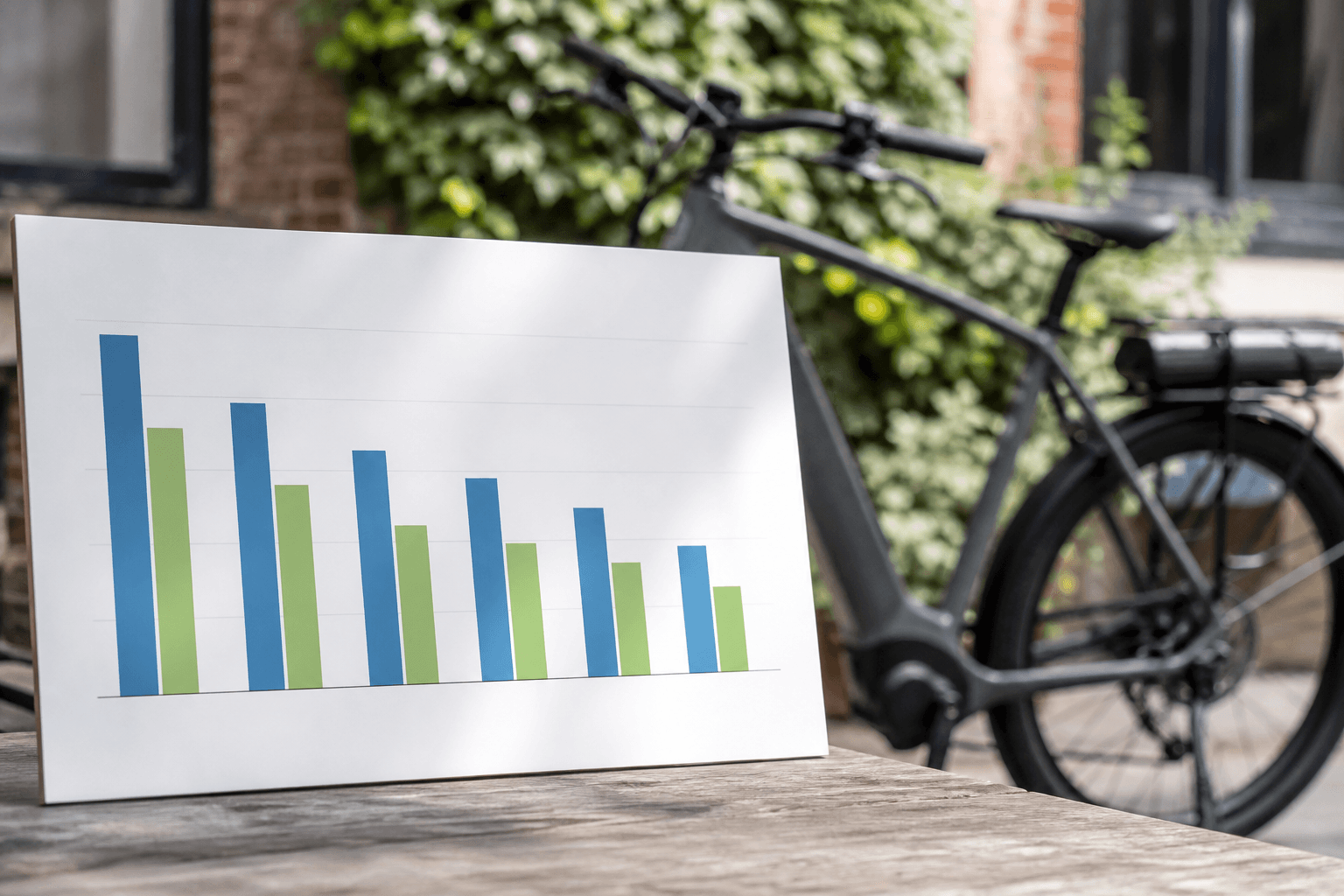
Our cost-of-ownership calculator totals five years of price, charging, servicing, battery and resale. For a median bike, that total is 1642 EUR, or 0.11 EUR per km. But that assumes you ride a certain distance. The more you ride, the lower the cost per km, because the fixed costs spread out.
Consider a few examples from our database. The HITWAY BK15M, a budget mountain bike, costs 1153 EUR over five years at 3000 km a year, or 0.08 EUR per km. The HAOQI Leopard Pro costs 1802 EUR, or 0.12 EUR per km. The Velowave Rover costs 2012 EUR, or 0.13 EUR per km. The Velotric Summit 1 costs 2362 EUR, or 0.16 EUR per km. These figures include everything: purchase, charging, servicing, and resale.
If you're comparing a repair to a new bike, run both through the calculator. Use the same annual distance. That gives you an apples-to-apples comparison.
When to Repair
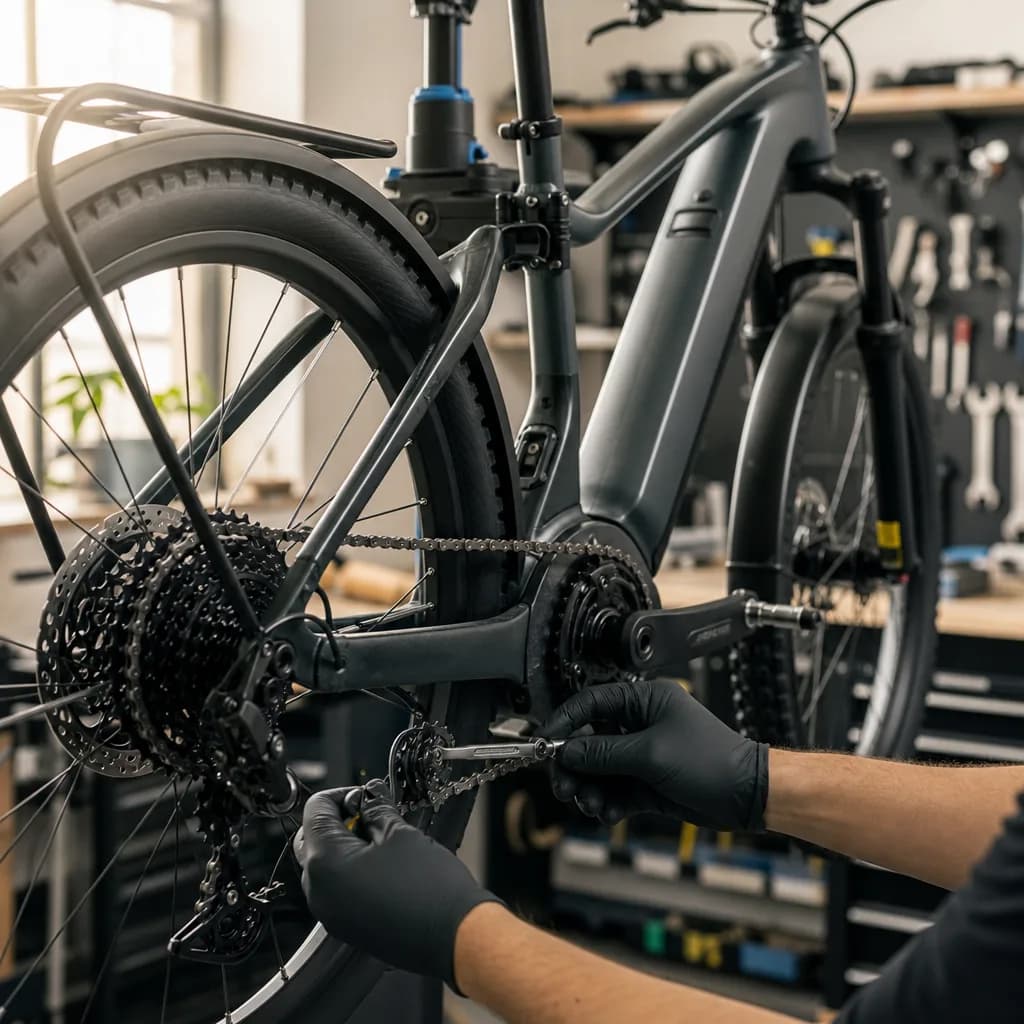
Repair makes sense when the bike is otherwise in good shape and the repair cost is low relative to the bike's value. Common repairs like brake pads, tires, and cables are cheap and worth doing. Even a mid-drive motor service at 180 EUR a year is reasonable if the bike is reliable.
Also consider the bike's frame and motor. If the frame is solid and the motor is a known brand, repairing can extend its life for years. For example, the Aventon Ramblas eMTB has a 346 Wh battery and a wide gap between claimed and estimated range, but that doesn't mean the bike is bad. If the motor is fine, a new battery might be all it needs.
Repair is also better for the environment. Manufacturing a new e-bike has a carbon footprint. Our data shows e-bikes emit about 5 g of CO2 per km, compared to 170 g for a car. But making a new bike still uses resources. If you can fix your current bike, you avoid that impact.
- Repair if the battery is the only major issue and the bike is less than 5 years old.
- Repair if the frame and motor are in good condition and you plan to keep riding for several more years.
- Repair if the repair cost is less than half the bike's current value.
When to Replace
Replace when the bike is beyond reasonable repair. That happens when the motor fails, the frame is cracked, or the battery and motor both need replacing. If the repair quote is more than the bike's value, it's time to move on.
Also consider replacing if your needs have changed. Maybe you need more range for a longer commute, or you want a different style like a cargo bike. The Fiido M1 Pro is a cheap cargo option at 799 USD, while the Troxus Trax Plus has the largest battery in our catalogue at 1440 Wh, giving an estimated range of 103 km. If your old bike can't do what you need, a new one might be worth it.
Another reason to replace is safety. Older e-bikes may lack modern features like better brakes or lights. If your bike has mechanical issues that affect safety, don't risk it. A new bike with a warranty gives you peace of mind.
- Replace if the motor or frame is failing and repair costs exceed the bike's value.
- Replace if you need more range, power, or a different bike type.
- Replace if the battery is dead and the bike is old enough that other parts are likely to fail soon.
Use the Right Tools to Decide
You don't have to guess. Our calculators do the math for you. Start with the range calculator to see if your battery is underperforming. Then use the cost-of-ownership calculator to compare your current bike's remaining costs with a new bike's total costs. Finally, the savings calculator shows how much you save by riding instead of driving, which can justify a new purchase.
For example, if you ride 50 km a week instead of driving, you save 486 EUR a year. That means a 1295 EUR bike pays for itself in 32 months. If you ride 200 km a week, you save 2245 EUR a year, paying back in 7 months. That changes the calculus: a new bike might be a money-saver.
Also consider financing. If you need to spread the cost, our finance calculator shows monthly payments. A 1295 EUR bike over 24 months at 0 percent APR is 54 EUR a month. At 9.9 percent APR, it's 60 EUR a month with 138 EUR total interest. That's a small price for a reliable ride.
A Simple Decision Framework
Here's a step-by-step way to decide. First, test your battery. If it's weak, get a quote for a replacement. Second, get a quote for any other repairs. Add them up. Third, find your bike's current value using our resale formula or online listings. Fourth, compare that total repair cost to the cost of a new bike that meets your needs. Finally, consider your riding habits and how long you plan to keep the next bike.
If the repair cost is less than half the bike's value and the bike is otherwise sound, repair. If it's more, replace. But also think about the future: an old bike may need more repairs soon. A new bike comes with a warranty and a fresh battery, which can save money in the long run.
Remember, the median price of a new e-bike is 1399 USD. That's a significant investment. But if you ride regularly, the cost per km is low. Over five years, a median bike costs 0.11 EUR per km. That's cheaper than driving, which costs about 0.20 EUR per km in maintenance, depreciation, and parking alone.
What to Do Next
Start by checking your battery with our range calculator. Then get repair quotes and compare them to the value of your bike. Use our cost-of-ownership calculator to see the full picture. If you decide to replace, browse our catalogue of 275 bikes, filter by price and type, and use the find-my-ebike tool to narrow down your options.
Your decision should be based on numbers, not emotions. A repair might be the right call if it's economical. A new bike might be better if it saves you money in the long run. Either way, you're riding an e-bike, which is good for your wallet and the planet.
Frequently asked questions
How do I know if my e-bike battery needs replacing?
If your battery no longer holds a charge for your typical rides, it may be time. Most batteries last about 800 full cycles. Check the range you get against our estimates; if it's far below, consider a replacement.
What is the average cost to replace an e-bike battery?
Replacement packs cost about 1.2 EUR per Wh. For a median 720 Wh battery, that's 864 EUR. Smaller batteries cost less, but if your bike is old, that cost may be close to its value.
How much does it cost to service an e-bike per year?
Annual servicing runs about 120 EUR for hub motors and 180 EUR for mid-drives. Over five years, that adds up, so include it when comparing repair vs replacement.
What is the resale value of an e-bike after five years?
A median bike is worth about 24 percent of its price after five years. That's around 316 EUR for a 1295 EUR bike. Depreciation is a real cost of ownership.
When should I replace my e-bike instead of repairing it?
Replace when repair costs exceed the bike's value or when the battery and motor are both failing. Also consider if your needs have changed, like needing more range or a different style.