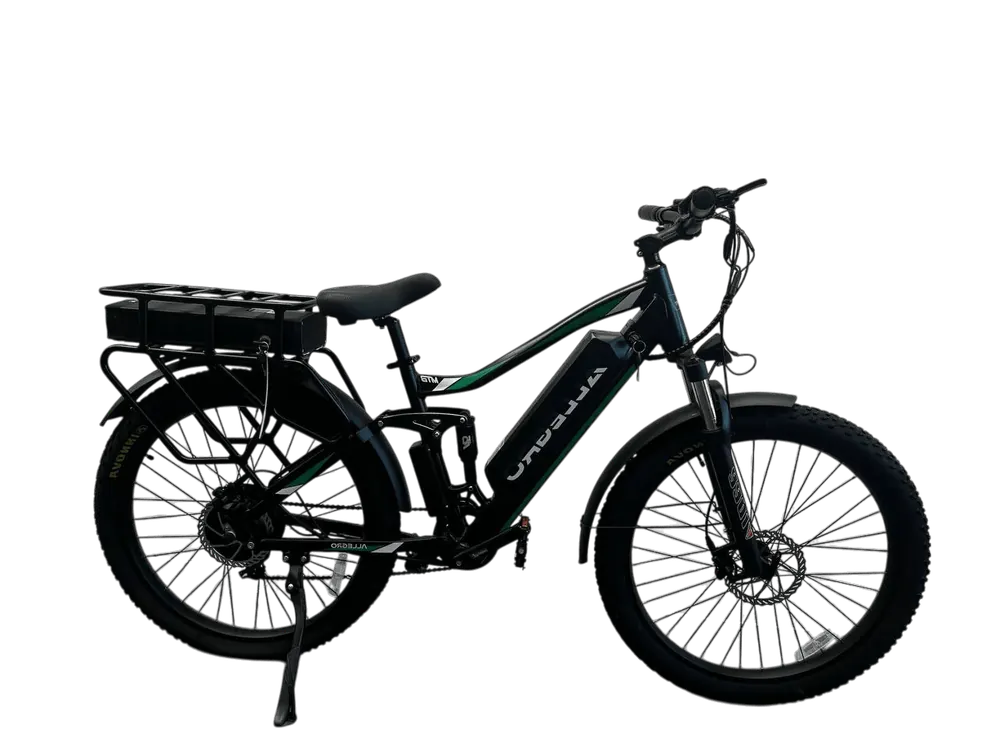
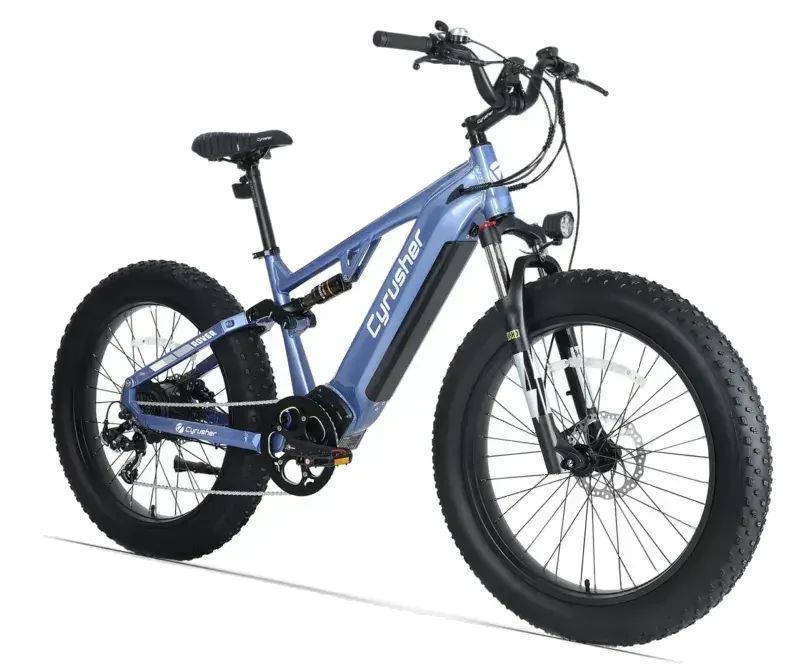
The Cyrusher Rover Full Suspension is a mountain e-bike with a 95 Nm hub motor. That torque figure is 19% above the median for its type. It also weighs 39.5 kg, which is 15% above the median. This bike is built for riders who want strong pull and a sturdy frame, not for those who need to carry it upstairs.
It has a 811 Wh battery and a manufacturer claim of 100 km of range. Our estimate is 46 km, which is 54% below that claim. The bike costs 1850 USD, which is 19% above the median price for its class. It suits riders who value power and range over light weight and low cost.
What the numbers say
| Spec | This bike | Median for its type |
|---|---|---|
| Battery | 811 Wh | 840 Wh |
| Weight | 39.5 kg | 34.2 kg |
| Torque | 95 Nm | 80 Nm |
| Estimated range | 46 km | 49 km |
| Price | 1850 USD | 1554 USD |
Questions people ask
How much does it weigh?
The Cyrusher Rover Full Suspension weighs 39.5 kg. That is 15% above the median weight for mountain e-bikes. You will feel the extra mass when lifting it onto a rack or pushing it up a hill.
How much torque does it have?
The motor delivers 95 Nm of torque. That is 19% above the median of 80 Nm for its type. More torque means stronger acceleration from a stop and better climbing on steep trails.
What speed class is it?
This is a fast class e-bike. It assists above 25 km/h and has a top speed of 45 km/h. It has no throttle, so you pedal to get power.
How far does it really go?
The manufacturer claims 100 km of range. Our estimate is 46 km, with a band of 40 to 51 km. That estimate comes from a formula using a reference ride: Tour assist, rolling terrain, mild weather, brisk pace, and an 80 kg rider. It is not a measurement. You can adjust the inputs with the range calculator.
What does it cost to run?
The purchase price is 1850 USD. Running costs depend on electricity, maintenance, and replacement parts. The warranty is not listed, so budget for potential repairs. Use the cost calculator to see long-term costs.
Where it falls short
The biggest drawback is the weight. At 39.5 kg, it is 15% heavier than the median mountain e-bike. That extra mass makes it harder to maneuver off-road and difficult to lift. The estimated range is also 6% below the median, at 46 km against 49 km.
Who should buy it
This bike is for riders who prioritize power and battery capacity over weight and cost. It is not for casual commuters who need a light bike or a long verified range.
- Riders who want strong torque for steep hills and off-road trails.
- Riders who value a large battery for longer rides, even if the real range is lower than claimed.
- Riders who have a place to store a heavy bike and do not need to lift it often.
Look elsewhere if you need a light bike for carrying or a model with a published warranty. Also consider bikes with a higher estimated range if you ride long distances without charging.