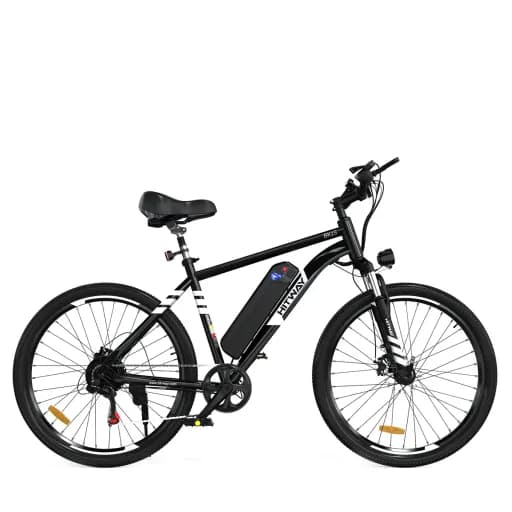
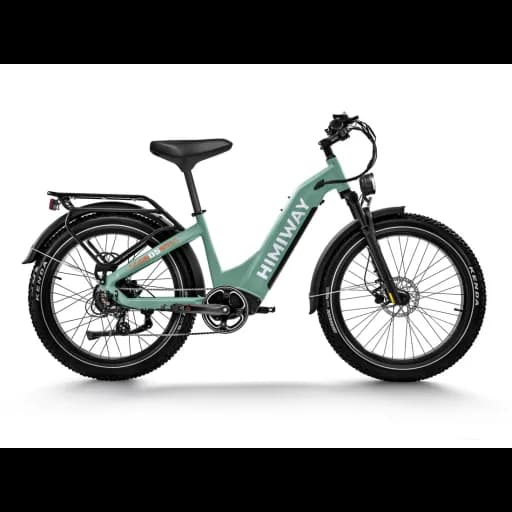
The HIMIWAY D5 ST stands out for its 720 Wh battery, which is exactly level with the median for mountain e-bikes. It is a non-folding, non-step-through MTB with a hub motor and no throttle. You get a standard pedelec that tops out at 32 km/h. It suits riders who want a large battery and a sturdy frame for off-road use.
This bike is heavier than most of its class, at 33.1 kg, which is 18% above the median. The motor delivers 86 Nm of torque, 8% above the class median. The price is 1799 USD, 5% below the median for its type. If you prioritize battery capacity and torque over weight, this bike may fit your needs.
What the numbers say
| Spec | This bike | Median for its type |
|---|---|---|
| Battery | 720 Wh | 720 Wh |
| Weight | 33.1 kg | 28.1 kg |
| Torque | 86 Nm | 80 Nm |
| Estimated range | 41 km | 42 km |
| Price | 1799 USD | 1899 USD |
Questions people ask about the HIMIWAY D5 ST
How much does it weigh?
The HIMIWAY D5 ST weighs 33.1 kg. That is 18% heavier than the median for mountain e-bikes, which is 28.1 kg. You will feel the extra weight when lifting it or carrying it up stairs.
How much torque does it have?
The motor torque is 86 Nm, which is 8% above the class median of 80 Nm. This is a hub motor, so the torque is delivered at the rear wheel. It should help you climb moderate hills, but it is not as high as some mid-drive motors.
What speed class is it?
It is a standard pedelec class, meaning it assists up to 32 km/h. There is no throttle, so you must pedal to get assistance. This is typical for many e-MTBs.
How far does it really go?
The manufacturer claims a range of 129 km, but our estimate is 41 km, with a band of 36 to 46 km. That is 68% below the claim. The estimate comes from a formula using one reference ride, not a test. You can adjust conditions with the range calculator.
What does it cost to run?
The price is 1799 USD, which is 5% below the median for its type. Running costs include electricity and maintenance, but the warranty is not listed. Use the cost calculator to estimate your total cost over time.
Where it falls short
The main drawback is the weight. At 33.1 kg, it is 5 kg heavier than the median for its class. That extra weight makes it harder to maneuver off-road and more tiring to pedal without assistance. Also, the estimated range is 41 km, which is short for a bike with a large battery, because the motor and weight consume more energy.
Who should buy it
This bike suits riders who value battery capacity and torque over weight. It is a solid choice for those who ride mostly on flat to rolling terrain and can handle the heft. The price is slightly below average, so you get good specs for the money.
- You want a large 720 Wh battery for long rides without recharging.
- You need strong torque for climbing steep hills or carrying heavy loads.
- You are on a budget and want a capable e-MTB below the median price.
Look elsewhere if you need a lightweight bike for lifting or technical trails. Also, if you rely on a long real-world range, the estimate of 41 km may be too short. Consider a bike with a more efficient motor or a smaller battery but lower weight.