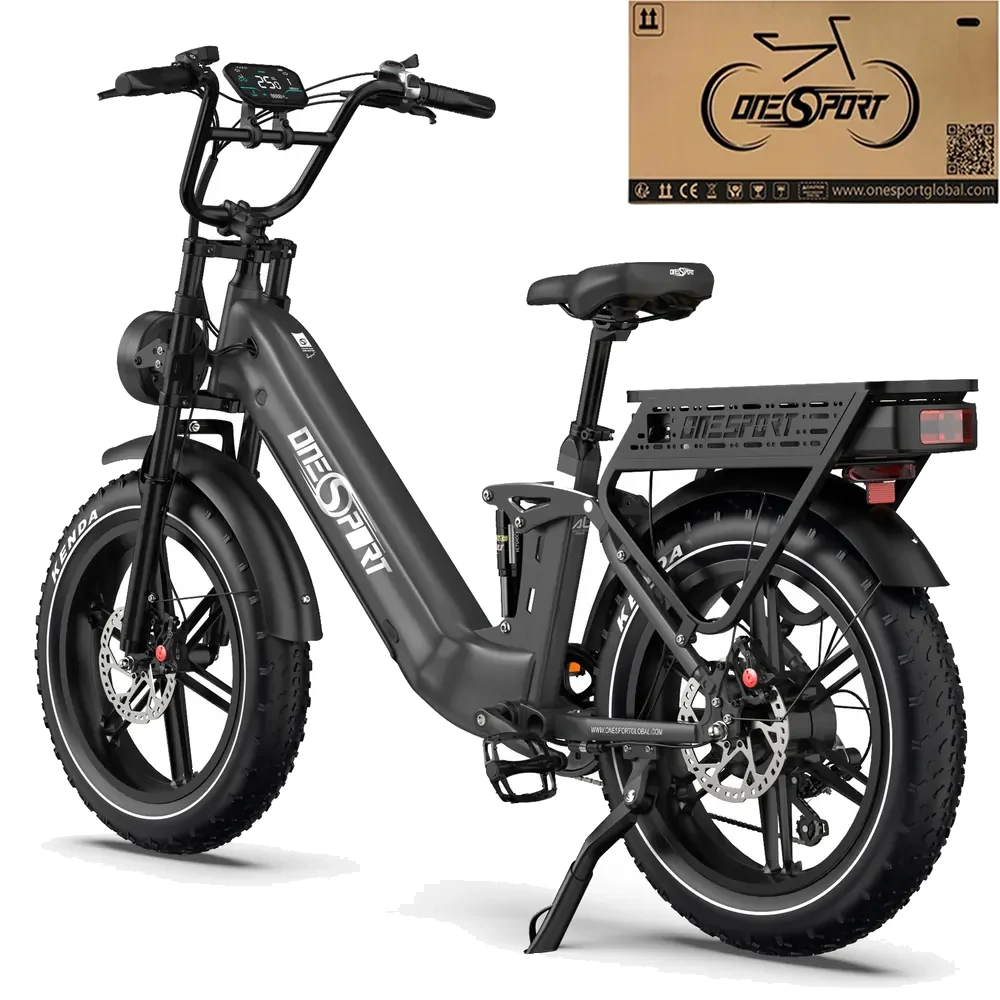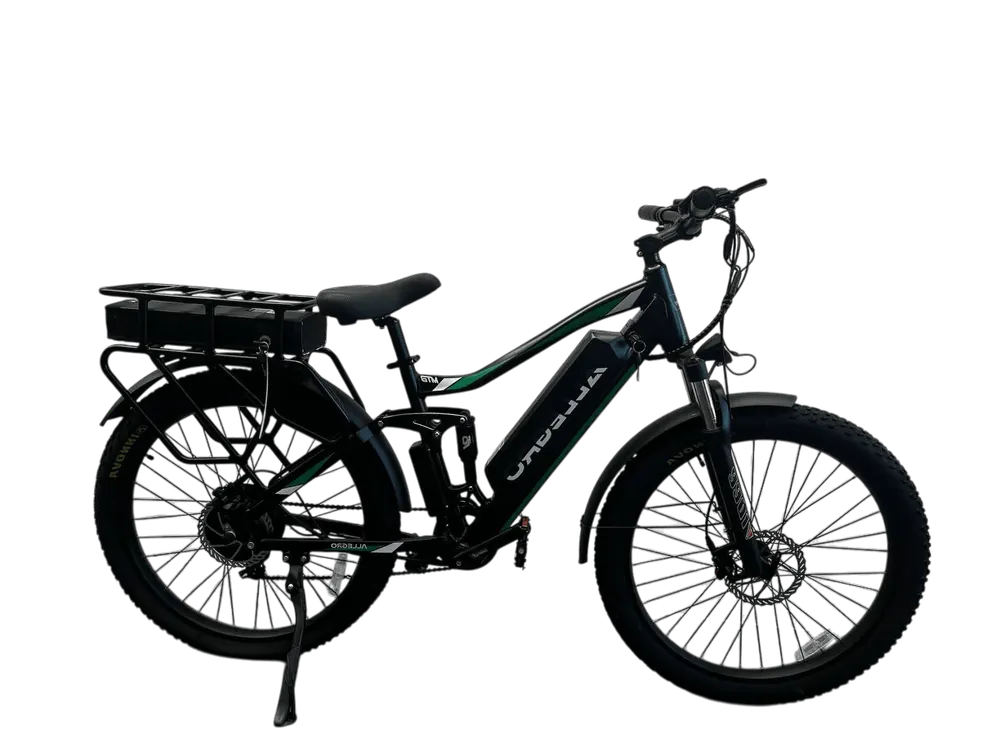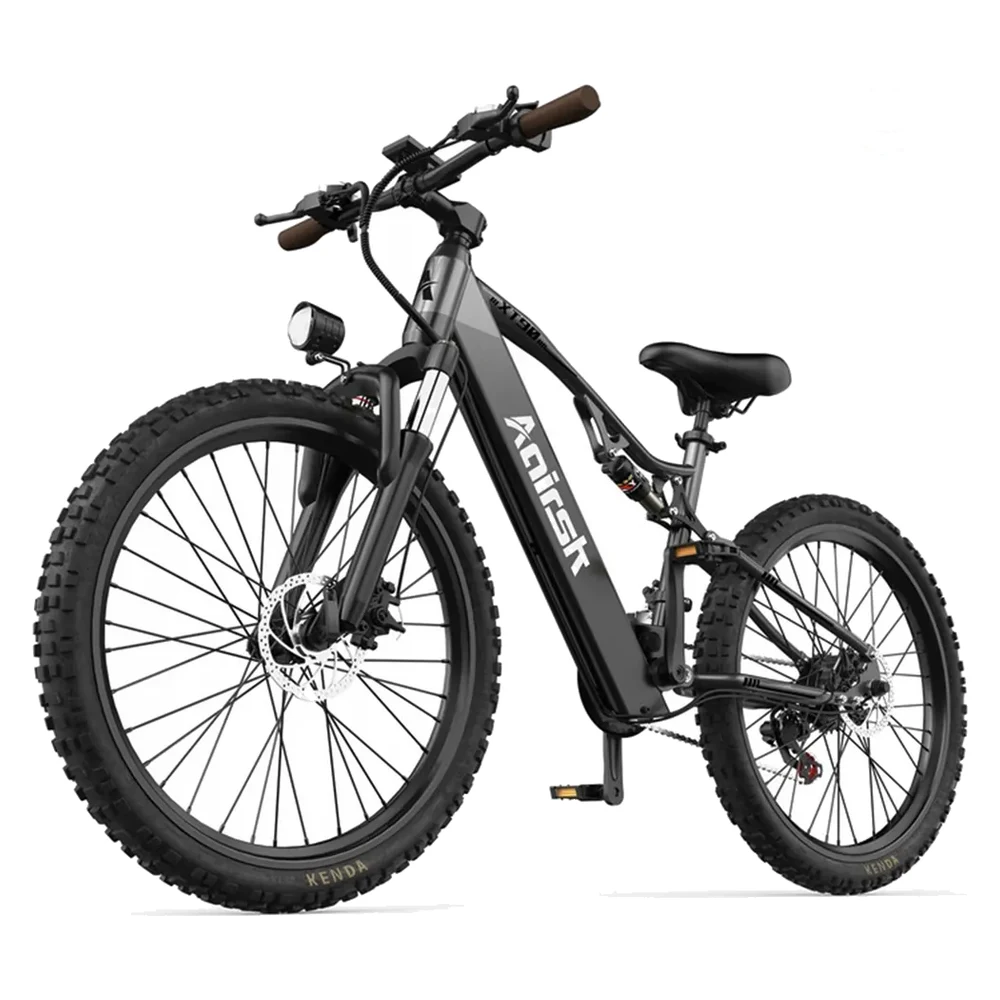
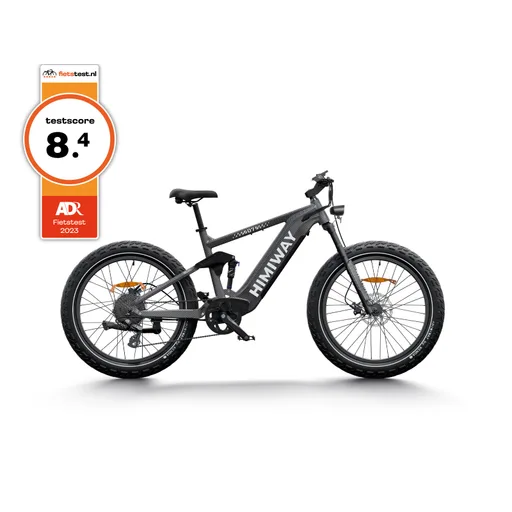
The Himiway D7 (Cobra) is a full-suspension mountain e-bike with a 960 Wh battery. That is 11% above the median for its type, which is 864 Wh. The big battery is the number that most sets this bike apart from its class.
It suits riders who want long assisted rides on rough ground and do not mind a heavy machine. The 40.2 kg weight is 17% above the 34.5 kg median, so you will notice it when you lift it or push it uphill. If you have space to store it at ground level and want a throttle for help on climbs, it is worth a look.
What the numbers say
| Spec | This bike | Median for its type |
|---|---|---|
| Battery | 960 Wh | 864 Wh |
| Weight | 40.2 kg | 34.5 kg |
| Torque | not listed | 80 Nm |
| Estimated range | 54 km | 49 km |
| Price | 0 USD | 1499 USD |
The table shows the pattern. The battery is bigger than the class median, and the estimated range is 10% above the median at 54 km against 49 km. But the bike is also heavier, and torque and price are not published in a way that lets us compare them.
What people ask about the Himiway D7 (Cobra)
How much does it weigh?
It weighs 40.2 kg. That is 17% above the 34.5 kg median for this type. You will need help lifting it onto a rack or carrying it up steps.
How much torque does it have?
The motor torque is not published. The rated power is 250 W, but peak power and torque are not listed. The class median torque is 80 Nm, so we cannot say how it compares.
What speed class is it?
The speed class is not listed. Top speed is also not published. You should check with the seller before you buy if you need a specific class for legal use.
How far does it really go?
The manufacturer claims 128 km. Our estimate is 54 km, which is 58% below the claim. The estimate uses a formula: battery capacity divided by consumption on one reference ride. You can try your own route with the range calculator.
The estimate assumes Tour assist, rolling terrain, mild weather, a brisk pace and an 80 kg rider. Your range will vary with load, hills and how much you pedal. The 960 Wh battery gives you more room than most bikes in this class, but the weight works against it.
What does it cost to run?
The price is 0 USD, which is not a realistic figure for a new bike. Treat it as not published. Running costs depend on your electricity price and how often you charge. Use the cost calculator to put your own numbers in.
Where it falls short
The main drawback is weight. At 40.2 kg it is 17% heavier than the class median. That makes it harder to lift, slower to steer and more tiring to push. The big battery adds capacity but also adds mass.
The range estimate is also 58% below the manufacturer claim. That gap is not unusual, but it matters. Plan for the estimate, not the claim.
Who should buy it
This bike suits riders who prioritise battery capacity and estimated range over low weight. It also suits those who want a throttle and a high payload limit of 181.4 kg. If you have ground-level storage and mostly ride from home, the weight matters less.
- You want a large battery for long assisted rides and have a place to store the bike without lifting it.
- You need a throttle to help on steep climbs or when you are tired.
- You carry heavy loads and need the 181.4 kg payload limit.
Look elsewhere if you need to carry the bike on a rack, ride tight technical trails or often lift it. The 40.2 kg weight will be a burden. Also look elsewhere if you need a published torque figure or speed class, because those are not listed.