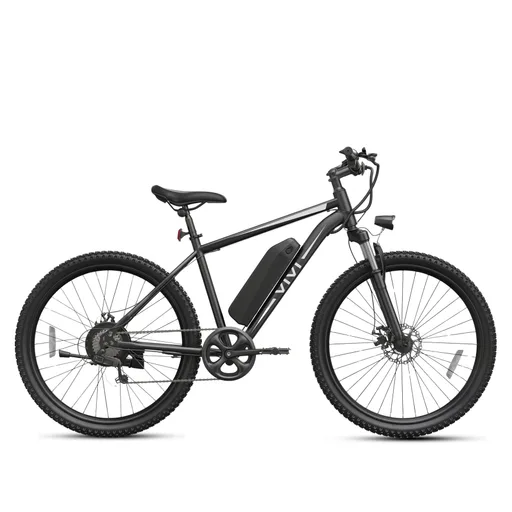
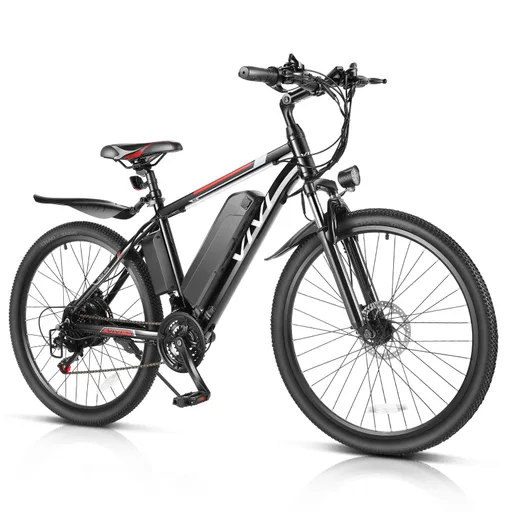
The VIVI Cruise Control 21 Speed stands out first on price. At 559.99 USD it costs 62% less than the median mtb e-bike in our database. That is the number that separates it from its class. It pairs a 374.4 Wh battery with a 65 Nm motor and a 25 kg frame.
This is a budget mtb e-bike for short trips and light trails. It suits riders who want a removable battery and a low entry price. It does not suit riders who need long range or high torque. The estimated range is 22 km, which is 55% below the class median.
What the numbers say
| Spec | This bike | Median for its type |
|---|---|---|
| Battery | 374.4 Wh | 864 Wh |
| Weight | 25 kg | 34.5 kg |
| Torque | 65 Nm | 80 Nm |
| Estimated range | 22 km | 49 km |
| Price | 559.99 USD | 1489 USD |
Questions people ask about this model
How much does it weigh?
The VIVI Cruise Control 21 Speed weighs 25 kg. That is 28% below the median weight for its type, which is 34.5 kg. A lighter bike is easier to move and store. It may also feel more nimble on the trail.
How much torque does it have?
The motor produces 65 Nm of torque. That is 19% below the median for its class, which is 80 Nm. Lower torque means less pulling power on steep climbs. It is still enough for moderate hills.
What speed class is it?
The speed class is not published. The top speed is also not listed. You should check with the seller if you need this information. We do not estimate it.
How far does it really go?
We estimate a range of 22 km, with a band of 19 to 24 km. This is an estimate from a formula, not a test. The formula uses Tour assist, rolling terrain, mild weather, a brisk pace and an 80 kg rider. Your range will vary with load, hills and assist level. Use the range calculator to see how different inputs change the estimate.
The manufacturer does not list a claimed range. So we cannot compare our estimate to a claim. The estimate is 55% below the median estimated range for this type, which is 49 km. That gap is mostly due to the smaller battery.
What does it cost to run?
The price is 559.99 USD. That is 62% below the median price for its type, which is 1489 USD. Running costs depend on your electricity price and how often you charge. The battery holds 374.4 Wh, so each full charge uses a small amount of energy. Use the cost calculator to work out your own running cost.
Where it falls short
The main trade-off is range. The 374.4 Wh battery gives an estimated 22 km, which is 55% below the class median. That limits how far you can go between charges. The lower torque, 65 Nm against a median of 80 Nm, also means less help on steep climbs. And the speed class is not published, so you cannot check it against local rules.
Who should buy it
This bike suits riders who put price and weight first. It is a good choice for short, flat trips and light trail use. It also works for riders who can charge often. It is not for long-distance commuting or steep, sustained climbs.
- You want a low-cost entry into mtb e-bikes and your rides are short.
- You need a lighter bike to carry or store, and 25 kg is manageable for you.
- You have a place to charge after every ride and do not mind a 22 km estimate.
Look elsewhere if you need more than 22 km of estimated range or more than 65 Nm of torque. Riders who face steep hills or long commutes should consider a bike with a larger battery and higher torque. Also look elsewhere if you need a published speed class or warranty, since neither is listed for this model.