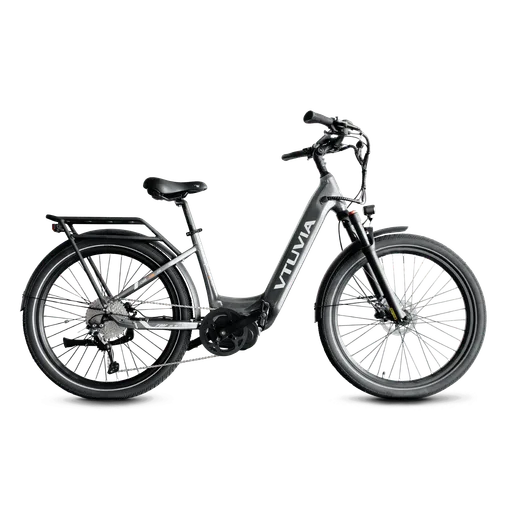
The VTUVIA CMB 8-Speed stands out with 175 Nm of torque, which is 250% above the median for city e-bikes. That is a huge amount of twist for a bike meant for paved paths and errands. It also packs a 691.2 Wh battery, 11% more than the class median. This is a heavy, powerful city bike with a price to match.
You get a robust build and strong assistance for steep streets or carrying gear. The trade-off is weight: at 27.2 kg, it is 1% above the median, so it is not light. It suits riders who want power and do not mind a few extra kilos. It is not for you if you need to carry it up stairs or lift it onto a rack.
What the numbers say
| Spec | This bike | Median for its type |
|---|---|---|
| Battery | 691.2 Wh | 624 Wh |
| Weight | 27.2 kg | 27 kg |
| Torque | 175 Nm | 50 Nm |
| Estimated range | 50 km | 45 km |
| Price | 1399 USD | 1299 USD |
The table shows where this bike sits against other city e-bikes. Battery, torque and estimated range are all above the median. Weight is only slightly higher, and price is 8% above the median. The torque figure is the biggest outlier by far.
What people ask about the VTUVIA CMB 8-Speed
How much does it weigh?
The VTUVIA CMB 8-Speed weighs 27.2 kg. That is 1% above the median for city e-bikes, which is 27 kg. So it is a little heavier than a typical city e-bike, but not by much. Keep that in mind if you have to lift it.
How much torque does it have?
It has 175 Nm of torque. The median for its type is 50 Nm, so it has 250% more torque than the class median. That should give strong assistance from a standstill and on hills. It is a lot of torque for a city bike.
What speed class is it?
The speed class is not published. The top speed is also not listed. You should check with the manufacturer or dealer if you need to know the legal class. Without that, you cannot be sure where it can be ridden.
How far does it really go?
We estimate a range of 50 km, with a band of 44 to 56 km. This is an estimate from a formula, not a test. The formula uses battery capacity and a reference ride: Tour assist, rolling terrain, mild weather, brisk pace, and an 80 kg rider. Your range will vary with load, hills and how much you pedal. Use the range calculator to see how different inputs change the estimate.
What does it cost to run?
The bike costs 1399 USD, which is 8% above the median of 1299 USD. Running costs depend on your electricity price and how often you charge. The battery holds 691.2 Wh, so a full charge uses about that much energy. You can work out your own cost per charge with the cost calculator.
Where it falls short
The main drawback is weight. At 27.2 kg, it is not a bike you will want to carry upstairs or lift onto a car rack. It is also 8% more expensive than the median city e-bike. And the motor type, power ratings, top speed and warranty are not published, so you are buying with some unknowns. The high torque is impressive, but it may be more than you need for flat city streets.
Who should buy it
This bike suits riders who want strong assistance and do not mind a heavier machine. It is for those who prioritize power over light weight. If you have hills or carry loads, the torque could be a real benefit. But you should be comfortable with the price and the unknowns.
- You face steep hills on your daily route and want strong motor assistance.
- You carry heavy groceries or gear and need extra battery capacity.
- You park at ground level and do not need to lift the bike often.
Look elsewhere if you need a light bike for stairs or public transport. Also consider other options if you want full specifications before buying, since several key details are not published. And if you want a lower price, the median city e-bike costs 1299 USD. This bike is for those who value power and capacity over light weight and low cost.