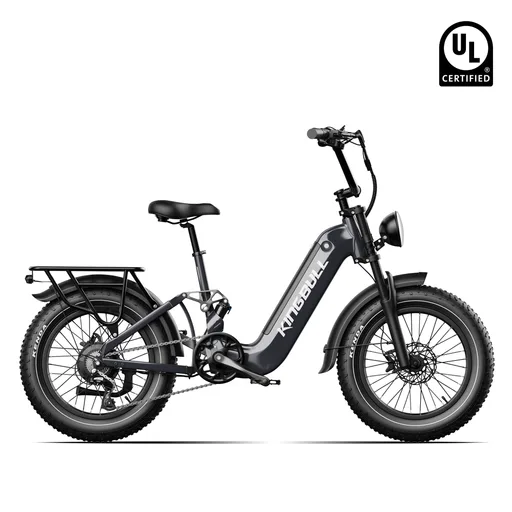
The Kingbull Jumper Go stands out with a 960 Wh battery. That is 11% above the median for mtb e-bikes in our database. It also delivers 90 Nm of torque, 13% above the median. This is a heavy, powerful e-mtb with a big battery and a high price.
You get a 750 W rated motor with 1400 W peak. The top speed is 45 km/h. At 36.7 kg, it is 6% heavier than the median mtb e-bike. It suits riders who want long assisted range and strong climbing power, and who can handle the weight.
What the numbers say
| Spec | This bike | Median for its type |
|---|---|---|
| Battery | 960 Wh | 864 Wh |
| Weight | 36.7 kg | 34.5 kg |
| Torque | 90 Nm | 80 Nm |
| Estimated range | 55 km | 49 km |
| Price | 1899 USD | 1499 USD |
What people ask about the Kingbull Jumper Go
How much does it weigh?
The Kingbull Jumper Go weighs 36.7 kg. That is 6% above the median mtb e-bike. The extra weight comes with a larger battery and a heavier motor. You will notice it when lifting the bike or loading it onto a rack.
How much torque does it have?
It has 90 Nm of torque. That is 13% above the median for this type. More torque helps on steep climbs and with loaded starts. The motor type is not published, so we cannot say if it is geared or direct drive.
What speed class is it?
The top speed is 45 km/h. The speed class is not listed. That means we cannot confirm whether it is limited to a particular class. Check with the seller before you buy if class matters where you ride.
How far does it really go?
The manufacturer claims 129 km. Our estimate is 55 km, with a band of 48 to 61 km. That is 57% below the claim. The estimate uses battery capacity divided by consumption under one reference ride: Tour assist, rolling terrain, mild weather, brisk pace, and an 80 kg rider. It is not a measurement. You can adjust for your own conditions with the range calculator.
What does it cost to run?
The price is 1899 USD. That is 27% above the median mtb e-bike price of 1499 USD. Running costs depend on your electricity rate and how often you charge. The battery is 960 Wh, so each full charge uses just under one kilowatt-hour. Use the cost calculator to work out your own cost per charge.
Where it falls short
The biggest trade-off is weight. At 36.7 kg, this bike is 6% heavier than the median mtb e-bike. That makes it harder to lift, to load on a rack, and to handle on tight trails. The high price is another drawback: 1899 USD is 27% above the median. And the estimated range is 57% below the manufacturer's claim, so plan for fewer kilometres than advertised.
Who should buy it
This bike suits riders who prioritise battery capacity and torque over weight. It is for those who can handle a heavier machine and who want strong assistance on climbs. The high price may be justified if you need the extra range and power.
- You ride long distances and want a large battery, even if the estimated range is 55 km rather than the claimed 129 km.
- You face steep climbs and need the 90 Nm of torque, which is 13% above the median.
- You have a secure place to store a 36.7 kg bike and do not need to lift it often.
Look elsewhere if you need a lighter bike for tight trails or frequent lifting. Also look elsewhere if your budget is near the median price of 1499 USD. And if you need a published warranty or speed class, this bike does not list them. Consider a lighter model with a lower price and a clearer specification.